Showing posts with label great read. Show all posts

Friday, January 6, 2017

The Best of 2016

Each year, the reviewers here at the New Podler Review of Books pick the book (or books) which we feel are the very best independently published (or small press) works. The only other requirement we have is that the book was reviewed here on the blog during the calendar year.

Book cover for Madam TulipHere are the winners for 2016:

Bertha Thacule: "I chose Madam Tulip. Its eccentric characters and witty observations make this an immensely enjoyable contemporary mystery/thriller set among denizens of Dublin's theater, art, and entertainment worlds. Fans of the first novel will be pleased to hear that a second installment in the series, Madam Tulip and the Knave of Hearts, is now available."

Book cover for The ColonyRichard Abbott: "The Colony, by RM Gilmour, gets my vote for 2016. It is primarily a story about travel between parallel universes, but with enough plot twists and variations that you're not always sure which way events will turn. I found the central characters compelling, and also the basic premise of why The Colony was there in the first place. The closing words suggest that there will be a follow-up novel at some point—I certainly hope so as I'm keen to find out what happens after the events at the close of this book."

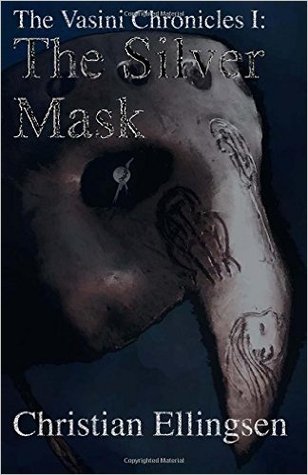
Book cover forDED: It took me a while to decide which book to pick for best of 2016. There were a few contenders, so I had to go back and revisit them all. After weighing the strengths and flaws of each, I finally reached a conclusion. My pick for best of 2016 is The Silver Mask by Christian Ellingsen. Yes, I was critical of the cover (I hope that Mr. Ellingsen invests in a better one), but the story was great. Ellingsen made use of a well developed cast of characters and excellent world-building to blend murder mystery, political thriller, and flintlock fantasy together to create a superb tale.

Congratulations to the winners!

Wednesday, December 23, 2015

The Best of 2015

Each year, the reviewers here at the New Podler Review of Books pick the book (or books) which we feel are the very best independently published (or small press) works. The only other requirement we have is that the book was reviewed here on the blog during the calendar year.

First off, I'd like to give an honorable mention to Rob Steiner for Citizen Magus and Muses of the Republic and M. Terry Green for her Chronicles of White World series. I thoroughly enjoyed their books, but as I was proofreader for them, I was disqualified from reviewing them here. Definite bias there.

There were five books I reviewed here on the blog that were in the running for best of 2015. I could take the easy way out and nominate all five, but that would be a cop out. Unfortunately none of them stood far enough apart from the pack to make this an easy decision. So I had to decide if what I considered a flaw would be just a petty gripe to other readers. In the end, I decided that the book I chose would be one that I could unequivocally stand behind.

Without further ado, this year's winner is:

book cover for Tethered Worlds: Blue Star Setting

In my review of the first book in this series, Unwelcome Star, I complained about the length of the book, not relating to the protagonist, and a battle scene that went on for far too long. I decided that story length was my problem and not one with the books. I think that most readers consider 500+ page books to be a plus rather than a minus. And young adult characters are always in fashion, so ignore the middle aged grumpy guy.

My appreciation for the first novel grew after I read the second book in the series. The myriad new names and terms that Faccone dumped on us in the first book paved the way to enjoying Blue Star Setting. By then, I had a better appreciation of the effort that went into what I'd thought were tangential or out of place story fragments. Faccone had a long range plan for this series, and he needed to lay the groundwork from the outset. It's in this book that you can start to see it coming together.

One thing that I praised from the start was Faccone's world building. Each world and faction is fully rendered with a rich history. Technology has blossomed into a myriad of forms. There are several factions struggling against one another to achieve their objectives. And while there are many characters, both human and AI, each of them is a unique individual with quirks and personality. It can be a bit overwhelming at first getting up to speed with all of this, but it's worth it. For space opera fans, I'd say you owe it to yourself to check out both books and join in the adventure.

For more information on Unwelcome Star and other books in the Tethered Worlds universe, please visit the author's website.

Wednesday, January 28, 2015

The Best of 2014

Each year, the reviewers here at the New Podler Review of Books pick the book (or books) which we feel are the very best independently published (or small press) works. The only other requirement we have is that the book was reviewed here on the blog during the calendar year.

Here are the winners for 2014:

book cover for Chained by Fear Rob: Jim Melvin's Chained by Fear gets my vote for "Best of 2014." It's book two of the Death Wizard Chronicles, which follows the adventures of Torg the Death-Knower in his quest to free the world of Triken from the mad sun sorcerer Invictus. It's adult fantasy on par with G.R.R. Martin, but with far more magic and monsters. Highly recommended.

Noise by Brett Garcia RoseDED: There were a few titles that I thought were very good this year. In order to narrow the list down I had to pick out the flaws in the choices, no matter how small. That got my list narrowed down to two. It was a tough decision, but ultimately, I chose Noise.

In my review, I wrote: "Noise is a revenge flick dressed up as art house mystery. Rose juxtaposes brutality with spirited, yet acerbic, prose. Meticulous attention to detail evokes noirish cinematic imagery."

Congratulations to the winners!


We reviewed 19 stories last year and rejected over 194. Roughly speaking, that means everyone who submitted a story to us had a 9% chance of being reviewed. I wish that number could be higher, but it's just not possible with the number of reviewers we have.


Unfortunately, Rob Steiner and S.B. Jung are deactivating themselves from our reviewer roster. Rob wants to devote more time to writing while S.B. will be starting nursing school soon. I want to thank them for their time and devotion to the blog over the years and wish them success. Come back when you can, guys!

Thursday, January 30, 2014

The Best of 2013

Each year, the reviewers here at the New Podler Review of Books pick the book (or books) which we feel are the very best independently published (or small press) works. The only other requirement we have is that it was reviewed here on the blog.

Here are the winners for 2013:

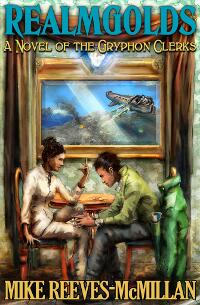
The Bookworm: I'm going to go with Realmgolds by Mike Reeves McMillian. It's everything that a reader could want in a steampunk novel. It combines politics, innovation, social unrest and the fight for basic freedoms in a compelling story. And the books in the series are even better.
Realmgolds
Black Book Rob: Black Book: Volume 1 by Dylan Jones, is my pick for the best of 2013. It had a cool blending of genres (Western, sci-fi, and fantasy) that you don't often see in traditionally published books. However, be aware that it's a serial novel made up of three "episodes." You'll need to buy future volumes to learn the characters' ultimate fates.

A Calculated Life - Original CoverDED: It should come as no surprise that my selection for the best book of 2013 is Anne Charnock's A Calculated Life. It is an excellent character study of a young augmented woman named Jayna who works for a global trends analytical firm. Her journey of self-discovery is what makes this story. Charnock deftly bonds the reader to Jayna by granting us unfettered access to her mind, thus making us her mute confidant.

Since my review, the novel was picked up by 47 North, Amazon Publishing's speculative fiction division, and nominated for the 2013 Philip K. Dick Award.

We reviewed 24 stories last year and rejected over 170. Considering that we were closed for seven months, that's still a fair amount of submissions.

Friday, May 24, 2013

Odd's Door by W. S. Lacey


Roger North and Lewis Spender, students and friends in the early Twentieth Century, are on a mission. In order to win acceptance into a club of rational thinkers, they must solve a seemingly paranormal mystery. Spender has chosen the case of the insane playwright, Adelard Odd. One person reading Odd's writings was struck blind, and three other people disappeared while in his room at the Quartersoake asylum. Once at the asylum grounds, the two men find out soon enough that Odd's door, a door ostensibly leading to nothing, is an axis mundi that involves those entering in a myriad of shifting universes. North and Spender are soon separated; Spender is held up as a king in the civilization he happens upon. North reappears with one eye colored silver; he is now able to see past and future and is also gifted with sight in the subjunctive mood.

They reunite and contend with multiple realities, described with a Douglas Adamsesque matter-of-factness. Trying to escape from a land run by paisley-clad Greeks, they briefly encounter Odd, who is a ruler, and who initiates a destructive impulse that lands them back on terra firma.

But the rational thinkers' club is a ruse. Spender is really on a mission to find out what happened to his mother, one of the three people to have disappeared through Odd's door on her own Odd-yssey. This Oedipal journey (we meet the Sphinx not once, but twice) subsequently leads to an island off Tunisia. They soon realize that dealing with doors such as these is dealing with Death, and they try to avoid killing or being killed as they search for Spender's dematerialized mother, aided by the sinister, scarred Dr. Holroyd.

This is very enjoyable reading. Lacey is a superb writer. The reader will encounter wonderful old words like “grimoire” and “catafalque.” The allusions to mythology (I probably missed some of them) are enticing. Do not fear Doors, but allow yourself to be immured in this story.

Monday, January 21, 2013

The Best of 2012

Each year, the reviewers here at the New Podler Review of Books pick the book (or books) which we feel are the very best independently published (or small press) works. The only other requirement is that we reviewed it here on the blog. Here are the winners for 2012.

Lunch Bucket Paradise Libby Cone had two picks:

"My favorite books of 2012 were Fred Setterberg's Lunch Bucket Paradise and Scott Dominic Carpenter's This Jealous Earth. Both featured excellent writing and interesting characters. Both had something intelligent to say about modern life."
This Jealous Earth


Oathbreaker Book Two: The Magus's TaleRob Steiner had one pick:

"For the second year in a row, I'll have to go with Colin McComb. Oathbreaker Book Two: The Magus's Tale had the beautiful language and vivid world-building I liked from Book One, but with different characters that gave added depth McComb's Empire of Terona. I'm looking forward to Book Three."

It was difficult for me to pick the best story for 2012. There were five really good books among the twelve I reviewed so narrowing it down to one required me to nitpick, quibble, and split hairs. But I had to settle for two.

We Live Inside YouJeremy Robert Johnson's second short story collection, We Live Inside You, revealed the inner monsters that compel us to do terrible things. These monsters can be anything from arrogant ideologies to emotional voids that desperately need filling. Oh yeah, there's the occasional parasite too. His writing is gritty and honest. His characters are very real; you've seen them around town, unaware of what churned inside them.

Shaman, Friend, EnemyMy other, very different choice is M. Terry Green's Shaman, Friend, Enemy. I thoroughly enjoyed how Green's characters evolved in their complexity and realism. No cardboard here, not even her antagonist. Green built up the conflict and resolved it with mastery. It's a pleasure to see a writer's improvement parallel that of her protagonist. Although this is the second book in the series, one need not have read the first to enjoy this one, but it wouldn't hurt.

We reviewed 24 stories and rejected over 250. Now that we have a new reviewer on board we hope to improve upon that. The submissions window will be opening soon.

Wednesday, November 14, 2012

This Jealous Earth by Scott Dominic Carpenter

This Jealous Earth by Scott Dominic Carpenter. Midwestern Gothic Press.

It is interesting that one of these sharply written short stories, “The Spirit of the Dog,” takes place in a uranium mine. Instead of looking for sparkly bits of gold, the miners run around with Geiger counters after a preliminary blast, looking for little bursts of radiation. Most of these stories involve connections: their breaking, their forming, their resilience, their failure. Just as the forces binding particles in the atomic nucleus are enormously strong, many of the characters in these pieces are drawn, despite themselves, to their imperfect families, to their treasured pets. The opposite occurs in “The Spirit of the Dog”; the various miners pit themselves against the new, pretty engineer. Their individual stubborn egos form a sort of misogynist hive mind whose evil ideas drive everyone apart.

The egos of squabbling or drunk parents get in the way, but their kids band together for mischief or otherwise store up memories that refuse to die, and, when probed, yield little bursts of love. In “Inheritance,” a computer programmer is reminded of the illogical kindnesses of his alcoholic father as he cleans out the latter's home after his death, and has to confront some of his darker ideas of the family romance as he sees himself through the eyes of his son. In “The Death Button,” a young college student sells his plasma to make rent; he is caught up in the drudgery of survival until, as the subject of a psychology experiment, he is compelled to note each instance he thinks of death. His inadvertent running over of a squirrel starts him obsessing about death, spurring him to behave more decisively towards someone he loves.

The title story concerns a family in the last throes of preparation for the rapture. The son doesn't buy into it. As his parents scurry around doing useless things like housecleaning and clothes packing, he thinks about practical, Earthly concerns like money and food. Slowly, the rest of the family, starting with his sister, realize the strength of their own connections. What girl would choose the uncertain amusements of Heaven when she has a brother who calls her “Kitty Cat,” and who tries to arrange future care for her hamster?

Tuesday, January 24, 2012

The Best of 2011

Like last year, each reviewer here at the New Podler Review of Books picks the book (or books) which he/she feels are the very best independently published (or small press) work. Before, when it was just Podler, it was very easy to come up with one book to receive the Independent Novel Award. One reader, one judge. Getting four people with very different tastes, not to mention genre interests, to agree on one book out of thirty-three as being the very best would be impossible. Flaming Dove

First up is S.B. Jung.

"My pick for 2011 is Flaming Dove by Daniel Arenson. This book is a great read that I highly recommend to anyone who loves a different kind of fantasy fiction."

Libby Cone had two picks.
Being Light "I nominate Helen Smith's Being Light—a tale well-told, with interesting characters of real depth—and Gunshot Stigmata by Scott C. Rogers. It takes a great deal of talent to employ a highly unreliable narrator, explore his delusions, and keep the narrative from flying apart altogether. A very sensitive treatment of the world of a very damaged soul." Gunshot Stigmata

Rob Steiner picked Oathbreaker Book 1: The Knight's Tale by Colin McComb.

"Vivid language, unique characters, and a compelling story combined to put it far above the other books I reviewed last year. It's the first of a planned series, so I hope to read more of McComb's work in 2012."


Mirror ShardsFor me, the 2011 winner, hands down, was Mirror Shards. This anthology, about the impact of augmented reality upon society, featured a diverse array of authors. Indie author, Thomas Carpenter, assembled the stories from both traditionally published and indie writers and published it under his Black Moon Books imprint. The end result was a highly entertaining and thought provoking read.


We reviewed 33 books last year. Over 150 submissions were rejected due to various reasons. Time is a big factor. We rejected some well-written stories because we didn't have the time to stick with a book that didn't grab us right away. When we were open to submissions, we received 20-30 submissions each month. It's just too much for us to handle. We need more reviewers to handle the flood. Until then, we'll finish up the remaining submissions from 2011 before we open the submissions window for a new batch.

Thanks for reading!

Friday, February 25, 2011

The Best of 2010

Yeah, I know. "Best of..." posts are supposed to come out either in December or January. Well, we've been a tad bit busy with stuff so we're just getting around to compiling our choices for best books that we've reviewed here on the blog.

Before, when it was just Podler, it was very easy to come up with one book to receive the Independent Novel Award. One reader, one judge. Getting three people with very different tastes, not to mention genre interests, to agree on one book out of twenty-three as being the very best would be impossible. Therefore, we agreed to each pick that book (or books) which we felt was the very best.

First up is S.B. Jung.

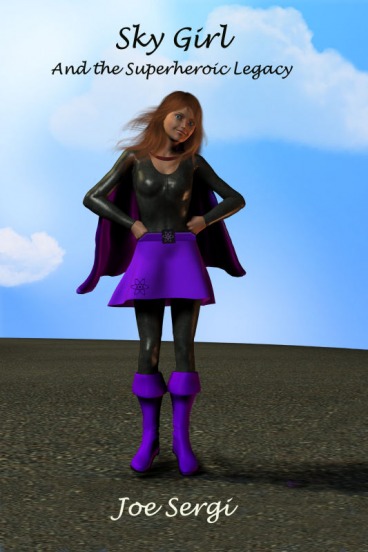
My pick for 2010 would have to be SkyGirl and the Superheroic Legacy by Joe Sergi. I read through that book in less than 48 hours!


Libby Cone's top two picks were:
  1. Arguing with Henry by Niall Hunter
  2. ZombieStop Parade by Richard Buzzell
Both books were extremely refreshing in their authors' skill with prose style and nuance. Although one would not guess it of ZombieStop, both books were character-driven. What goes on inside someone's head can be just as riveting as fiery explosions and mass computer crashes; it just takes an author with talent to share it with us.

As for me, it was very difficult to select one book as I found examples of great stories over a few genres. Libby Cone's Flesh and Grass was not your run-of-the-mill historical fiction. To be able to tell the story of a blind Dutch boy, from his POV, deserves high praise. Libby's vivid descriptions of the scents and sounds of 17th Century Delaware were a treat.

Although I didn't review S.B. Jung's Lines of Neutrality, I read it and commented about how the reviewer missed the point of the story. Characterization, not action, was the star here. Alternating the narration from the two main characters, both assassins, was a superb way of presenting the story. Witnessing the evolution of their relationship from rivals to allies was thoroughly enjoyable.

And then there was Rob Steiner's The Last Key. I'd become a bit jaded with high fantasy after reading so many Tolkein clones. I couldn't tell you the last time I read anything in the genre. But when I read the sample chapters lying in the slush pile, I was hooked despite myself. Realistic action, characters with depth, a compelling story, Rob's story had it all. It was a pleasure to be able to read a high fantasy story and not feel like it was cardboard characters executing a formula.

These are three very different stories: historical fiction, contemporary thriller and medieval high fantasy. And all of them were written by my fellow reviewers. I wanted to praise them for their hard work, but to avoid cries of nepotism, I shall pick another story.

And it isn't a difficult choice. The Losing Role by Steve Anderson gets my vote as the best story I reviewed in 2010 here at this blog. This work of historical fiction, traces the story of Max Kaspar, an out-of-work German actor turned soldier, recruited to play a crucial role in Operation Greif during the Battle of the Bulge. Excellent dialogue, well-crafted characters, and enough dramatic tension to saw a Panzer in half, The Losing Role is an excellent blend of noir and espionage thriller.

Thank you for your patronage. We'll try to be a bit more timely with our "Best of 2011" post. :)

Sunday, April 5, 2009

The Book Thief

The Book Thief
Markus Zusak
584 pages
Picador (2005)

"Five hundred souls. I carried them in my fingers, like suitcases. Or I'd throw them over my shoulder. It was only the children I carried in my arms."

This is a novel narrated by Death. It’s January 1939, and nine year-old Liesel Meminger and her young brother, Werner, are being taken by their mother to live with a foster family in Molching, a small town outside Munich. Liesel’s father was arrested as a Kommunist, and Liesel’s mother fears a similar fate. During the train journey, Death takes six year-old Werner, but not without noticing Liesel, too. It will be the first of many such encounters. By her brother’s graveside, Liesel’s life is changed when she finds a mysterious object, partially hidden in the snow: it’s a book, The Gravedigger’s Handbook, left there by accident. It’s the first of many she will steal.

So begins a fascination with books and words as Liesel, with the help of her foster father, learns to read. Soon she is stealing books from Nazi pyres. With the help of her new friend Rudy Steiner, she liberates several from the personal library of the mayor’s wife. As years pass, Death watches. Life with the Hubermann’s on Himmel Street is punctuated by the terror of the Allied bombings, but is otherwise as tolerable as a wartime childhood can be. Then her foster father repays an old debt by allowing a Jewish fist-fighter to hide out in their cellar, and Liesel’s life is changed in more ways than she could’ve imagined.

Does the world really need another Holocaust novel? Yes, if it's as good as this one. No, it’s not some German inversion of The Diary of a Young Girl despite what the synopsis might suggest. Nor is it Harry Potter and The Holocaust as more than one critic has quipped. Young Australian writer Markus Zusak is a prize-winning writer of children’s fiction, but The Book Thief is his daring adult debut.

And what a debut it is. The Book Thief is one of those extremely rare novels: an absolute page-turner as well as a serious work of art. It’s unsettling, provocative, triumphant and tragic, at times fanciful and at others relentlessly grim. It’s beautiful and harrowing in almost equal measure. More than anything, it’s emotionally gripping in a way that few novels are. I stayed up one night, determined to finish it, and brushed away tears for the last fifty pages.

Zusak says he was inspired by two real-life events related to him by his German parents: the bombing of Munich, and a teenage boy offering bread to an emaciated Jew being marched through the streets, ending with both boy and Jewish prisoner being whipped by a soldier. As Philip Ardagh in The Guardian noted, it’s the way in which Zusak combines such terrible events with such believable characters and the minutiae of everyday life in Nazi Germany that makes this book so special.

The genius, too, is in the voice. Death is arch, wry, and given to bad jokes about his profession, but he’s also moved by the plight of humans and amused by our attitudes to him. "By the way – I like this human idea of the grim reaper. I like the scythe. It amuses me." Death is closely involved with what’s happening in wartime Europe – and obviously very busy – but he’s also, for the most part, emotionally detached from it. This allows him to comment on man’s inhumanity to man without ever being ponderous or moralistic, and without taking sides. This is important. The novel could be painfully sappy or irritatingly didactic without such a detached perspective driving it.

Zusak uses a plain style, punctuated only occasionally by vivid images. The moments of joy and violence, when they come, are all the more striking for the economy with which they’re depicted. It’s an object lesson to writers who want to deal with complex moral issues or powerful themes. And the lesson is this: just get the hell out of the way. Your language doesn’t need to be dazzling and ornate; your plotting doesn’t need to trick and surprise; you don't need to lecture or berate. Carefully choose your narrative point of view. Then put the right characters in the right situation and describe what happens as clearly as you can. The rest will take care of itself.

This is an important indirect lesson in a book that takes as its subtext the power of reading and writing. As Janet Maslin in The New York Times commented: "It will be widely read and admired because it tells a story in which books become treasures. And because there's no arguing with a sentiment like that."

Saturday, April 4, 2009

A Death on Skid Row

ThresholdTHRESHOLD
by Bonnie Kozek

Available from Amazon.com

Only in her mid-twenties, Honey McGuiness is already an old soul who seems to have lived a life twice as long. A self-described loner and outsider with no connections and no meaningful relationships, she hides from life in a self-imposed exile from society in Los Angeles' Skid Row, wallowing in the gutter along with the rest of the damaged persons. Of course, Honey is not like them; she could be somebody, as one of the other characters insists, but Honey neither believes that, nor does she want to hear it from anyone. There is something dark in Honey's past, something that she's not yet ready to accept and deal with, and that something is killing her chances at life and living.

Honey is not completely isolated, however. There is one person in the world of the homeless that she has a thing for. Not that this thing could ever be anything other than it is, a simple a connection that's pretty special to Honey's jaded self. Billy himself isn't much. For one thing, he is blissfully unaware of the world around him, including Honey's attention. And he communicates in seemingly random rhymes out of the words that he hears around him, like a parrot. But there seems to be something innocent about Billy, something genuine, something that draws Honey. Billy is the only person she cares about.

Working at the urban mission, living in a building targeted by developers, and Billy seem to be the building blocks of Honey's new life in hiding. But Honey's skid row honeymoon from reality is shattered when Billy is shot by unknown assassins. Dying in her arms, he whispers “mother.”

Shattered by the death of her simple friend and thirsting for vengence, Honey launches on an all out, one-woman investigation into Billy's death. That a recording device was strapped to Billy leads Honey to suspect that Billy was being used by the police, a turn of events that she finds particularly upsetting for how the system had used Billy's innocence.

In her quest to get even with the slimy players responsible, Honey encounters the last boyscout, an idealistic cop who still lives by long-gone values of right and wrong, joining the force in order to do some good. The two become close, ersatz partners, each on an idiosynchratic quest for justice. In order to turn up some leads into Billy's death, Honey herself must descend into the local drug scene. The first real contact she meets is Abel, the street boss and drug dealer with an unlikely conscience. But is this the same man whose name is mentioned on the tape she recovered from the recorder on Billy's body? Through Abel she meets another player in the drug scene, Mr. V. But Honey is treading in dangerous waters, for Mr. V knows far more than Honey suspects, and before she knows it her world erupts with violence.

Threshold is stellar writing, a work populated with complex characters, and a story with a hypnotic narrative pull. And Bonnie Kozek is a talent to watch.

Thursday, April 2, 2009

Briefing for a Descent into Hell

Briefing for a Descent into Hell
Doris Lessing
228 pages
Vintage (1981)
First published, 1971

"Sometimes when you read a book or story, the words are dead, you struggle to end it or put it down, your attention is distracted. Another time, with exactly the same book or story, it is full of meaning, every sentence or phrase or even word seems to vibrate with messages and ideas, reading is like being pumped full of adrenalin." (p.155)

You don't say, Doris. The title alone should be enough to tell you that Nobel-winner Lessing's 1971 novel isn't going to be an easy read, and the first 100 pages are a very hard slog indeed. This is one of the few books I have almost turned away from in frustration (I normally finish everything I start). But it's worth the effort.

This self-declared "inner-space fiction" narrates the gradual "recovery" of amnesiac Charles Watkins, a Cambridge Classics Professor who is hospitalized after being found wandering along the London Embankment. The narrative alternates between Watkins' inner world and the efforts of his doctors and friends to revive him.

Lessing has been accused of trivializing mental illness here, but the charge carries no weight. She isn't attempting to articulate the experience of amnesia, nor of delusional psychosis. Her aim is philosophical. The further we go into the novel, the more we come to realize that Watkins may not, in fact, be ill at all - rather, the human condition may be his "illness" and his breakdown is actually a kind of waking up. What emerges is a view of the world in which identity is conditional, all matter is a unified system, and "time is the whole point". The "Hell" of the title may not be mental illness - it may be life as it is lived in the supposedly real world.

Of course, Lessing can give no definitive answer to such philosophical questions, but her exploration is powerful and increasingly sharp. Once we leave Watkins' inner world and he is asked to write about his experiences, Lessing's narrative elevates to a level of startling lucidity. The stories Watkins writes about his apparent wartime experience in Yugoslavia, and what he can see from the window of his Cambridge study, are both beautiful and profound. They make the philosophical point far better than any academic essay ever could.

And what is the point? It's a particular understanding of reality. As Lessing's epigraphs - one from a fourteenth-century Sufi mystic, the other from a twentieth-century marine biologist - neatly show, we tend to think of spirituality and science as heading in opposite directions, but they may in fact be inching ever closer together. No, the conclusion is not that God actually exists as some old man sitting up there in heaven, but rather that the ancients' intuitive understanding of the nature of reality, and their poetic expression of such, is startlingly similar to a lot of what quantum physics is telling us about space-time today. Much of human suffering may stem from an inability to see our world and ourselves in the right way. Readers engaged by this kind of thinking might also enjoy "Valis" by Philip K. Dick.

Friday, March 20, 2009

The Faber Book of Utopias

The Faber Book of Utopias
Edited by John Carey
528 pages
Faber and Faber (1999)

Anthologies are a wonderful way of exploring a genre or theme; not as a substitute for wide reading but as pointers to make your reading more rewarding. I’ve discovered some of my favourite books and authors through anthologies such as The Art of the Story edited by Daniel Halpern, and Alberto Manguel's Black Water: The Book of Fantastic Literature, which is a wonderful collection of fantastic/speculative tales.

Given a fair number of this site's readers declare an interest in post-apocalypse and alternate history titles, I suspect they might also be interested in an anthology such as this. The Faber Book of Utopias edited by John Carey is a fascinating survey of writing dealing with one of the most recurrent concerns in speculative literature and philosophy.

As Carey explains in his introduction, utopia actually means nowhere or no-place. It has often been taken to mean good place, through confusion of its first syllable with the Greek eu as in euphemism or eulogy. As a result of this mix-up, another word dystopia has been invented, to mean bad place. But, strictly speaking, imaginary good places and imaginary bad places are all utopias, or nowheres. Both are represented in this book and Carey uses the word dystopia for the bad places simply because it now has currency.

Not every imaginary nowhere counts as a utopia, however. To qualify as a utopia, an imaginary place must be an expression of desire. To count as a dystopia, it must be an expression of fear. This book, then, is a collection of humanity’s desires and fears over several millennia. The instant we recognise that everything inside our heads, and much outside, consists of human constructs that can be changed, we want to change them. This belief in the perfectibility of human life and society encourages many noble and selfless schemes but it's also inspired a trail of folly, tyranny and attempts at social control. They tend to centre around genetic engineering, education, crime and punishment, the prevention of ageing and the avoidance of death (or painless ways of inducing it).

Carey’s scope is vast, in terms of both period and genre. The first extract, “Holy Snakes”, comes from an Egyptian manuscript written 2000 years before the birth of Christ. The last comes from Lee M. Silver’s 1998 book Remaking Eden and concerns the fate of humankind in a post-cloning America of the year 2350. In between there are fiction and non-fiction selections from Plato, Tacitus, Francis Bacon, Jonathan Swift, Milton, Hobbes, Voltaire, Samuel Johnson, the Marquis de Sade, Robert Owen, Karl Marx, Oscar Wilde, William Morris, H. G. Wells, W. B. Yeats, D. H. Lawrence, George Orwell, Aldous Huxley, Italo Calvino, Julian Barnes and many more. As other reviewers have noted, while many of the selections are predictable, some are surprising: Carey has defined utopian writing widely enough to include an extract from Hitler's Mein Kampf and Abraham Lincoln's “Gettysburg Address” as examples. (Sidenote: Did you know there is actually a photograph of Lincoln delivering that speech?)

Each has a brief introduction which provides enough context for you to appreciate an unfamiliar piece without ruining it for you (a lesson the editors of many anthologies should learn, including the aforementioned Manguel). Carey’s impressions are sometimes radical: on Plato’s Republic he argues that, however benevolent its goals, the imagined world is maintained by a mixture of force and lies and depends on squashing the aspirations of ordinary people. This points to a theme that emerges consistently here. Utopias obviously offer warnings, promises and social critiques by encouraging us to compare imagined realms with our own. But the meaning we make of the comparison will differ depending on the nature of where, and when, we live. In the mid-twentieth century, Karl Popper criticized Plato’s Republic because he saw in such a seemingly benign utopian model the beginning of, and justification for, totalitarian states. The force of a utopia seems to rely on how readily it thrusts us into a re-evaluation of our own world and its current trends. This can change over time.

Overall this is a vast and rewarding work that should appeal to anyone interested in the idea of utopia/dystopia. Ultimately, utopias seem to be attempts to address the insoluble problems of human life, but utopians tend to falsify these problems by regarding them as simple. They build their utopias on universal human longings. But what they build usually carries within it its own potential for crushing or limiting human life. As this anthology shows, how that particular contradiction plays out can be endlessly fascinating.

Saturday, March 14, 2009

Real People

Real People
Alison Lurie
146 pages
Random House (1969)

I’m a big fan of the ‘diary novel’ as a genre – i.e. those novels which purport to be the actual journals of fictional characters. I enjoy the unreliability of the narrator, the blend of interiority and external action, and the freedom it gives the narrative to slip into analysis, reflection and anecdote.

Some of the most engaging and enjoyable books I’ve ever read fall into this genre: Saul Bellow’s early novel Dangling Man, Ruth Prawer Jhabwala’s 1975 Booker-winning Heat and Dust, Evan S. Connell’s Diary of a Rapist (don’t let the title deter you, it’s actually an insider’s vision of the classic disintegration of a schizoid personality) and Jean-Paul Sartre’s Nausea which is part-parody of the form and one of the best novels of the twentieth century.

In Diary Fiction: Writing as Action (1984), H. Porter Abbott gives an amusing outline of the genre’s key elements. Though remarkably consistent across the genre, within these apparent "rules" there can be almost infinite variety of stories. In the male version, the diarist is intelligent, sensitive, introverted and self-conscious. He is reasonably alienated with no gift for social life. He is young, in his twenties or early thirties. He is poor and powerless. He is alone. He lives in a room that contains at least two things: a window with a view and a mirror. It is a shabby room in a shabby house. The house is in a city. He walks the city streets. He writes. He paces the room. He gazes out of the window and meditates upon those passing below. At least once in the course of his entries, he looks in the mirror and describes what he sees there. He is either in love or obsessed with that fact that he is not. He is prone to melodrama. He is doomed. There is a good chance he will die. If he dies, there is a good chance he will die by his own hand.

In the female version, the major differences are that the writer is usually married; she is oppressed by the indifference, the insensitivity, or the love of her husband (or lover); she is a victim of the stereotyping imposed on her by virtue of her gender; her powerlessness is a function of her social condition as a woman; her sense of identity is more tenuous; she is less melodramatic.

That all sounds pretty grim, but the diary novel can also be the occasion for great hilarity, as demonstrated by John Updike's A Month of Sundays, Helen Fielding's Bridget Jones novels and Sue Townsend's classic series on the adolescent and adult adventures of Adrian Mole.

One of the most enjoyable examples of the "female version" is Pulitzer-winner Alison Lurie’s 1969 novel, Real People. It was reprinted several times right through to the 1990s, so most good second-hand bookstores will have it – which is precisely where I stumbled across it.

When writers write about writing, the results are usually very interesting. Think of Italo Calvino’s If On A Winter’s Night a Traveler, A. S. Byatt’s Possession, Philip Roth’s The Ghost Writer, and J. M. Coetzee’s Elizabeth Costello. To my mind, Real People is right up there with them. It’s only 146 pages long, but what it lacks in length it more than makes up for in elegance and sophistication.

Janet ‘Belle’ Smith - married, early forties, and the author of a well-received collection of short stories - is taking her annual sojourn at Illyria, a New England mansion which has been converted into an invitation-only retreat for artists of all kinds. Craving escape from a deadening home life, Janet is delighted to find her friend Kenneth is on the guest list, but the appearance of the witless waif Anna May and the husky sculptor Nick Donato threaten to disrupt everything. As Janet struggles to construct new stories she is forced to confront some uncomfortable truths about herself, her companions, and the potential fraudulence of her art.

Lurie chooses Janet’s diary as the narrative device, and it’s an excellent choice for the kind of novel this is: one which deals with the difference between appearance and reality, between social roles and one’s own sense of identity, and in which the protagonist’s reflection on these differences is vital. Apart from constructing a neat snapshot of American art in the 1960s, Lurie deftly explores the familiar crisis of female artistry: the competing claims of being a wife/mother and having a creative career which family members more or less refuse to take seriously.

But this isn’t just about women. It’s about the relationship between art and reality. What starts out as a comedy of manners escalates in profundity until it becomes, in the final pages, a concise manifesto on the nature and purpose of art – which turns out to be truth: “If nothing survives of life besides what artists report of it, we have no right to report what we know to be lies.”

Saturday, February 21, 2009

The Reader

The Reader
Bernhard Schlink
224 pages
Vintage (1999)

Michael Berg, 15, is on his way home from school in post-World War II Germany when he falls ill and is befriended by the 36-year-old Hanna who takes him home. When he recovers many weeks later, he dutifully brings her flowers in appreciation, and the two become lovers. The relationship, at first purely physical, deepens when Hanna takes an interest in Michael’s education, insisting that he study hard and attend classes. Soon, their meetings take on a more meaningful routine in which after lovemaking Michael reads aloud from the classics. There are hints of Hanna's darker side: one inexplicable moment of violence over a minor misunderstanding, and the fact that Michael knows nothing of her life other than that she collects tickets on the streetcar. Hanna leaves the city abruptly and mysteriously, and Michael does not see her again until years later, as a law student, he sits in on her case when she is being tried as a Nazi criminal.

The Reader explores Germany's guilt-ridden relationship with its own past by objectifying it in the sexual and emotional coupling of a 15-year-old boy and a 36-year-old woman. On the face of it, that doesn't sound like the premise for one of the most engaging pieces of Holocaust fiction available, but it is. Far from eroticizing Nazism or trivializing the Holocaust, using the metaphor of a human relationship makes them both more accessible. Schlink provides a way into the unique postwar experience of the German people by relating it to things we have all experienced: guilt and romantic love. Issues and events which usually repel or dismay us with their enormity are taken out of the zones of History and Philosophy and reconfigured on a human, interpersonal scale - the scale on which they actually happened, and on which they must be confronted if we are ever to understand them fully.

I was surprised and moved to find a novel that treats the Holocaust in this way; a novel that risks being misunderstood in order to foster understanding. The erotic aspect of the novel is, in the end, a minor one and hardly the point: it's about so much more than that. Through careful characterization and plot development, Schlink manages not only to make plain the ease with which German civilians were drawn into unspeakable roles, but also to explore the difference between a legal conviction and real justice, between retribution and recompense, and, most importantly, the almost insoluble situation in which Germans born postwar find themselves - laden with guilt for things they did not do and for which they cannot possibly atone.

Interestingly, Schlink's book also becomes a sustained yet subtle commentary on the function of literature and literacy as ways of recording and recovering the past. Those interested in this subtext might like to read next W. G. Sebald's On The Natural History of Destruction which explores the historical unwillingness, and therefore the contemporary inability, of German literature to deal with the terrorist victimization of German civilians at the hands of the Allies, e.g. the bombing of Dresden. Anyone unfamiliar with W. G. Sebald’s work should read all of it. Immediately.

For all its high intent, and equally high achievement, The Reader is almost an easy read. Schlink's language (or Carol Brown Janeway's translation, at least) is smooth, spare and precise. Schlink's subject is dignified by such straightforwardness.

Thursday, February 12, 2009

The Killer Inside Me

The Killer Inside Me
Jim Thompson
256 pages
Vintage (1991)
First published, 1952

Lou Ford, 29, is the Deputy Sheriff of Central City, Texas. He's a local boy, son of the town doctor, and a sure thing to marry the girl next door. He's also a secret sufferer of what he terms "the sickness": textbook sociopathy, most likely, the dramatic upshot of which is a penchant for committing nasty murders, preferably of women. It first emerged in adolescence and resurfaces when Lou is drawn into a plot to silence a prostitute with the potential to embarrass the town's first family. Things rapidly escalate when suspicion falls on Lou and he needs to eliminate an ever-growing number of human loose ends, including several people he claims to love.

The genius of Thompson's dark classic is that he manages to horrify us with Lou’s truly vicious murders and all the calm premeditation that goes into them – every monstrous step narrated in Lou's wonderfully deadpan voice – and yet still have us feeling for him. Lou’s flat, affectless delivery is anything but unaffecting. He’s intelligent, cynical, self-aware and chillingly rational in his irrationality until he detours into obvious delusion towards the end. But by that point you understand him. You can't forgive him, but by witnessing his villainy from the inside you might just be able to accept that, for Lou, things couldn't have been any other way.

Technically, there's a lot to like here, and potentially a lot to learn for those interested in writing their own thrillers: an engaging voice, beautiful plotting, some agonizingly suspenseful scenes (Lou’s visit to Johnnie Papas in the lockup, in particular), masterful use of laconic speech rhythms and Texan dialect, and a whole raft of wonderfully realized minor characters who, while still identifiably small-town types, are never caricatures. But the construction of Lou Ford is Thompson’s real achievement. Numerous scholarly articles available online explore Lou’s “sickness” and find consistency with clinical diagnoses – some of which post-date the novel’s publication, suggesting Thompson had remarkable native insight into this kind of character (including their tendency to misdiagnose themselves). While I don’t think we should psychoanalyze characters as if they were real people, authors constructing fictional killers can obviously benefit from a good working knowledge of the symptoms, behaviours, inner life and childhood origins of the pathologies they want their villains to express. Thompson’s novel demonstrates how engaging and enduring such veracity can be.

It’s endured, too, because this novel is actually about something, and not just mental illness: there are several passages in which Thompson touches on the tenuousness of civilized morality; on the phoniness of social interaction and the grim reality it masks. The recognition of this commonplace inversion of values – the difference between the way the world actually is, and the way we say it is or think it should be – is a staple of the noir genre, of course. But Thompson gives it a highly effective workout here, making this a superior novel. Running chills up and down your spine is one thing. Making you think is something else.

Sidenote: Those who enjoyed Casey Affleck’s performance as Patrick Kenzie in big brother Ben’s 2007 adaptation of Dennis Lehane’s Gone Baby Gone might be interested to know he’s playing Lou Ford in a new adaptation of The Killer Inside Me directed by Michael Winterbottom. Currently filming, it’s slated for release in 2010. Stacey Keach played Ford to good effect in the otherwise undistinguished 1976 version, but the unassuming young Affleck should bring some rather chilling, baby-faced menace to the role.

Thursday, February 5, 2009

Come Closer

Come Closer
Sara Gran
168 pages
Soho Press (2003)

This clever little “horror story” can be read in one sitting, but don't let that suggest it isn't significant. It has the intensity of a parable, and that's probably the best way to describe it, given the subtext.

Amanda, a young married architect, suspects she is losing her mind. Odd things keep happening to her: a strange tapping sound that only seems to occur in her presence, bizarre dreams, frightening blackouts, and out-of-character behaviour: like finding herself in bars seducing strange men. She mistakenly receives a book in the mail—Demon Possession Past and Present—which includes a quiz on how to tell if you're possessed. Obsessively returning to it, Amanda finds she is able to answer “yes” to more and more of its questions.

The demon apparently possessing her is Naamah—Adam's second wife, in Jewish folklore, and the woman he rejected because he saw her being created by God, i.e. he saw the human “blood and guts” beneath the feminine beauty. Forced to confront a real human being rather than a submissive sexual object, Adam refused her and she fled to the Red Sea. (This is a story hidden in documents only accessible to older Jewish men, of course!) Naamah wheedles her way into Amanda's consciousness through blood-soaked dreams and nagging voices, gradually taking control of her life, with shocking consequences.

Ostensibly this is a story about a case of demonic possession, but Sara Gran uses that as an analogy for the psychological crisis of Amanda who turns out to be an intelligent, thirty-something woman trapped in a too-safe relationship that has drained her life of meaning. It's an exploration of the fear felt by both women and men about female power and the surprising incapacity of modern life to allow women appropriate avenues for its expression, especially as they grow older. It also confirms the way religious/mythical stories grow out of the real and predictable crises of adult life (you can read Naamah as Amanda’s frustrated id). But don't worry; the novel doesn't read like some kind of feminist psycho-babble, even if this review might to some readers. The subtext isn't worn on the sleeve. Gran focuses on the visceral as she carefully unwinds her tale with all the skill of an accomplished horror writer, but with quite a bit more economy and flair. It's a testament to her narrative power that using the questionnaire entitled "Are YOU Possessed by a Demon?" she can foreshadow, several times, the chilling logic of escalating violence by which the story will proceed, without ever actually undermining the horror of those events when they inevitably come to pass. The key is the bluntness of the narrative voice. Every step is executed with a dispassionate distance that makes it more chilling, more credible, more real.

Not everyone agrees. Some enthusiasts of horror fiction have found Come Closer trifling or slight, but these reviewers seem to have missed the point. If your taste in horror or thrillers runs more to the literary, this is one you'll enjoy.

Wednesday, December 17, 2008

The Ant King & Other Stories * * * * *

book cover for The Ant KingThe Ant King & Other Stories
Benjamin Rosenbaum

A surrealist masterpiece of fantasy that's hilarious and macabre, reflecting our strange reality in its mind-bending world, The Ant King is filled with soul-shuddering wisdom. This brilliant collection is about integrity, love, belonging, the loss of place of the male in the social order, Jewish Diaspora, God, good and evil, and being alone in a universe that is ambivalent, unavailable, incomprehensible and filled with suffering. Rosenbaum begins in fantastic places, then adds on more layers of fantasy besides and before long you seem to lose your footing, carried along on a fun house ride through the absurd landscape of the human experience.

In the first story in the collection, Stan goes on a quest to rescue his former love from the Ant King while his gumball empire evolves and mutates to the point where Stan, it's founder, ends up seeking employment at the company which he founded. The story expresses the absurdity of corporate and personal life in which people no longer act like people Stan imagines that they should act. They act as they want: they lack integrity, change at a moment's notice, and ultimately leave him alone and abandoned. But reality changes in bizarre and incomprehensible ways and before long Stan is back in the revolving kaleidoscope, stumbling toward some unknown end like a character in a computer game.

In "The Orange," an Orange rules the world from a Florida orange tree branch, but is then picked, traveling from the branch, through the national fruit distribution system, dispensing miracles and graces along his way, finally ending up in the mouth of the narrator. The last two paragraphs come like a thunderclap:

I bought the orange who ruled the world for thirty-nine cents at Safeway three days ago, and for three days he sat in my fruit basket and was my teacher. Today, he told me, “It is time,” and I ate him.

Now we are on our own again.

In a story titled "Fig," a tragic story of unrequited loyalty runs its sad course. Another stunning piece is "The Blow," where detective receives a blow to the head from the villain, then spends the holidays at the villain's house, unaware at whose table he's eating his sweet yams and ham.

A theme that runs through the collection is that of a problem of perception and the sorrows that it confers on those unfortunates whose perception is flawed. The more we hang on to what we imagine the world should be like, the more we suffer because the world isn't nice, denying us our dreams. Where have these perceptions come from? The perfidious Greeks: Aristotle and the Athenians imagined an orderly world which is surmounted by the ideal of ideals, the highest good. The Medievals continued this hopeless project, imagining a hidden order and a Plan. But the world isn't simply that simple. It's much more complex and our attempts to reduce it to a formula we can comprehend is at once a sad expression of our arrogance and hubris and a lost cause that brings us only suffering.

Rosenbaum's genius excavates an unknown world of wonder and terror that lies buried just under the surface of our perception, showing us that reality is much more complex and unknowable than we thought.

Rosenbaum's interview at Locus
Rosenbaum's website

Friday, December 7, 2007

Wednesday, May 16, 2007

PODler Book of the Month APRIL

Each month here at the PODler review blog we will pick one book that stands out especially among all others that were reviewed that month.

In April, we reviewed three particularly strong books, Chion by Darryl Sloan, North of Sunset by Henry Baum, and Lucius the Club by Michael Allan. It was a tough call because all the books are very strong. I chose Chion because of its high concept and human drama mix.

May looks to be very interesting as we have very strong contenders in Heart of Mars, A Prayer at Rumayla, The Father, and Storyteller. But the month is not yet at an end and who knows, maybe some entry that is yet to come will blow the others out of the water?