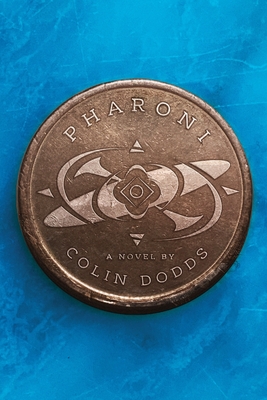
 When
the body of Harry Injurides - playwright, provocateur and bodybuilder - washes up on a beach, his
friends are shocked, but not altogether surprised. But when they meet to mourn Harry, he shows up
and says he's been resurrected.
When
the body of Harry Injurides - playwright, provocateur and bodybuilder - washes up on a beach, his
friends are shocked, but not altogether surprised. But when they meet to mourn Harry, he shows up
and says he's been resurrected.
Pharoni is the story of those friends. Tommy Pharoni tries to overcome his shock by writing about his friend's resurrection, and accidentally starts a religion. Roy Sudden starts a tech empire based on digital empathy and digital pain, drawing in billionaire investors, femme-fatale programmers, and tsunamis of capital. And, Roy's on-again, off-again girlfriend Maud works in secret to bring radical justice to the most neglected and abused corners of society.
As Tommy's religion grows, Roy and his backers try to take control of it. The battle, about more than doctrine, engulfs Tommy's marriage and threatens his life, leading to a conflict with strangely humane results that no one could predict.
Told in the first person, Pharoni has the feel of a memoir or a really long confession. Tommy Pharoni is a struggling screenplay writer who pays his bills and alimony by working a soulless marketing job. His closest friends were aspiring artists of different sorts in college. Now in their mid-thirties, they've set aside those aspirations to "adult" properly. All except for Harry, whose death opens the story. Harry struggled to fit into contemporary society, instead preferring to help the homeless while penning "words of wisdom" in his many notebooks. After his death and subsequent re-birth, those notebooks wound up in Tommy's possession. Ultimately, Tommy would collect them into a coherent manuscript and seek out a way to get them published.
As Tommy is a screenwriter, the format of the story periodically shifts into screenplay mode. This works particularly well for conversations as it affords opportunity to get to know the other characters through their dialogue rather than relying on Tommy's narrative. I wouldn't say Tommy is an unreliable narrator, but he does limit what we can learn about what's going on elsewhere with other characters. References to things that have been written elsewhere and NDAs force the reader to fill in the gaps.
After Harry's resurrection, the lives of Tommy and his friends change as described in the blurb, but there's so much more. The group of friends find themselves splattered by the seven deadly sins, fitting for a story where a religion is founded upon the philosophical musings of a character that has died and miraculously resurrected days later. At least Christianity didn't get partnered with a health and wellness brand. The corrupting influence of millions and billions of dollars seeps its way into their lives and rots them from within. What is friendship worth? Can you put a dollar amount on it?
If there's one overarching theme that I can take away from this tale, it's that power corrupts, and absolute power corrupts absolutely. Keeping this spoiler free, I'll say that Tommy started out as a character that I could connect with to someone I didn't want anything to do with. But I stuck with him because act two opens with:
This is where I get unrelatable, maybe even unlikable. As the writer of failed screenplays, I know what a mortal sin unlikability can be.That gave me hope for him in act three. But Tommy is far from the only person to be corrupted by power. It's everyone up to the very end of the story. And the only characters whose souls are left intact are those who never possess it.
Colin Dodds has crafted an excellent morality play with vivid characters. Pharoni offers modern day parallels to the founding of Christianity, right down to the Christmas star, but in an age of unbridled capitalism. If you're old enough, with all of the life experience that implies, it forces you to take a look at this fellowship of friends and how they sacrificed art and friendship for wealth and power and check to make sure that this isn't a mirror of your own life.
4 stars
\_/
DED


