Showing posts with label horror. Show all posts

Wednesday, November 6, 2024

Escalators to Hell: Shopping Mall Horrors

book cover for Escalators to HellThis anthology's theme is horror stories that have some connection to shopping malls, those dying bastions of consumerism. Not that consumerism is dead, mind you. It's that we're transitioning from roaming their vast corridors of myriad wares to surfing the digital versions on our phones and laptops. To wit, the editors thought that the demise of shopping malls would make for an excellent theme for a horror anthology. And I thought so too.

The stories cover a wide gamut of horror sub-genres, so it isn't all about gore. There's a "Content Warnings" section—something I've never seen in a horror anthology—which I thought was odd. I mean, it's horror. If your mental health is such that certain things will trigger a traumatic emotional reaction, maybe you shouldn't be reading horror. I know that there are certain aspects that I won't read because of my issues. So I guess a content warning is considerate of the authors, can one find it before purchasing it?

Author representation is quite diverse. While North American authors are present, there are stories from African and Asian authors. Also, there are many non-binary authors in this collection.

Ok, onto the stories. Of the 22 stories in this collection, I liked 15 of them. Of those that I didn't enjoy, a good deal of them were too focused on gender identity, with the mall serving as mere setting. A couple of the others were too esoteric or allegorical to connect with.

On with the good stuff! The opening story, "Hard to Be a Mall God," was excellent. It deals with a demonically possessed escalator. "The Intercessor" shows how retail associates deal with trollish customers. "Why I Won't Eat at the Food Court" is part of the Generation Dead series. It drags in some cosmic horror for teen mutant superheroes to deal with but doesn't forget to add a dash of humor. "A Plague Upon Both Our Houses" is Romeo and Juliet with Zombies in a mall. "A Quick Trip to Ryan's" delves into masochism on a whole another level. "Kim, Ray, Trey, and Morgan" delves into drugs as a mind expanding experience with a dash of cosmic horror.

Some stories confront serious matters. "You Must Drop Buy" tackles the subject of rampant materialism and false promises made by deceptive marketing. In "Poseurs," a teen girl deals with her father's suicide by re-enacting a drama with mannequins.

In case anyone feels I'm being unfair to non-binary character stories, there were good stories that had non-binary characters and authors. These stories didn't lose sight of the objective. For example, "The Basement of Crowley's Artefacts and Interests of the Occult" has some non-binary teens dealing with demonic invocation in the supply room of an odd store in the mall. "Cherry Cola Lips" features a woman reflecting on her first crush back in high school, a girl who wouldn't come out and later disappeared. Rumors are that she was murdered, but the truth is stranger.

My favorite story was the closer, "The Temple of All." Makoma is forced by ritual to take her dead husband's remains into the ancient ossuary. It's a post-apocalyptic story with a touch of Handmaid's Tale where the ultimate act of rebellion is to live.

Yes, I'm glad I read this anthology. While I wish some of the stories were better, the good stories made it worth the price and my time.
Full Disclosure: I backed this book on Kickstarter and received a digital copy as a reward.

\_/
DED

Tuesday, November 22, 2016

Speck by L. Marshall James

book cover for SpeckA dark speck slips from dormancy, where it has been trapped for millennia. It is utterly alien, singularly enthralling, and devastatingly lethal. What follows in its wake are chaos and death.

There will be no escape.


The opening strikes me as a mashup of the first third of King's Dreamcatcher (the good part) and an incident that took place near the end of Koontz's Watchers. James offers us a lovely picture of an idyllic natural setting and then unleashes his "speck" upon a hapless marmot. The speck has the ability to control minds in close proximity through suggestion at the most primal level. As the speck grows in size, it gains strength and sophistication. Things spiral out of control, leaving the reader to hope that someone can get the speck under control before its destruction reaches catastrophic proportions.

The story starts with a universal omniscient narrator but switches to third person subjective once humans get involved in the story. The narrative is relayed through several characters, primarily those that encounter the speck. Characters are only given a chapter to carry the narrative, but James has them make the most of it. I never got the impression that these were disposable characters. Although their appearance on stage is brief, James invests the time in each to develop them. If the book had been a novel instead of a novella, I don't see any reason why the characters wouldn't be able to carry the story further.

But the length of the story is also something of a negative. The story reaches a point where the reader says, "Oh crap! What now?" The fast pace of the story comes to an abrupt halt. The ending comes as a bit of unsatisfying diabolus ex machina, which is followed by an epilogue that struck me as an outline for how the story could've carried on from novella to novel. I feel like the author hit a wall and either couldn't think of a way to continue or didn't want to (hence the epilogue).

Although only a novella, Speck demonstrates an author with a talent for creating believable characters, setting a good narrative pace, and establishing a realistic setting. He understands King's idiom that "bad things happen to good people" and handles it well. As James continues to develop his craft, I have no doubt that his potential will be realized.

For more information about Speck, please visit Goodreads.

Monday, August 29, 2016

100 by 100: Stories in 100 Words by M.L. Kennedy

Book cover for 100 by 100100 by 100 is a collection of 100 stories that are each 100 words long. Mathematically, that makes each worth 1/10 of a picture. Some of these 0.1 pictures are scary, some are funny, some are funny and scary, while others are just odd.

Reading this book reminds me of beer (or wine) tastings. When you finish sampling one and wish to try another, it is recommended that you cleanse your palate with some water. You're resetting your taste buds so that your new taste experience won't be unduly influenced by the previous sample. This book is like that. When switching from one novel to another, this book would serve as a great literary palate cleanser. It's refreshes your brain and has the bonus side effect of entertaining it as well.

Most of the stories have a twist at the end. But as I think about it, how else can one neatly wrap up a story that's only one hundred words long? The author quickly sets up the premise and then (bam!) there's the ending. I found that 93% of the stories worked (I kept track), and most of them relied on that format. It didn't matter if the twist was spooky, ironic, or humorous. That's what worked. Those that didn't just trailed off.

The stories cover the gamut from quirky sci-fi, suspense & horror, bizarre fantasy, and conversational satire. Santa Claus, vampires, clowns, ghosts, interdimensional travel, and alien invasions all make appearances. With a few exceptions, the stories remain light-hearted.

If you've just finished some 500-page behemoth and you're not ready to start the next one, but you need to read something, then consider 100 by 100. It's light and refreshing, and you'll be done with it in no time.

To learn more about 100 by 100 or M.L. Kennedy, please visit his website.

Friday, July 29, 2016

Guns, Gods & Robots by Brady Koch

Book cover for Guns, Gods, and RobotsBrady Koch's Guns, Gods & Robots is a short story collection whose tales fall into one of those three categories. Three out of the seven stories had been released as standalones, but now they've been combined into one collection.

The collection opens with "Numbers 16:32", which was originally released as a standalone story, and I reviewed it here. The original blurb: Joseph's Sunday morning routine of church, beer and solitude is interrupted by a ragged screaming coming from the far side of his farm land. What he finds there will challenge his resolve in ways he hasn't faced since losing his wife or facing the horrors of the Korean War. I re-read the story and discovered that it had been slightly re-worked and edited. There was a definite improvement which increased my enjoyment of the tale. It makes for a solid opening to the collection.

"X-mas for a Half-Life": The story starts off with a typical "Dear Santa" letter, but the kicker is that it was written by a little girl living in an underground bunker after a nuclear war. So how do you make a child's Christmas wish come true when day-to-day survival is a struggle? A charming story in the face of grim circumstances.

"Popular Mechanics for Young Widows": A dying engineer builds a robot butler for his wife. Years later, she struggles to cope with his death and what the robot represents. I wasn't sure where this one was headed, but I suspected it would end tragically. Koch deftly resolves the situation.

"Fighting Weight": A son reflects upon the ritual of his mother cutting his hair. That doesn't sound like much of a story, but it actually provides a window into a destructive co-dependent relationship. I was so focused on the obvious developments that Koch presented that I didn't see the end coming.

"Sangrimal": A girl’s birthday wish comes true when she gets to spend an afternoon on a manhunt with her lawman father. I found this one to be the weakest in the group. The story is told from Katie's POV, so when events transpired, I didn't understand why. I don't recall there being any clues that the reader should've picked up on that Katie wouldn't because of her age.

"Timothy": In a world beset by a plague, human missionaries of all faiths have been replaced by robots. Something goes wrong with a robot named Timothy, and it is up to a pair of human engineers to figure it out before its malady spreads to the other robots. It's a story that explores faith in an interesting way. Tied with "X-mas for a Half-Life" for favorite story in this collection.

"3rd Flight": A marathon runner sets out for the third run of his life—tradition says it will be last. To say anything more would give too much away.

There's a Bradbury current running through the sci-fi stories. I don't know if the author is a fan, but I sense the vibe in his writing, enough to say there's an influence. The horror feels a bit more like King (short story King, not bloated novel King). He lacks Bradbury's poetic flourish, but Koch definitely has his own voice, which I imagine will grow stronger over time. But it's how everyday people deal with extraordinary circumstances, be they wonderful or horrific.

Unfortunately, I found a bunch of typos. I didn't let them distract me from my enjoyment of the stories, but they could've easily been caught by a proofreader. Other than that, the composition of the stories was sound.

Guns, Gods & Robots is a delightful collection of short stories by an author who's truly emerging in his own right. Any of these stories could've been sold to a zine for publication (after some tweaking for length). If you appreciate older sci-fi (and horror) that focuses on upheavals in the lives of everyday people (rather than grand galactic sagas or dystopian dramas), then check out Guns, Gods & Robots.

For more information, please visit the author's website.

Monday, April 11, 2016

God of Ruin by Michael John Grist

Original cover for God of RuinIn the battle to defeat King Ruin and protect the Bridge between souls, ex-Arctic marine Ritry Goligh tore his own soul into pieces. Now those pieces, embodied as six rugged marines spread across the tsunami-blasted world, are adrift without Ritry to guide them.

Their captain, Me, is addicted to dying in raids against the remnants of King Ruin's army. Ray longs for the love he lost. Far seeks the mythical heart of the Bridge, So is lost to her calculations, while twins Ti and La have split as far apart as possible. They trudge from bunker to bunker blinded by loss, mopping up holdouts from the war.

But the war isn't over. It's only just begun. From the ashes of King Ruin's defeat a godlike power rises, one that understands the Bridge better than Ritry ever did, and means to bring a flood so vast it will erase every soul from history. Me's only hope is to ascend to godhood himself, before everyone he loves is washed away forever.


If you haven't read the first two books in the series, then this review will contain spoilers for those books.

New cover for God of RuinIn the promos for the new season of Fear the Walking Dead, someone off-camera is heard to say, "To defeat the monster, you become the monster." In effect, that sums up what happens here. King Ruin's successor, the Pawn King, has built upon King Ruin's knowledge and gleaned how to transcend the Aetheric Bridge from Ritry's technique. With the knowledge gained from both, he becomes even stronger than King Ruin and Ritry's chord. Knowing what he's capable of, the chord wrestle with the moral dilemma: Does one adopt the tactics of the evil Pawn King in order to defeat him? Does the end justify the means? Many within the chord's army don't think so, and the debate threatens to tear them apart.

If you've read the first two books in the series, you'll be familiar with Grist's style of alternating chapters between the real world and the metaphorical landscape of the mind. But whereas the first two books featured Ritry in the real world and his chord handling inner space, this book throws that convention out the window. As the blurb above explains, Ritry's chord went from metaphorical to physical at the end of King Ruin. With the Ritry gestalt no more, the real world narrative is handled by "Me", the leader of the chord. But he handles the narrative in the inner space journey as well, so if you don't pay attention to the chapter titles, there's a chance for you to get confused as to what's going on.

Both versions of Me embark upon solitary quests to battle their respective foes in the physical and metaphysical worlds until they blend together to become one surrealistic landscape. The science fiction and dystopic elements of Mr. Ruins are gone, replaced by fantastic elements where the laws of time and space are irrelevant. Both protagonist and antagonist strive to achieve godhood to reshape the world as they think it should be.

But this isn't merely a battle of good versus evil. Grist is too smart an author to reduce the story to these simplistic elements, though he leads us to believe this at first. Eventually, we learn how the Pawn King came into existence, a child in one of King Ruin's brutal courts. We see what horrors he endured just to survive and what his goals ultimately are. Grist's resolution of the conflict between Pawn King and Me is unexpected, but it makes sense.

God of Ruin brings the Ruins trilogy to a satisfying conclusion. The war waged in the desolate post-apocalyptic wasteland is but a prelude to the battle to control existence itself. It reinforces the message from King Ruin: Our pain defines us. But God of Ruin also asks us what we would sacrifice to erase that pain. Would we sacrifice those we love? Would we turn that pain on others? Would we sacrifice our very souls? But if pain defines us, should it be erased at all? Grist explores these questions in the surreal landscape of the mind and the ruins of a tsunami and war ravaged world.

For more information about God of Ruin and the Ruins trilogy, please visit the author's website. You can also read my reviews for Mr. Ruins and King Ruin.

Monday, January 25, 2016

King Ruin by Michael John Grist

Standing in the ashes of his final battle with Mr. Ruins, at the edge of the floating slums, ex-Arctic marine Ritry Goligh thinks his long nightmare is finally over. His family are safe, his soul is his own, and at last he can go home.

Then comes an explosion that makes no sound, but blows all his thoughts to shreds. In an instant Ritry is prey again, hunted by a power so vast he can’t even comprehend it. This is King Ruin, and before him all Rit can do is run, so far and so fast he starts to forget who and what he is.

Soon half his mind is gone, the King is closing in, and the souls of billions are at stake. Because King Ruin wants the Bridge, a direct path into the minds of every living thing, and only the lost and broken Ritry Goligh stands in his way.


King Ruin picks up right where Mr. Ruins left off. Ritry doesn't get to savor his victory or even go home to see his family. He's right back in thick of it with a foe that is far stronger than Mr. Ruins.
Previous cover
Previous cover for King Ruin
Before I get into the review, I'd like to comment on the covers. Mr. Grist decided last year to redo his covers as sales for the Ruins War series had dropped off. It got him to thinking that maybe the covers weren't conveying enough of the mystery of the books. I disagree, but that's just one man's opinion. Anyway, this isn't the first time he's revamped his covers.

The series of covers I saw all featured scenes from their respective books—the skyscraper picture above is rather chilling in retrospect. The new covers are more focused on characters. Mr. Ruins himself is featured on the new version of his titular cover (new cover added to bottom of review). However, I don't recognize the person on this new King Ruins cover. The two red suns are pertinent though. I could make a guess on the character, but the appearance doesn't match up with the description in the book.*

On with the review
Current cover
Current cover for King Ruin
As I mentioned above, the book picks up right where the previous one left off. Ritry fights for his life only to find himself captured by Don Zachary, an organized crime boss of the skulks from the first book. Ten percent of the book has gone by before Grist lets Ritry and the reader take a breath. But it isn't long before Ritry is on the run again.

The marines return and are just as important to saving Ritry's life as they were in the first book. I won't spoil their connection to him if you haven't read the first book. But for those who have, their mission here is just as surreal and mysterious as before. Me and Far are missing, which is puzzling to the rest of the chord. But by doing so, Grist permits the reader to get to know the other members of the chord—Me and Far were the focus of the first book. Grist keeps their absence a secret until the story nears its climax, when all is revealed.

Mr. Ruins, Ritry's foe in the first book, was a bit of a mystery. While he offered an explanation for his obsession with Ritry, I felt like there was something more. He seemed to be hiding something, but with the conclusion of that book, I didn't hold out much hope of finding out. Fortunately for the sake of the story, Mr. Ruins makes a return, and we get to the truth behind Mr. Ruins' sadistic treatment of Ritry and others.

Whereas Mr. Ruins was a sadist, King Ruin is a ghoul. If we take it that power corrupts, then as power grows so too does the level of corruption. King Ruin does things to people that would make Josef Mengele proud, if not envious. Grist forces the reader to bear witness to some of these horrors and to the suffering that King Ruin's crippled victims struggle to recover from. It serves a purpose; this isn't torture porn. King Ruin is a being that feeds upon pain. He would starve to death without it. If you're one who is easily upset by disturbing imagery, then heed the "horror" tag I applied to this review.

Just as Grist revealed the origins of Mr. Ruins, so too does he reveal the ghastly origin of King Ruin. It makes sense. It might seem like this is just Ritry's battle against a bigger and badder foe, but King Ruin's reach knows no bounds. He strips everything from Ritry. Everything. Ritry must sacrifice his connections to everyone he loves, lest King Ruin find them and make them suffer too.

Unfortunately, my experience was marred by typos and punctuation problems. If he had hired a proofreader, I believe that the manuscript would've been much cleaner. Maybe the story has been edited since I received my copy. Anyway, if typos aren't the sort of thing that catches your eye, then don't sweat it. Just enjoy the story.

King Ruin is a journey through desolate post-apocalyptic wastelands, both physical and mental, full of madness and pain. At times surreal, it is also visceral. The overarching message I get from this story is that our pain defines us. The memories of that pain form strong bonds that entwine our souls. It twists us. If it doesn't break us, it shapes us into something different, possibly evil. In turn, we inflict that pain upon others, whether we wish to or not. Only love and forgiveness can break the cycle. And if we can find redemption for the pain we've caused, we can rest in peace.

For more information about King Ruin or Grist's other works, please visit his website.

* I spoke with Mr. Grist about her. She is whom I thought she was, just a different interpretation than the one I had.

Wednesday, June 24, 2015

No Dogs in Philly by Andy Futuro

Book cover for No Dogs in PhillyPhiladelphia. Elzi on every corner, cops just itching to crack a skull, and the Gaespora lordin' it up in their high towers while the rest of the filth dribbled down the sewer. Saru had a way out. All she had to do was find the girl, one skinny stray with blue, blue eyes—bluer than anyone had ever seen—and ten million fat bucks were hers. Except someone was killing blue-eyed girls, and they were A-list, major-league, cold-sweat effective. And something about the end of all existence if she failed.

Don't let the doe-eyed woman on the cover fool you. That's Saru. She'll use that cattle prod on you if you mess with her. While not evident from the cover, she's enhanced with all the doodads that cyberpunk fans would expect of a near future sci-fi heroine. She's connected to the Net 24/7; has a pistol named "Betty" up her sleeve ready to go when adrenaline, pulse rate, and subconscious thought reach a critical threshold; and everything's subdermal. But just as her soft exterior belies the bad ass that she is, her gender hides the fact that she's more macho than most men, certainly the other male characters in the story. She could be Mike Hammer's granddaughter, though with less rage and more cynicism.

I get that she has to be tough. Her world is full of creeps and creepy things. But the hard-boiled persona has its limitations. While Hammer was out for justice, Saru only seems to be out for herself. People can sympathize with vigilantes, not so much the obnoxious brats just looking for a payday. It takes a lot of death before any kind of humanity breaks through the concrete barrier surrounding her heart. Even when it does, I wasn't convinced that she was going to carry through on her promise to set things right.

Futuro's Philadelphia is a complex place with enhanced humans, aliens, and monsters. The aliens and monsters would be right at home in Lovecraft's universe. But whereas Lovecraft's unthinkable creations lurked in the shadows and faraway places, Futuro's creations are out in the open. Considering the obvious menace that some of them pose, I'm surprised that there wasn't more panic among the populace. The elzi seem to be former people that were exposed to dark forces which devolved them into sub-human animals with tech sticking out of their bodies and great appetite (hence the book's title). Sure, there are even worse things lurking underground, but the elzi are out on Broad Street in broad daylight. The city seems to function; why not round them up or put them down?

Futuro is at his best when he taps into that Lovecraft vibe. He reaches out to the infinite and shows how it overwhelms a human mind. There's the plea from a desperate soul that we have to hope that the old, hungry god ignores our world. But it's the elements of indescribable horrors lurking in the dark that do unspeakable things that really fires things up. My favorite part was when Ria took shelter from the rain in a subway tunnel. It was already a tense scene as she sat with a few homeless people around a trash fire while dozens of satiated elzi slept nearby. Will they stay asleep? What if one of them needs a midnight snack? And then there's a rumble that wakes up the elzi, and they scatter. The people start to panic. What could drive an elzi to run away? Then Futuro reveals what that thing is.

Unfortunately, my experience was marred by comma problems (missing or too many) and run on sentences. Sometimes it seemed as if Futuro tried to cram as many adjectives and phrases as possible. These two sentences lack any form of punctuation:
We live as we can can as thoughts within your kind and through thought we drive action and with action we bring your world closer to our own.

She could pound a liter of vodka and walk a line and thread a needle and she remembered exactly what had happened.
Here's an example of a sentence that goes on far too long given its limited punctuation:
She'd tried wearing sunglasses to complete her disguise, but with the clouds and the dark she couldn't see shit, kept stepping in it and glass and syringes and tripping and potholes and the last time she'd had a condom dragging from her heel for about four blocks until the cashier at the liquor store pointed it out by yelling in his angry foreigner language.
While there are more examples, it's not like the whole book is like this. Most of the time, Futuro gets it right. If he had hired a proofreader, I believe that the manuscript would've been much cleaner. If commas and long sentences like these don't bother you, then don't sweat it. Just enjoy the story.

While it might seem from my complaints about grammar and the unsympathetic protagonist that I didn't like the story, that isn't the case. I really enjoyed it. Futuro nicely blends cyberpunk and Lovecraftian horror together in a bleak, near future Philadelphia. While his protagonist is about as warm and cuddly as 80 grit sandpaper, she adds a hard-boiled detective element into the mix that works well given the story's setting and plot.

For more information, please visit the author's website.

Tuesday, March 31, 2015

This Darkness Light by Michaelbrent Collings

This Darkness LightA man with no past, but who holds the future of the world in his hands. A woman who has sworn to protect him, for reasons she does not understand. A killer who must destroy them, or lose all he holds dear. They are running—from each other, from the plague that is killing all around them, from the dark forces beyond their understanding. Running from shadow to shadow. From dark to dark. Hoping to find light. Hoping that this darkness is not all there is. Hoping…because hope is all they have in This Darkness Light.

The book starts out like a Stephen King thriller, like the kind he wrote during the seventies and eighties when he was still hungry. Back before King started writing cinder block-sized epic tomes filled with meandering storylines that wandered off on tangents. It grabs your attention, hints at something terrible just outside your vision, and convinces you to keep reading because you have to know how this is all going to play out. And there's certainly a nod towards King with an all-obscuring fog and strange creatures that lurk within, a la The Mist. Unlike King, Collings is still hungry, and it shows. With only a couple of exceptions, Collings stays focused on the plot and the characters in said plot. There's plenty of action with several fight scenes and car chases. Horror is used to reveal the monsters living within people in a very literal sense.

Collings provides us with three likable protagonists: John (the man with no past), Serafina (the woman sworn to protect him), and Isaiah (the killer). Collings goes in depth with each of them, revealing their pasts and their struggles to hold it together as their worlds come crashing down. Isaiah was the most interesting of the three as he goes from avenging angel to a man caught in an emotional vise, blackmailed to do the dirty work of the antagonists. And he's a priest! I found his life journey from troubled youth to priest to assassin quite intriguing.

The two main antagonists are Dominic and Melville. While the former is in charge, it's the latter that had more depth (as despicable as he is). Dominic seemed too much a cardboard cutout villain. And then there's President Richard Peters, whose emails with Dominic, staff, and foreign leaders opens every chapter. He offers the reader a clue as to how the rest of the world is dealing with the crisis as well as a window into his deteriorating mental state.

After the thriller opening that plays on conspiracy theorists' worst fears of an all-knowing police state, the story morphs into apocalyptic fantasy. Los Angeles is collateral damage as John and Serafina are relentlessly pursued by Dominic's henchmen, Isaiah, and Melville. The disease morphs people into abominations and the fog closes in, yet there always seems to be a car to be found with a full tank of gas and maybe some sandwiches. This is all intentional; the characters are being led to a meeting place in the middle of the country where all will be revealed.

Unfortunately, the manuscript could've used another run through by a proofreader. There were enough mistakes in there that, while it didn't sink the story, proved to be a distraction: "laying down" was used instead of "lying down", an assault shotgun becomes an assault rifle then switches back, a gun becomes a knife, bad dates in email headers, misused punctuation, capitalization (the Bible) and word choice errors.

This Darkness Light is an an action-packed chase across an apocalyptic landscape. While the characters serve familiar roles, Collings embodies (most of) them with enough depth that you can picture who will play them in the movie. Another set of eyes would've been helpful before publication to tidy things up, but it shouldn't stop you from enjoying the ride.

To find out more about This Darkness Light and other works by Michaelbrent Collings, please visit his website.

Monday, December 29, 2014

Shared Nightmares, an anthology from Cold Fusion Media

Cover for Shared NightmaresShared Nightmares is a collection of short stories whose central theme revolves around dreams, but more accurately, nightmares. That's about the only thing these stories have in common as the authors tell us tales that span all matter of genres. While horror is the overriding element, some authors make use of other elements: science fiction, historical fiction, and urban fantasy. Some stories rely on visceral action, while others suspense. Fortunately, none of these stories wander down Elm Street, and for that, I'm grateful.

Please indulge me as I offer brief comments about each story.

The anthology opens with “Father’s Day” by Larry Correia. Aliens have invaded Earth and are attacking us through our dreams. And we're losing. Correia does a stand up job with his protagonist, as he fights a bureaucracy in order to protect his daughter.

In “Dreamcatcher”, Sarah Hoyt warns us that things in the dream-world wants to become real. There are guardians who keep the nightmares at bay, and it helps to keep an ax—a very sharp ax—close at hand.

The message I got from D.J. Butler's “Incubation” is that regret is a nightmare that you can't wake up from. It takes some time before we learn what the unreliable narrator has done, but Butler drops us enough clues along the way to piece together this crime scene.

The devil has Adam's number in Tom Lloyd's “The Devil On My Shoulder”. Every time Adam wakes up, whether from actual sleep or blackouts, he discovers that he's been up to no good. Pity him, but pray you never meet him. Lloyd does a great job bringing the reader along on Adam's senseless ride through misery and then rewards Adam (and the reader) by revealing his purpose.

The first of the historical fiction pieces is “Onnen” by Paul Genesse. Having visited the Kyoto imperial palace, he was inspired by its strange, bleak history to write this story. It's an excellent tale of a woman's scorn and her unquenchable thirst for revenge.

In “To Dream Awake, to Sleep the Real” by Michaelbrent Collings, Booker Nyx talks about the dream-like bliss of the early days of marriage: "Existing with one foot in dream, and the other in a place where the world was seen as it truly was: a place of magic, and wonder, and light, and infinite possibility." But then children come along, and the responsibility of parenthood kills the dream. Booker yearns to return to that dream. Collins does a solid job with his sad yet familiar portrayal of Booker's life.

“What Hellhounds Dream” is an action-packed urban fantasy story from Steven Diamond, who's also one of the editors. It was a fun story that seemed like it could be expanded to novel length.

“The Damnation of St. Teresa of Ávila” by Marie Brennan is the other historical fiction piece. The titular character died right at the time when Spain transitioned from the Julian calendar to the Gregorian calendar, whereupon ten days were lost. In Brennan's story, St. Teresa's death lasted for those ten days. Drawing from St. Teresa's life and writings, Brennan skillfully paints an all too real picture of the woman as she hovered between life and death.

“Man in the Middle” by Max Gladstone was another fun piece. It appears to be something out of his Craft Sequence series. If you're like me and haven't read anything about it, there's a bit of dead gods and scientific sounding magic (which reminded me of Stross's Laundry) that keeps the world—at least an alternate version of ours—running. This story concerns a trip into a nightmare where Tara discovers a remnant from the God Wars. After reading this story, I feel compelled to dive into this series.

A video game that you play in your sleep is the subject of “U.I.” by Howard Tayler. The game is still in beta as the protagonist is testing it for the developer. Rather than just lamely showing the game action, Tayler presents their conversations, which shows the protagonist's progress in getting caught up in the game.

“The Quality of Light is Not Strain’d” by Peter Orullian was a difficult read due to the subject matter. That's not to say it wasn't a good story. It was well-written, and the difficult parts were tastefully composed. I find that the most disturbing horror stories are not the ones with visceral gore, but rather the mundane acts that are carried out by good people in desperate situations. This is one of those stories.

The anthology concludes with “Health and Wellness” by Dan Wells. It follows a pair of Indian immigrants who are here on work visas and take these special vitamins generously provided by the U.S. government. It's a delightful tale of paranoia and the paranormal.

Editors Steven Diamond and Nathan Shumate have done a fantastic job corralling these disparate tales into a cohesive collection. If you prefer your horror to be on the literary end of the spectrum, without the usual tired clichés, then check out Shared Nightmares. For more info and reading samples, visit the publisher's website.

Sunday, August 17, 2014

A Letter from Hell by William Presley

A Letter from HellIn a desperate attempt to save his soul before he dies, southern aristocrat William Virgil Hollingsmore writes the world a cautionary letter on the last of his twelve days in a personalized Hell. In it, through the haze of his own mental deterioration, he chronicles the horrors and agony that befell him at the hands of Satan, as well as the sad events leading up to this unfortunate climax.

When Hollingsmore was a younger man, he was an alcoholic and did as he pleased when drunk. He's older now and full of regret. Upon returning home, he finds that Satan is chomping at the bit to claim him and drag him on down to Hell for his eternal punishment. This is a man desperately trying to find a way to avoid his fate. There is no excusing his past behavior, so it is difficult to sympathize with him. But does he deserve to burn in Hell? His "letter from Hell" is his attempt to find redemption by warning others.

Hollingsmore serves as protagonist and narrator. As such, we only get to see the other characters when he interacts with them. There is a chapter where Hollingsmore is put through out of body flashbacks in order to learn what suffering he has inflicted upon the people in his life. Satan is obviously the antagonist, but his character only sees development when he shows up to torment Hollingsmore. I wouldn't say that he's two-dimensional, but he doesn't stray from what we expect of him.

A Letter from Hell reminds me of old fashioned horror—more concerned with chills and suspense than gross outs and visceral gore. The writing style Presley uses reads like something out of the Romantic movement of the 19th century, which produced such notable greats as Poe and Coleridge. Presley forgoes the purple prose but retains the suffocating imagery and puts it to use at all the appropriate times. While in the midst of Hollingsmore's recounting of his ordeals, I was often reminded of Vincent Price horror movies from the 60's.

A Letter from Hell is William Presley's first novel. There are times when I felt it could've used another round of proofreading to remove extraneous commas and freshen up the dusty writing style he chose. However, it should be noted that when it was published earlier this year Presley was only a junior in high school. I could not have written something this good back when I was his age. I have no doubt that if Presley sticks to it and continues to work at his craft, we will see great things from him in the years ahead.

I don't have an author's website to point you to, so I'll just state that A Letter from Hell is available from Amazon, Smashwords, Barnes & Noble, and even Google.

Wednesday, July 16, 2014

First Stone by Gary Ballard

First StoneForensic psychologist Dr. Jack Carter wakes from a semi-catatonic state in a mental hospital with no memory of the previous year. His wife, Sarah, has disappeared, and as the last human being to see her alive, Jack is the prime suspect in her disappearance. Without a body and with no physical evidence to prove foul play, the lead investigator and Jack's friend, Bill West, must continue to search for the truth even if it means fingering Jack for the crime. When a serial killer in West Virginia's coal country claims to have killed Sarah Carter, Bill and Jack rush to the crime scene. What they find is a deeply disturbed man with no memory of his crimes or of taking credit for Sarah's death. As Jack tries to decipher the mysterious series of runic symbols the killer carved into his slaughter house, he unlocks a deeper cosmic mystery that goes beyond anything he could imagine.

First Stone is the first novella in Gary Ballard's Stepping Stone Cycle, a "modern interpretation of H.P. Lovecraft's Cthulhu Mythos." Naturally, I'm curious about all things Lovecraft, including new tales by authors playing in the Master's non-Euclidean sandbox. Of course, should anyone defile that sandbox, I would feel compelled to warn everyone to stay away. Fortunately, that isn't the case here.

The novella opens with Carter waking from his semi-catatonic state. As a nice touch, Ballard has Carter re-discovering his senses and the world around him. He questions the words we attach to objects, the length of time, and his own body. There are elements of knowledge still functioning within his brain, but we don't know if these are all a priori nuggets or the undisturbed bedrock of memory. Either way, slipping back into one's body isn't as simple as getting back on a bike after years away.

A good chunk of Lovecraft's work involved the protagonist setting off on an investigation to uncover the truth to a bizarre circumstance. In this regard, Ballard follows a similar path. His protagonist is a forensic psychologist, a solid choice for going out to crime scenes and dealing with those whose minds may have been damaged by things that dwell in the dark.

Ballard invests a good deal of time developing his characters, and it pays off. You really get to know Carter and root for him to find the answers to Sarah's disappearance. His friendship with Bill plays easy. And Ballard develops the small town West Virginia characters, too. It would've been easy to let them be two-dimensional stereotypes, but Ballard invests in their backgrounds to make their personal stories real.

While Ballard is playing in Lovecraft's sandbox, he doesn't play with his toys in quite the same way. Ballard sticks with his own writing style. Yes, he teases you with a survivor's testimony, has you listen to some preaching about the unfathomable darkness, and flaunts mysterious objects. The obligatory fhtagn and R'lyeh utterances are thrown in, too, but the story flows like a crime drama rather than cosmic horror. It's an interesting twist on presenting Cthulhu Mythos fiction and might serve as a bridge for psychological thriller fans to get a glimpse of the Old Ones.

Like quest fantasies and space opera epics, this isn't a tale that will be wrapped up right away. Patience is the key here. Ballard explains that he's writing the novellas like episodes in a TV series. Short-term mysteries are solved in each novella and clues to the overarching plot (What happened to Sarah Carter?) will be provided as the mystery deepens, but to get it all you'll have to read all of season one (Episode Two was recently released).

All in all, it's an entertaining and quick read. I'm left wondering just how far Ballard intends to go with this series and if he'll deliver the goods at the end of the season. I got the feeling that he was holding back, not wanting to give too much away so soon. But like many a good writer, he dangles the line out far enough to hook you in.

Wednesday, March 13, 2013

In a Season of Dead Weather by Mark Fuller Dillon

Grab a comfy chair by the fire, a hot drink, and a book of good horror stories.  Those rattling shutters outside?  Just the blowing snow.  Those shadows dancing in the corner?  Fire light, nothing more.  And the whispers behind your chair are your imagination.

Maybe.

That’s the feeling Mark Fuller Dillon conveys throughout his short story collection In a Season of Dead Weather. In most of the stories, it was never quite clear whether the “horror” was in the narrator’s mind or if it was real. The reader was left to interpret at the end.

And that worked for me. Each Lovecraftian tale was expertly crafted, with poetic and visceral language describing characters enduring the loneliness and isolation of a long winter in the country or the city. Dillon is a Quebec native, so he’s no stranger to maddeningly endless winters (I’m a west Michigan native, so I can sympathize).

Most of the stories were quite literary and a little confusing to me, a genre reader. But their narrative styles, descriptions, and situations were so unique that I found myself eager to read on just to hear the language rather than find out what happens to the characters.

In the first story, “Lamia Dance,” a medical student takes a break from his studies – and braves the snow – to attend a film festival where see a film that brings back haunting memories from his childhood. The film’s images of violence and anatomy seemed quite erotic to the narrator. “Lamia Dance” was either a story about being pushed into a profession that the narrator did not choose for himself...or about a budding serial killer.

In “Never Noticed, Never There,” Tom Lighden sees ghastly apparitions in terrible pain on the streets of Ottawa. He is the only one who sees them, as every one else simply walks past them without a second glance. Dillon implies that society has become good at ignoring the pain of others, as we are too busy with our own lives to notice.

If you’ve ever been stuck alone in the woods during winter, you’ll understand the characters’ bleak situations in “Shadows in the Sunrise,” “The Vast Importance of the Night,” and “Who Would Remain?” Blizzards keep the narrators from civilization, they lose time, and see clawing shadows. Is it madness, ghosts, alien abductions? The reader is left to wonder if it’s all real or if winter has claimed the characters' sanity. While the three stories had similar themes, their unique characters and situations sufficiently differentiated them.

“The Weight of Its Awareness” had a middle-aged man revisiting a seemingly deserted, walled-off home that he originally tried to explore when he was eighteen. Grotesque sculptures now decorate the gardens, and a dark presence spies him from the home’s blackened windows and infects his mind. The story seemed like an extreme version of “curiosity killed the cat.” It was the weakest of the seven stories for me; although “weak” is a relative term since even this story kept me enthralled.

The strongest story for me was “When the Echo Hates the Voice.” Paul Bertrand is a brilliant, handsome young man who’s always the life of any social gathering and constantly seeks any excuse to be around people. The reason is that he cannot stand to be alone, for that is when the voices and faces visit him. Told by a narrator observing Paul, the story suggests a struggle between two personalities: one that seeks companionship and social reward, and one that seeks to keep us isolated from each other.

As I said at the beginning, I’m a genre reader and rarely read stories just for their styles and language. Dillon’s In a Season of Dead Weather is one of those rare works that can make even a genre reader like me want to take a second look at the literary. Highly recommended.

Available on Smashwords.com.

Monday, October 22, 2012

Demonworld by Kyle B. Stiff

Demonworld by Kyle B. Stiff is a highly imagined Lovecraftian tale that combines science fiction, fantasy, and horror in a way I've never seen. It's dark and dystopian, but with elements of humanity that hint at a hopeful future in the books to come.

The world is dominated by monsters called “flesh demons." Most human tribes appease the flesh demon “gods” by offering them human sacrifices. But a small hope for humanity exists in a technologically advanced city called Haven. It has survived and thrived by staying isolated on a small, bleak island in the middle of a vast ocean, hidden for hundreds of years from the flesh demons and aggressive human city-states.

Wodan, a gifted teenage boy from Haven, finds himself mysteriously exiled from his home for no reason he can comprehend. Wodan has to battle flesh demons, their twisted minions, and humans just as warped and evil as the demons, to return home to Haven and discover who kidnapped him and dropped him into the middle of the wasteland.

Demonworld was a book of extremes for me.

Many times I was floored by beautiful prose or a brilliant plot twist. The story and setting were intriguing and kept me turning the pages. I was also impressed with the editing, since I didn't find one typo or grammar mistake.

But the next moment, I was jarred out of the fantasy world by 21st century American slang uttered by supposedly primitive tribesmen (I saw “ding-bat,” “nit-wit,” and “weirdo;” one primitive referred to his biceps as “cannons”). The events in the book were far removed from our own time, so I would liked to have seen dialogue with slang and speech patterns that evolved from this strange world, not our present day.

Another issue I had was character “monologue-ing.” A villain went on for pages on how slavery was the natural state of humanity. Later, a good guy went on for pages on why humans had the potential to be more powerful than they imagined. These speeches were interesting in a philosophical sense, but they brought the action to a hard stop. I tended to skip most of them. I think their content would've been more dramatic if presented as an argument between two characters.

It was Demonworld's setting and mysteries that saved the book for me and set up a solid foundation for the projected nine additional books. As long as the author works through these craft issues in future installments, I think the Demonworld saga will be a highly entertaining series.

Demonworld is available on Amazon.

Thursday, August 16, 2012

We Live Inside You by Jeremy Robert Johnson

We Live Inside YouI first heard about Jeremy Robert Johnson (JRJ) from Girl on Demand's POD-dy Mouth blog back in 2006. Her enthusiastic review of his short story collection, Angel Dust Apocalypse, led me to my first indie book purchase. I was not disappointed.

After writing two short novels, Siren Promised (co-written with Alan Clark and nominated for a Bram Stoker award) and The Extinction Journals, he focused on his publishing company, Swallowdown Press. Unlike most indie authors who form a publishing company under false pretense of being anything other than a vehicle for the author's own work, JRJ actually publishes the work of other indie authors that he enjoys (Forrest Armstrong, J. David Osborne, and Cody Goodfellow to name a few). We Live Inside You is JRJ's second short story collection, featuring his work published between 2006 and 2011. When I found out that JRJ finally got around to publishing another collection of his short stories, I had to pick up a copy.

From the cover it would be easy to dismiss We Live Inside You as a collection of parasitic body horror. But that would be a big mistake. Yes, there are three stories in which parasites appear but only in one of them, "When Susurrus Stirs", is it the focus of the story. In the other two, "Cathedral Mother" and "Laws of Virulence", the parasite's presence is secondary, a means to an end. The former is the story of how a young woman went from free love hippie to hardened anti-human ecoterrorist. The latter is the confession of how a guy who couldn't quit partying screwed up his last chance to salvage his marriage.

We Live Inside You is really about the emotions, needs, and ideologies that drive us and rule our lives. And in these stories they typically lead to terrible outcomes. The loneliness of a socially awkward orphan turns him into a thrill seeking cat burglar ("Persistence Hunting"). A father's mounting healthcare bills drive a daughter to stealing from drug dealers ("The Gravity of Benham Falls"). Ashamed of his father's weakness for alcohol, a young man joins a survivalist cult that believes the weak need to be culled from the human race ("Trigger Variation"). How people deal with the loss of a loved one is explored in "The Encore" and "States of Glass". A car accident doesn't faze a social Darwinist in "Consumerism". In fact, it solidifies his ideology. Tired of human suffering, a group of Buddhist monks decide to impose Nirvana (the state of mind, not the band) on the human race ("The Oarsman").

I'm trying not to spoil these stories for you. I couldn't even write anything about the emotional pain that lies in "Cortical Reorganization" without giving the story away. I'm trying to show that JRJ didn't write a bunch gross out stories; but the emotional monsters he throws at you are, in their own way, just as horrific as the physical ones burrowing underneath your skin.

We Live Inside You is available through Amazon.

Monday, December 5, 2011

Creepers by Bryan Dunn

I have a confession to make. You know those cheesy monster movies on the SyFy channel, the ones on Saturday nights when only the geeky or married are home? The ones with eye-catching names like Mega Python vs. Gateroid?
I love them all. Some people like Dancing With The Stars, I'll take Man With The Screaming Brain any day.

So when I saw Creepers by Bryan Dunn in our review queue, I snatched it up. It promised a story about a “zany group of characters struggling to save their home after a genetically altered creeper vine invades their small desert town with an insatiable thirst...and a taste for human blood.”

That alone should get you to download a sample, but here's a bit more.

An eccentric biologist living in the Mojave Desert creates the creeper vine as a way to “green up” the desolate landscape. But things go awry, as they always do in these stories. The vine escapes its confines and runs amok near the small desert town of Furnace Valley. It's up to Sam Rainsford, a local date rancher, and Laura Beecham, a beautiful botanist, to rally the town's sixteen residents – and a group of teenage campers – to escape the blood-thirsty vine and destroy it before it takes over the desert and the state.

Creepers follows the same pattern as my beloved SyFy movies – cut-out characters, dubious science, mortal peril for all involved.

But that's what I love about those movies and this book.

Creepers does not pretend to answer, or even ask, profound questions about the human existence. It's all about monstrous vines tearing apart buildings, animals, and people. It's a story you'd tell your friends around the campfire on a clear night in the desert. I can almost see the author winking at me as he relates one humorous/horrible scene after another. It's obvious he had fun writing this book, and the reader (at least the fans of B horror movies) will have fun reading it.

On the technical side, the book was well-edited without any grammar errors or typos that I could find. It's a fast-paced story (once things get going – see below) and a quick read at around 54,000 words.

There were a couple of spots where I thought the book could have been better.

One, in a few scenes Dunn revealed the horror behind the closet door, so to speak, in an omniscient view point before the characters saw it. That took away a lot of suspense that would've been there if the horror were experienced first through the characters' eyes.

Two, Creepers started a bit slow, with the main characters simply thinking about how they ended up where they were. The backstories would have been more dramatic if shown through character interaction and dialogue rather than naval gazing. However, the pace did pick up once the characters were fully introduced around 10% into the book.

All in all, Creepers is to books what Flu Bird Horror and Mansquito are to cinema – glorious fun.

Creepers is available on Amazon and Smashwords.

Thursday, October 13, 2011

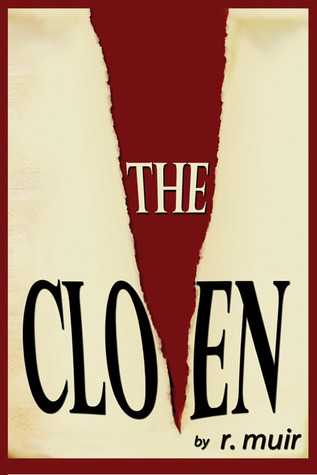
The Cloven by R. Muir

The ClovenAs it is October, I decided to find something dark in the slush pile. The Cloven fits the bill.

It is 1987. Malcolm Poole, an unpublished writer (self-publishing in this time means going down to Kinko's), answers a personal ad (as there is no World Wide Web, there are no online dating sites) from someone seeking a writer and asks that he describe his "heart's ideal." The 666 P.O. Box is a dead giveaway to the reader but not Poole. I'm not giving anything away by telling you that the Devil itself (for Muir's Satan is a hermaphrodite) has set this trap. But unlike most, if not all, sold-your-soul-to-the-Devil stories, Satan is in the foreground of the story instead of being relegated to a walk on role. You see, Satan has its reasons for picking Poole.

Poole is in the midst of writing what he feels will be the novel that finally lands him a publishing contract. A good deal of The Cloven is this manuscript: a story about a UC Berkeley professor named Mortimer who teaches an ethics class. The use of torture factors pretty heavily in his lectures. Willis Rutherford, a grad student auditing his class, is distraught as his girlfriend, Tamara, is missing. Willis has a vague empathic ability which proves to be both blessing and curse. While he suspects Mortimer knows something about Tamara's disappearance, he isn't certain that he isn't the one who's to blame.

Beaten down with repeated failure to get any sort of attention from the publishing industry, Poole's confidence is a mask which Muir tears away to reveal a troubled and yet possibly disturbed man. The reader doesn't know whether to pity or revile him. To further complicate things, Muir calls into question how much of Poole is in Professor Mortimer. Poole reflects on his unhappy childhood and gender confusion while Mortimer does the same. While the two characters' circumstances are different, there are enough similarities that Muir keeps you guessing until the very end.

Muir's Satan is no misunderstood dark prince. It is an angry Beast with nothing but anger for God and contempt for the human race. Muir provides visceral details whenever it is in the room with Poole. Its rant against God is well thought out and demonstrates a clear unblinking arrogance of ego.

At times, Muir resorts to unconventional writing styles: poetry, paragraph long sentences and screenplay-like setting of scenes. While these might be dismissed as errors by an inexperienced writer, it isn't the case here. Muir deliberately experiments with writing conventions as someone who still sees literature as an art form and not mere entertainment. At times, I found the paragraph long sentences tiring, but Muir's heart is in the right place and should be given credit for being brave enough to wander outside the norm.

The Cloven defies the "sell your soul" mold and provides an unconventional and unflinching look at the darkness within humanity. Strong characterization drives this unsettling psychological analysis of its protagonist. Muir doesn't shy away from the graphic, whether it be sex, torture or death though it isn't done for shock value. Instead, how characters respond to it determines how readers will respond to them.

Thursday, February 5, 2009

Come Closer

Come Closer
Sara Gran
168 pages
Soho Press (2003)

This clever little “horror story” can be read in one sitting, but don't let that suggest it isn't significant. It has the intensity of a parable, and that's probably the best way to describe it, given the subtext.

Amanda, a young married architect, suspects she is losing her mind. Odd things keep happening to her: a strange tapping sound that only seems to occur in her presence, bizarre dreams, frightening blackouts, and out-of-character behaviour: like finding herself in bars seducing strange men. She mistakenly receives a book in the mail—Demon Possession Past and Present—which includes a quiz on how to tell if you're possessed. Obsessively returning to it, Amanda finds she is able to answer “yes” to more and more of its questions.

The demon apparently possessing her is Naamah—Adam's second wife, in Jewish folklore, and the woman he rejected because he saw her being created by God, i.e. he saw the human “blood and guts” beneath the feminine beauty. Forced to confront a real human being rather than a submissive sexual object, Adam refused her and she fled to the Red Sea. (This is a story hidden in documents only accessible to older Jewish men, of course!) Naamah wheedles her way into Amanda's consciousness through blood-soaked dreams and nagging voices, gradually taking control of her life, with shocking consequences.

Ostensibly this is a story about a case of demonic possession, but Sara Gran uses that as an analogy for the psychological crisis of Amanda who turns out to be an intelligent, thirty-something woman trapped in a too-safe relationship that has drained her life of meaning. It's an exploration of the fear felt by both women and men about female power and the surprising incapacity of modern life to allow women appropriate avenues for its expression, especially as they grow older. It also confirms the way religious/mythical stories grow out of the real and predictable crises of adult life (you can read Naamah as Amanda’s frustrated id). But don't worry; the novel doesn't read like some kind of feminist psycho-babble, even if this review might to some readers. The subtext isn't worn on the sleeve. Gran focuses on the visceral as she carefully unwinds her tale with all the skill of an accomplished horror writer, but with quite a bit more economy and flair. It's a testament to her narrative power that using the questionnaire entitled "Are YOU Possessed by a Demon?" she can foreshadow, several times, the chilling logic of escalating violence by which the story will proceed, without ever actually undermining the horror of those events when they inevitably come to pass. The key is the bluntness of the narrative voice. Every step is executed with a dispassionate distance that makes it more chilling, more credible, more real.

Not everyone agrees. Some enthusiasts of horror fiction have found Come Closer trifling or slight, but these reviewers seem to have missed the point. If your taste in horror or thrillers runs more to the literary, this is one you'll enjoy.

Friday, November 2, 2007

Turtle Boy by Kealan Patric Burke(A)

book cover for The Turtle BoyThe Turtle Boy is a powerful story about ghosts of the past and about how those ghosts can wreck havoc in the lives of those who uncover their secrets.

It begins with two boys, Timmy and Pete, trying to figure out how to spend their time. As they consider various options (digging a hole, playing by the rain tracks) they end up near Meyers Pond, where they discover a strange kid is sitting at the bank. This boy is not only a stranger, but he is also strange-looking, and he has a secret that will change Timmy's life. The idyllic mood is broken when the boys see the way in which this stranger is feeding the turtles. The revelation is doubly shocking because it is set against the peaceful background of the boys' lives. Through it, a horror enters into the life and the imagination of Timmy and won't let go, causing thoughts of speculation about what he'd just witnessed to spring unceasingly from his perturbed mind. The impact of the event continues, like poison spreading from a bite wound, seeping into the friendship between Pete and Timmy, destroying it, and causing pain and sorrow for Timmy through the realization of the true feelings that Pete's father has toward Timmy's father.

Turtle Boy is a simple but masterful story. The author skillfully reveals, through superb writing, the power of thoughts, realizations, and ideas in shaping who we are and how we think: he shows how what happens can alter who we are, even if we don't want to change. Timmy has no choice in what is happening, no choice in facing the revelations that alter him and his life forever. He has no choice because he is part, as we all are, of a web of existence in which each life touches and influences another, sometimes years hence.

The story is masterful because, on the surface, nothing much seems to have happened—two boys saw something weird and strange—and yet so much happens as a result of what they see. This is masterful, character-based, writing where a simple alteration of the ordinary unearths a wealth of implications and forces things to change in unexpected ways. Indeed, the incident unleashes a great deal of anger from Pete's father, a man who's taking the death of his wife hard, and whose temper is on a short leash, shortened all the more by abuse of alcohol. At first, the reaction creates a mystery-why would Pete's father react as he did? Is he merely concerned about Pete's safety, or are other factors at work in his reaction? As the story progresses, it becomes clear that Marshall is a troubled man, haunted not only by events of the present but by the events of the past, but the full extent of his troubled character is only revealed, linking itself to the story of the Turtle Boy, in a shocking finale. Timmy, however, finds no peace in the resolution, only questions that continue to trouble him.

Turtle Boy shows us that horror is all around us, but it is hidden away in the folds of time and memory, waiting to be unleashed and to ruin those who are unlucky enough to pierce that curtain. Turtle Boy is definitely a memorable story.

The author has a website at kealanpatrickburke.com

Thursday, October 25, 2007

Autumn by David Moody (A)

AutumnAutumn is the story of post-apocalypse England, and it opens with these blockbuster lines:
Billions died in less than twenty-four hours.
William Price was one of the first.
A brief, terrifying prologue follows, and like lightning it augurs a story of a world after a calamity. The first chapter plunges us into the world of Carl Henshawe as his ordinary routine is slowly being disrupted by the epic disaster at work in the world at large. I was instantly gripped by the way that the disaster seeps into Carl's world. We are eased slowly, one small incident after another, into something incredible.

The writer takes his time drawing us in, and this creates a great deal of suspense as to what is happening, and why Carl seems to be unaffected by the apparent plague that strikes down everyone around him. Slowly, the creepiness and horror of the events sink in as Carl proceeds down the motorway, discovering cars crashed or stopped abruptly, their occupants suddenly dead.

There is something of Hitchcock here in the way that an existential terror is evoked by the action of a lone character going down the highway, discovering dead drivers in their cars. By the time he reaches Norwitch, his hometown, he has seen about fifty bodies. By now, dreadful tension fills the story as we watch Carl proceed toward his home, he only just becoming aware, because of the shock he had already suffered while discovering the bodies on the motorway, that his family is probably dead. When he reaches home, he finds his wife, baby, and mother dead. We're glad for Carl because he didn't have to watch them suffer as Price did in the prologue. But the effect on Carl is shattering:

I spent hours stepping through the bodies just shouting out for help.

This ending to the first chapter is simply awesome - in one sentence the author has reveled the humanity of the tragedy and bound our sympathy to Carl's plight. But what Carl went through is only a tease of things to come, a foretaste of the horror that Michael Collins witnesses as he speaks before a class.

What is happening to the world? The question arises as one reads about the events. Any number of answers are possible, creating a degree of tension and suspense. But the ultimate explanation is hidden, only to be revealed latter one cold morning.

Autumn is the story of Carl, Michael, Stuart, Emma, four among a number of survivors of the plague that turns the dead into zombies. I like the way that the author shocks the reader—first presenting the survivors in the community center, trying to cope with the loss of their loved ones, trying to decided what to do next in the unimaginable situation—then ups the ante as Michael ventures outside one morning and discovers that one of the dead is apparently alive.

The living dead are made believable because the author develops horror from the ordinary slowly turning into the terrifying. This is the true method of horror and it works well in Autumn. A less skilled writer would have had us witness some violence and gore, but that would only make the story unreal and indistinguishable from the cliché. In Autumn, the reality of the vision is reinforced because the author stays, wisely, away from the violence motif that permeates zombie stories, and focuses on what might, arguably, happen in such a situation. Instead of immediate violence and flesh eating, there is a more nuanced approach here as the survivors try to learn more about what is happening rather than immediately reaching for the gun to defend themselves. By once more focusing on the ordinary reaction-the curiosity of the survivors-the story maintains realism and horrific tension. Here the survivors approach one of the living dead and try to get her inside to study her in the hopes of figuring out what's happening:

Emma jogged the last few steps and moved round to stand in front of the body. She looked up into her glazed eyes and saw that they seemed unfocussed and vacant. Her skin was pale and taut, as if it had been stretched tight across her skull. Although she was sure that the body couldn't see her (she didn't even seem to know she was there) Emma respectfully tried to hide her mounting revulsion. There was a deep gash on the woman's right temple. Dark blood had been flowing freely from the wound for some time and had drenched her once smart white blouse and grey business suit.

"We want to help you," she said softly.

Still no reaction.

I think that this is much more terrifying and the horror is so much greater than what would have been had with simple violence. A tense situation results as the corpse interacts with the survivors. The scene is developed with humanity and objectivity that enhances the scary nature of the situation, creating a creepy sense of calm.

After a while, Emma, Michael, and Carl set out on their own, find a house tucked out of the way and the tension drops as the biggest threat seems to be boredom. But it becomes clear in the days that follow that the undead are becoming increasingly more alert and aggressive, roused somehow by the noise that the survivors create. But the challenge that the undead pose to the living comes across as a kind of nuisance rather than a genuine danger, and this make the tension and suspense evaporate. A sense of foreboding is created, however, by the knowledge the characters have that there seems to be no place where the undead cannot find. I am a bit disappointed by the way the undead behave, and the consequent loss of tension and suspense in the story. Tension and suspense should mount, and here it seems to evaporate. Another thing that is disappointing is the lack of a clear resolution—the question whether there is a place where the characters can lead a semblance of a normal life remains unanswered at the end of the volume.

The author has a website where you can find this and his other work. Autumn is being made into a movie.

Wednesday, May 16, 2007

Bitternest by Alan Draven (B)

BitternestAvailable from Amazon.com

Detective Graves enters a pact with the Vampires in order to save his town, and ultimately, the world from the ravages of avian virus. All he was to do is get rid of some half-breed vampires that have mysteriously grown in number as a result of the bird flu. The half-breeds are making alliances of their own too, and soon the town of Bitternest is set to explode in war between the Vampires, Humans, and half-breeds. But there are other players in the game that neither side had counted on.

Bitternest is an interesting mix of detectives and vampires, thought it is a bit unclear why a detective is picked to help the Vampires eradicate the half-breeds. Surely Graves is not going to kill all the half-breeds single-handedly. After all, he's not Rambo. This bit of a twitch gives the story a somewhat contrived feel and is a source of some disappointment-about 170 pages into the novel, the detective is not really doing anything to eradicate the blood mongers and yet this is his apparent goal.

But the writing is edited well enough and there is good action:
The person casting the shadow had its head lowered, so they couldn't make out its face. It looked human from where they were standing, but then again, vampires also looked human at first glance. "Can you tell us where we are?" Graves asked. No answer. He, she, or it just stood there, motionless.

"Don't you just hate it when you meet someone two hundred feet below the ground, and it doesn't answer you back?" Vallejo asked. Graves put a finger over his lips, telling Vallejo to shut up.


And creepiness:

"I'll get your tongue," it said, chuckling. It was a child. They weren't too sure if it was human, but it was a child, all right-a little girl with a high-pitched voice. Her words sent shivers down Vallejo's spine.

Nora turned around and gasped. Before she had time to scream, a large pack of red-hooded children leapt at her. Within seconds, they were all over her, biting the flesh off her neck, arms, legs, breasts, and tearing her face apart.


In the end, Bitternest is a good first effort from a promising writer.