Showing posts with label 2014. Show all posts

Wednesday, January 28, 2015

The Best of 2014

Each year, the reviewers here at the New Podler Review of Books pick the book (or books) which we feel are the very best independently published (or small press) works. The only other requirement we have is that the book was reviewed here on the blog during the calendar year.

Here are the winners for 2014:

book cover for Chained by Fear Rob: Jim Melvin's Chained by Fear gets my vote for "Best of 2014." It's book two of the Death Wizard Chronicles, which follows the adventures of Torg the Death-Knower in his quest to free the world of Triken from the mad sun sorcerer Invictus. It's adult fantasy on par with G.R.R. Martin, but with far more magic and monsters. Highly recommended.

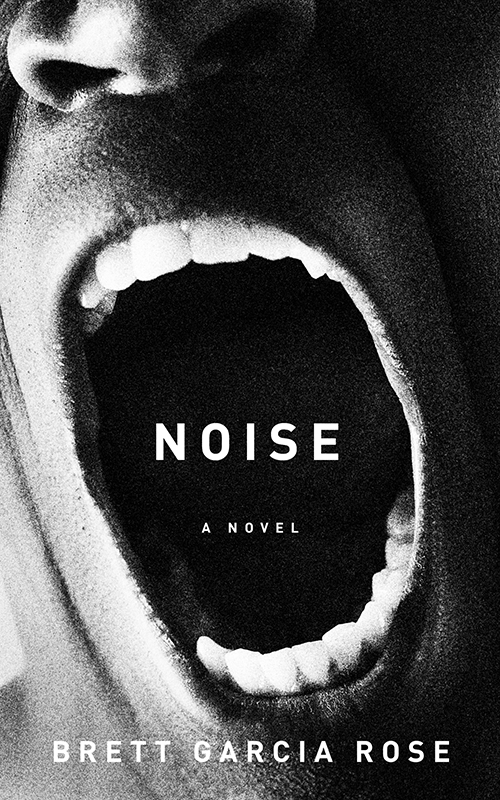
Noise by Brett Garcia RoseDED: There were a few titles that I thought were very good this year. In order to narrow the list down I had to pick out the flaws in the choices, no matter how small. That got my list narrowed down to two. It was a tough decision, but ultimately, I chose Noise.

In my review, I wrote: "Noise is a revenge flick dressed up as art house mystery. Rose juxtaposes brutality with spirited, yet acerbic, prose. Meticulous attention to detail evokes noirish cinematic imagery."

Congratulations to the winners!


We reviewed 19 stories last year and rejected over 194. Roughly speaking, that means everyone who submitted a story to us had a 9% chance of being reviewed. I wish that number could be higher, but it's just not possible with the number of reviewers we have.


Unfortunately, Rob Steiner and S.B. Jung are deactivating themselves from our reviewer roster. Rob wants to devote more time to writing while S.B. will be starting nursing school soon. I want to thank them for their time and devotion to the blog over the years and wish them success. Come back when you can, guys!

Monday, December 29, 2014

Shared Nightmares, an anthology from Cold Fusion Media

Cover for Shared NightmaresShared Nightmares is a collection of short stories whose central theme revolves around dreams, but more accurately, nightmares. That's about the only thing these stories have in common as the authors tell us tales that span all matter of genres. While horror is the overriding element, some authors make use of other elements: science fiction, historical fiction, and urban fantasy. Some stories rely on visceral action, while others suspense. Fortunately, none of these stories wander down Elm Street, and for that, I'm grateful.

Please indulge me as I offer brief comments about each story.

The anthology opens with “Father’s Day” by Larry Correia. Aliens have invaded Earth and are attacking us through our dreams. And we're losing. Correia does a stand up job with his protagonist, as he fights a bureaucracy in order to protect his daughter.

In “Dreamcatcher”, Sarah Hoyt warns us that things in the dream-world wants to become real. There are guardians who keep the nightmares at bay, and it helps to keep an ax—a very sharp ax—close at hand.

The message I got from D.J. Butler's “Incubation” is that regret is a nightmare that you can't wake up from. It takes some time before we learn what the unreliable narrator has done, but Butler drops us enough clues along the way to piece together this crime scene.

The devil has Adam's number in Tom Lloyd's “The Devil On My Shoulder”. Every time Adam wakes up, whether from actual sleep or blackouts, he discovers that he's been up to no good. Pity him, but pray you never meet him. Lloyd does a great job bringing the reader along on Adam's senseless ride through misery and then rewards Adam (and the reader) by revealing his purpose.

The first of the historical fiction pieces is “Onnen” by Paul Genesse. Having visited the Kyoto imperial palace, he was inspired by its strange, bleak history to write this story. It's an excellent tale of a woman's scorn and her unquenchable thirst for revenge.

In “To Dream Awake, to Sleep the Real” by Michaelbrent Collings, Booker Nyx talks about the dream-like bliss of the early days of marriage: "Existing with one foot in dream, and the other in a place where the world was seen as it truly was: a place of magic, and wonder, and light, and infinite possibility." But then children come along, and the responsibility of parenthood kills the dream. Booker yearns to return to that dream. Collins does a solid job with his sad yet familiar portrayal of Booker's life.

“What Hellhounds Dream” is an action-packed urban fantasy story from Steven Diamond, who's also one of the editors. It was a fun story that seemed like it could be expanded to novel length.

“The Damnation of St. Teresa of Ávila” by Marie Brennan is the other historical fiction piece. The titular character died right at the time when Spain transitioned from the Julian calendar to the Gregorian calendar, whereupon ten days were lost. In Brennan's story, St. Teresa's death lasted for those ten days. Drawing from St. Teresa's life and writings, Brennan skillfully paints an all too real picture of the woman as she hovered between life and death.

“Man in the Middle” by Max Gladstone was another fun piece. It appears to be something out of his Craft Sequence series. If you're like me and haven't read anything about it, there's a bit of dead gods and scientific sounding magic (which reminded me of Stross's Laundry) that keeps the world—at least an alternate version of ours—running. This story concerns a trip into a nightmare where Tara discovers a remnant from the God Wars. After reading this story, I feel compelled to dive into this series.

A video game that you play in your sleep is the subject of “U.I.” by Howard Tayler. The game is still in beta as the protagonist is testing it for the developer. Rather than just lamely showing the game action, Tayler presents their conversations, which shows the protagonist's progress in getting caught up in the game.

“The Quality of Light is Not Strain’d” by Peter Orullian was a difficult read due to the subject matter. That's not to say it wasn't a good story. It was well-written, and the difficult parts were tastefully composed. I find that the most disturbing horror stories are not the ones with visceral gore, but rather the mundane acts that are carried out by good people in desperate situations. This is one of those stories.

The anthology concludes with “Health and Wellness” by Dan Wells. It follows a pair of Indian immigrants who are here on work visas and take these special vitamins generously provided by the U.S. government. It's a delightful tale of paranoia and the paranormal.

Editors Steven Diamond and Nathan Shumate have done a fantastic job corralling these disparate tales into a cohesive collection. If you prefer your horror to be on the literary end of the spectrum, without the usual tired clichés, then check out Shared Nightmares. For more info and reading samples, visit the publisher's website.

Monday, December 22, 2014

Athame by Morgan Alreth

I hate to admit it, but I sometimes avoid the local library’s fantasy section because I’m not up for the intellectual investment in a fictional world’s historical and political minutiae, simply to understand the conflict at hand. I don’t always want to spend page after page hearing about all the factions, which dale or fell they inhabit, and which one slew the other’s thane. If you share these sentiments, Morgan Alreth’s Athame may be of interest. This charming novel falls squarely on the more playful, less overwrought end of the fantasy literature continuum.

Athame begins with a chance meeting in the forest between Jess, a woodsrunner and witch, and Peteros, the youngest son of King Jansen and Queen Lora. Pete, as Jess immediately begins calling him, is lost and without provisions after a werewolf attacked his group, killing all his companions and their horses. Because of his privileged upbringing, Pete lacks wilderness survival skills and is ignorant about the creatures that threaten travelers in that part of the world. Jess conducts him safely back to her family’s cabin and then agrees to escort him to a nearby town, where he can find transport back to his home city of Kulhn.

A romance ensues, and Jess travels with Pete to Kulhn. Numerous conflicts erupt after they reach the city. Confronted with the nobles’ disdain for her as a commoner, Jess must decide whether she and Pete can overcome the differences in their backgrounds and build a life together. They also face hostility from Pete’s father and brothers, who will go to any lengths to cut Pete out of the succession. The priests of Hohdwan, who persecute witches, arrive on the scene, determined to take custody of Jess. She and Pete also struggle to understand why their movements are dogged by ghaunts, which are deadly, nocturnal creatures of unknown origin.

Because these obstacles are relatively straightforward, Athame has no need for exhaustive world-building. Relationship woes, family drama, and class conflict don’t require a lot of context-setting to make them understandable. When Jess and Pete make their first appearance at court, its denizens’ antipathy toward Jess is obvious. We don’t need to know who is in the sneering crowd or why they hate Jess. It’s the age-old contempt of the haves toward the have-nots:

The jewel encrusted mob of satin-choked humans in front of Jess made Marge’s bird collection look drab and subdued. They stood crammed together, rib to rib and ankle to ankle, whispering and staring at Pete while he walked the length of the carpet toward the platform. Then some of them, mainly the women, started sizing her up and snickering. Jess tightened her jaws and straightened. She took a grip on her belt with both hands and lifted her chin.

In spite of Pete’s advantages as a prince, he and Jess are equals in their adventures. When they meet trouble, they rely on Jess’s magic and woodlore along with Pete’s swordplay. As they prepare to spend a night in a dilapidated fort, Jess detects signs that something nasty already occupies the structure. She instructs Pete to prepare by making torches and smearing garlic on their weapons. When they encounter the vampire Selvana inside the fort, Pete draws first blood, but Jess makes sure that the vampire is permanently out of commission.

…Pete lunged and buried the point of his sword in her belly.

Selvana’s form began to twist and morph as the edges of her body faded into mist. Jess took one step, drew back her arm and snapped it forward. The belt ax flew spinning across the room and chopped its way through undead breastbone, directly into the heart beneath. A stinking corpse hit the floor, already falling in on itself.

“Take the head, Pete. Quick.” He obeyed promptly. Jess grabbed it by the hair and ran for the fading sunlight outside. She called over her shoulder, “Grab my ax and put the stick through her heart.”

There was still enough sunlight for the head to start fuming when she emerged. Jess tossed it onto a pile of nearby trash and lit the disgusting thing with her torch. Pete came pounding up behind her and watched in wonder as the head crumbled into ashes.

“The old ones like her are hard to put down,” Jess said. “Gotta finish them in the sunlight or they might heal up. But that should take care of her.”

Jess exhibits strength, intelligence, and confidence when dealing with assorted natural and supernatural threats, and a well-developed sense of humor adds to her appeal as a main character. As she and Pete approach the vampire’s lair, he asks, “Shouldn’t we have some kind of holy symbol?” “Only if the vampire goes to church regular” is her response.

Although the character of Jess is one of Athame’s strongest points, she is also the source of its main shortcoming, which is the dearth of information about Jess’s life up to the point at which the story opens. The novel provides much more insight into Pete’s background. But the reader is left to wonder how Jess honed her magical abilities, what kind of relationships she had with family and friends, and what her prospects were before she met Pete. Clocking in at slightly more than 200 pages, the novel could easily have accommodated more backstory on Jess. Athame is the first book in The Unfortunate Woods trilogy, so perhaps this missing detail will be provided in subsequent volumes. Wrath, which I have not read, is already available, and Recompense is in progress, according to the author’s blog.

On the whole, the novel has much going for it. The two main characters’ experiences are easy to relate to – struggling to adapt to new circumstances, compromising in order to make a relationship work, and trying to figure out where you belong and what will make you happy. The pace is just right, striking a good balance between action and introspection. And the unresolved dilemmas are intriguing enough to leave the reader with a sense of anticipation for the trilogy’s remaining installments.

For more information, please visit the author's website.

Friday, December 5, 2014

Expanding Your Brand: A Guest Post by John Vorhaus

Normally I'm a sci-fi and horror guy. While I do venture outside of these genres from time to time, a story has to have something that grabs my attention. We didn't receive any sample chapters for Poole's Paradise and the blurb didn't have a firm grip on me, so I was on the verge of passing on it. But before I did, I checked out its author, John Vorhaus. I was impressed by what I saw on Amazon and his website. It was there that I got hooked. He had so much going on with novels, poker guides, Twitter, and videos that I was sold on reading Poole's Paradise. And I'm glad I did.

In the publishing world, an indie author has to find a good editor for their manuscript and make sure it has a professional looking cover. But even with those two things set, there's still the matter of marketing. There are some rudimentary things an indie author can do to self-promote, but sometimes that's not enough. Recognizing that John sold himself more than the book, I asked him if he would write a blog post on self-promotion.

Without further ado, here's John offering advice on "Expanding Your Brand".

I understand my problem exactly.

On one hand, I have a lot of how-to books (on writing and on poker) which sell their asses off because they have just exactly the information that certain people need, just exactly when they need it. On the other hand, I have all these terrific novels that struggle to find their audience, because reading a novel is a recreational activity; in other words, it’s a want to, not a need to proposition. How-to books sell because they meet the needs of a specific need-to proposition. Novels compete against other forms of recreation because they don’t have that urgent gravitational pull. And they face fierce competition, not from other novels but from other forms of recreation. I, for example, read books quite happily and enthusiastically on my iPhone—once I can get past my email and twitter and the baseball scores and all the dang games. I know I’m not alone in this. Never in human history has the act of picking up a book had to compete so hard against the act of picking up something else.
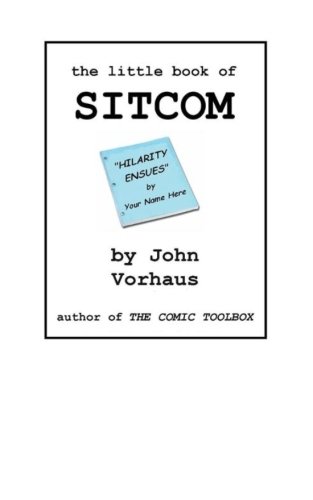
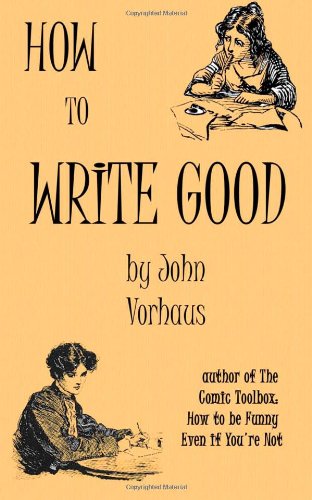
the little book of sitcom book coverOkay, so that’s where we are: need-to books sell easily; want-to books sell hard. How should we, as cottage-industry entrepreneurs, respond to this? One thing we could do is write a lot of need-to books. This is simply a matter of looking around, saying, “What am I good at?” and knocking out 15,000 words on that subject. Did I say 15,000? Yes, 15,000. That’s not much, nowhere near the 70,000 words, minimum, that you need to call a novel a novel. Is 15,000 words enough for a how-to book? I can tell you from personal experience that the answer is an emphatic yes. Because, you see, a function of all those short attention spans out there, and a function of the competition of all those games, websites, downloads, videos, and social media, is that people would rather spend less – less time and less money – even for information they know they really need. My two small reads—the little book of SITCOM and How To Write Good—routinely outsell my whole novel catalog combined. How to Write Good book coverThey earn. They earn consistently and reliably, month after month, year after year, and they (and titles like them) allow me to call myself a working writer—a consummation devoutly to be wished.
So why don’t I write how-to books exclusively? I sure could if I wanted to. I know enough about enough things that I could write how-to books till I die and never run out of subjects. But I wouldn’t be satisfied, because my heart lies in my fiction. Perhaps yours does, too. And even as I’m here saying “expand your brand through non-fiction,” you may be thinking, Nah, not so much. That’s really not for me. I feel ya, dawg. I do.

But here’s the thing: these books cross-sell. Someone discovers my poker books or writing books. They drop me a line to say how much they enjoy my writing style. I write them back and say, well, if you like my style, you’ll love my novels. Having already become fans of my way with non-fiction words, they’re ready to love my fiction words as well. I’ve reached them. I’ve used my non-fiction works as a bridge between my novels and my audience. That’s the argument for expanding your brand: The more people who approach you—from whatever direction and for whatever reason—the bigger your audience will be for the stuff you really want to sell.
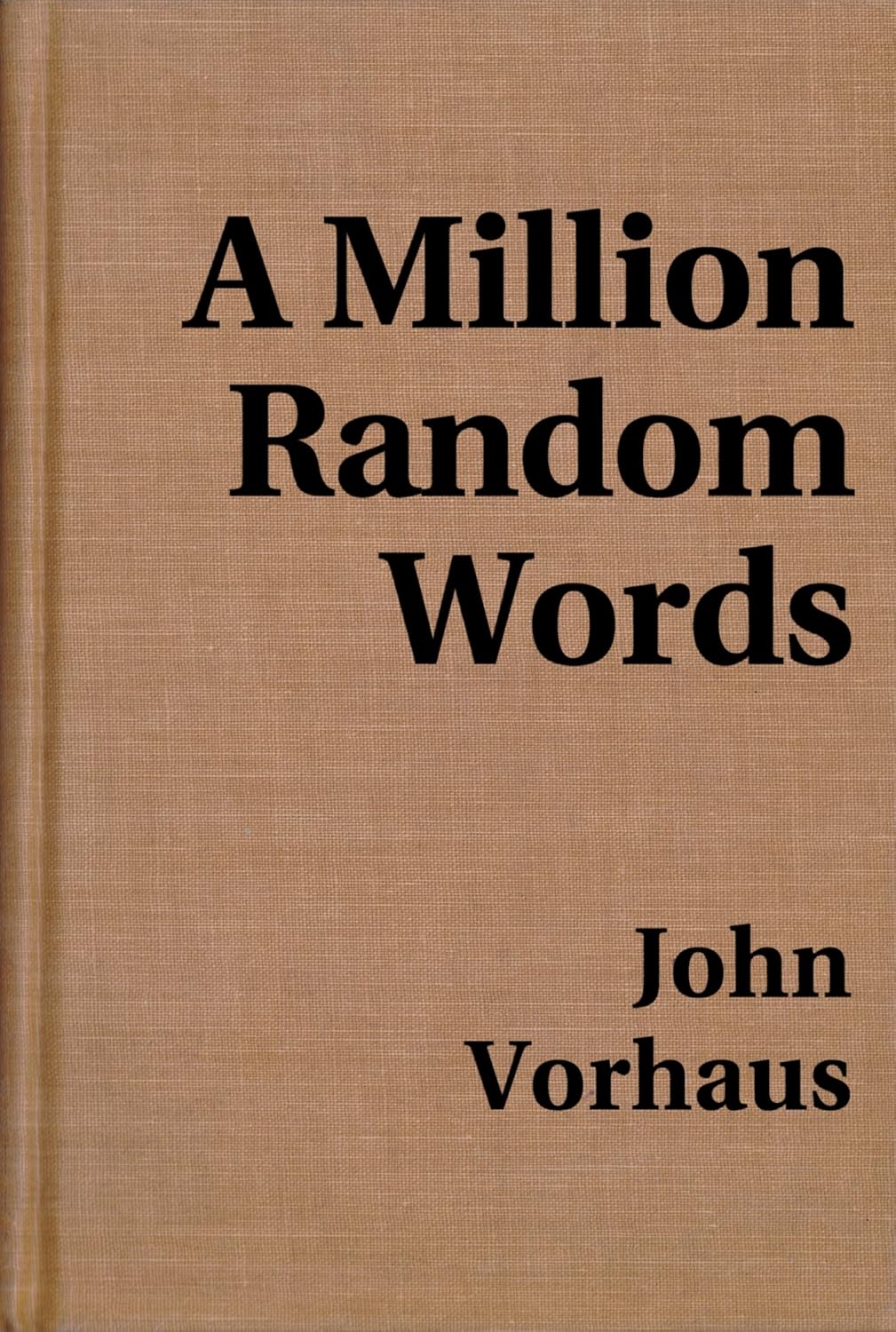
A Million Random Words book coverSo where, in this pantheon of titles, do we put such odd frivolities as my book, A Million Random Words? It contains, as the title promises, exactly a million random words, arranged in random order, and offered either as a one-note joke or as a sneaky-useful random reference book for writers or other creative types looking for new ways to trigger new thoughts. But what exactly is this book? It’s not fiction, certainly. It’s not non-fiction, certainly. It’s something altogether else. It doesn’t fit within my brand.

Which means that it expands my brand.

It brings other people to my work from a wholly different direction. Vorhaus? Isn’t he the guy with the wacky random words project? Indeed he is. And if you got the joke of that, you’ll probably like some of the other items in his catalog as well. This is how I think of cross-selling. I want my brand to be broad and deep and interesting, with many points of entrance for many different kinds of readers or users. I want to welcome them into my world, and once they’re there, I want to have many intriguing things to show them. And that’s everything from a million random words to the latest novel I have so lovingly birthed.

The Albuquerque Turkey book coverIf you choose to adopt this model of go off in all directions at once, there are a couple of mental adjustments that will help you. First, be willing to try anything. Don’t worry about how esoteric or random or silly your book idea seems. Get it out there. Put it up on Amazon where any conceivable buyer could conceivably buy it. Second, think strategically about your brand, and about expanding it. You may now be known as that yodeling-cowboy-mystery guy. Could you be known as that and also as that history-of-yodeling-cowboys guy? Of course you could. And if you walk that road, you’ll be making a broader invitation to a broader audience. You will be expanding your brand. Third, yep, you’re going to have to put in the marketing time, and that’s everything from social media to the promo cards you hand out on the bus. Fourth, don’t be too precious. Yes, it would be great if we could all be the Oprah-guest novelists of our wildest dreams, but if you don’t have that luxury then you have to do the work. That’s the bad news. The good news is you get to do the work, and I don’t care what that work is, if it involves putting words on the page, it’s bound to teach you something about something.

I’m a wacky guy. I have a wacky brand. It now extends to the fringes of rationality (or beyond—some people who hear about A Million Random Words do think I’m quite demented). But that’s my approach. It’s working for me and I’m striving to make it work better still. So how about you? What steps can you take, now, today, to expand your brand? Think strategically, and think long-term. If your goal is to be a working writer, the conversation certainly doesn’t begin and end with the novels you might write.

One final thing: Many writers find self-promotion distasteful at best or odious at worst. I used to think that way. I used to regard it as a necessary evil. But then I decided, hey, my work has value—why should I be shy about saying so? If you stand behind your work, there’s no shame in self-promotion. Feel good about it. After all, what’s the point of writing if no one’s going to read?

Friday, November 28, 2014

Poole's Paradise by John Vorhaus

Poole's ParadiseWhen you're Alexander Poole, everyone’s your teacher: a skeevy stereo salesman, master of the bait and switch; a flaky folk singer and his dog that reads Tolkien; a drug dealer loan shark with a passion for trees; a ballsy townie chick who turns you on to Springsteen; your wiseass roommate whose favorite pastime is smoking your dope; even your one true love. Together they point you to paradise — Poole's Paradise – but what will it cost to get in?
Poole's Paradise is set in 1974 in the "wilds of Western Connecticut", among the Berkshires to be more specific. It's the story of Alexander Poole, a Cort College sophomore in the fictional town of Greenville. As the blurb implies, Poole is trying to assemble a personal code of ethics, or philosophy for life, from the interactions he has with several people in his life. There's a certain level of naïveté to his demeanor. He's too trusting and deals with the world in an open and honest way that, while admirable, is dangerous—the cover features the tarot card of "The Fool" for a reason. As Poole is willing to apply this approach to everyone, he inevitably winds up in a serious predicament involving a sizable stash of drugs and cash. Ultimately, he has to choose between abandoning this philosophy or figuring out how to make it work in order to save himself and his friends.

In the first third of the book, Poole's Paradise seems like it's going to be "Zen and the pursuit of the perfect stereo." Poole engages in several discussions about stereo equipment, and it serves as a great introduction to those characters. My father is something of an audiophile, and I grew up listening to him expound upon the merits of music media (vinyl vs tape) and the constant refinement of his stereo gear: turntables, amplifiers, speakers, and more. Reading the exchange between the characters on this subject had me fondly recalling those days.

There are also other conversations that ring true in the story, particularly between Poole and his roommate, Dawkins. Whether they're talking about music, weed, or women, the dialogue is dead on for the 70's. The college kid vs. townie dynamic is accurate, having witnessed it myself in the small towns of Western Connecticut. Vorhaus knows people and how they interact. Each character, major and minor, is finely crafted. He has a mastery of dialogue and characterization that strikes me as effortless.

There were two problems I had with the story. The first was that I live in Western Connecticut and the setting didn't match in the slightest. The second was with the ending. At first, I was shocked and confused. It took a couple read throughs and some thought before it clicked. It wasn't the ending I was expecting, but as I reflected on the course Poole took, it made sense.

Poole's Paradise is a solid coming of age story set in the 70's. With a well-rounded cast of characters and accurate dialogue, Vorhaus places the reader smack dab in the middle of the most important days of Alexander Poole's life. Whether you fondly recall vinyl, want to know what college life was like for your parents, or just enjoy stories with realistic characters, Poole's Paradise is for you.

For more information about Poole's Paradise, check out the author's website.

Friday, November 14, 2014

The Northern Star: Civil War by Mike Gullickson

Reviewed by The Bookworm's Fancy.

The Northern Star: Civil WarMike Gullickson’s The Northern Star: Civil War picks up with a bang eleven years after the events of The Northern Star: The Beginning. The tentative cooperation between the world government and MindCorp (the company that owns the technology that makes civilization possible in a world drained of oil) has slowly begun to fray. Like its predecessor, Civil War is full of complex characters with interconnecting motives. It is very hard to separate the bulk of the characters into good/bad or black/white. Instead they all (except for Evan Lindo) exist in a state of varying shades of gray. This, in of itself, makes for a compelling read. But I’m getting ahead of myself.

Let me start with the easy stuff. All too often, we hear horror stories of indie books with bad editing and horrible covers. Not only are Gullickson’s covers amazing, but the editing is spot on. No odd formatting or glaring grammatical errors to break the reader’s immersion in the story.

I referred to Gullickson’s The Northern Star: The Beginning as an “old school, science-fiction romp”. The Northern Star: Civil War is this and so much more. It is more than just men in mechs destroying each other. It is more than amazing technological advances. Gullickson manages to make it all accessible to the average reader without overloading the senses. The technology is intricate and complicated but explained to the reader with a simple ease that just flows.

All the characters that survived through the first book are back to continue their journey in this book. Most interesting, though, is the inclusion of John Raimey’s now twenty-year-old daughter, Vanessa. Just a child in the first book, she has blossomed into a confident, intelligent young woman working with the bionics. While Gullickson’s story sets her up as the lynchpin to the ultimate evil scheme, the character of Vanessa becomes the emotional center of the story. Her relationships with Evan Lindo, Mike Glass, and John Raimey drive the story just as much as the constant struggle for power between MindCorp and the government.

Following the trend of the second installment in a trilogy being darker, Civil War is to The Beginning as the Empire Strikes Back is to A New Hope. It is decidedly darker, dirtier, and grittier. You find yourself rooting for the heroes and rallying with them only to have the rug pulled out from beneath you when they fail. The final scenes evoked the same emotional distress and despair as when Han Solo gets frozen in carbonite. The ending compels you to read the last book in the series because it just can’t end like this. The good guys have to win. Or do they?

The Bookworm gives The Northern Star: Civil War 4.5 stars for delicious darkness. For more information, please visit the author's website.

Friday, October 24, 2014

Mobsters, Monsters & Nazis by Dan O'Brien and Steve Ferchaud

Mobsters, Monsters and NazisMobsters, Monsters & Nazis is a six-part illustrated series that is a throwback to pulp books. The first installment goes on sale this Halloween, but you can pre-order now.

Mobsters, Monsters & Nazis takes place in an alternate universe where lizard men, fish-faced nightclub owners, and tentacled mobsters are everyday people. Derrick Diamond, a private eye, is tasked with delivering a mysterious artifact to the Fat Man. But there are others who are interested in the artifact, and their intentions appear to be just as malevolent as the titular Nazis. To put it succinctly, Mobsters, Monsters & Nazis is an illustrated short story, so I can't say anything more about the plot as that would spoil it for you.

O'Brien has lovingly crafted his characters with familiar personalities. Derrick Diamond channels Bogart. Ava Harpy is the femme fatale nightclub singer. The Weasel lives up to his name. And the Fat Man is the successful mobster who wields power and conducts his business transactions with shrewd calculation.

Ferchaud's ink drawings capture the noir atmosphere and the essence of the hard-boiled characters. To say that they add a nice touch to the work would be an understatement. While O'Brien's words offer enough visual cues, Ferchaud's work brings it to life.

So if you're a fan of pulp or old gangster films, and don't mind a dash of dark fantasy, check out the first installment of Mobsters, Monsters & Nazis.

Friday, October 17, 2014

Noise by Brett Garcia Rose

Noise by Brett Garcia RoseThe only person that Leon ever loved was his sister, Lily. But ten years ago, she left a suicide note and allegedly drowned. Allegedly, because her body was never found. Regardless, he was left alone.

But then a postcard in Lily's handwriting arrives one winter, drawing him to New York City. What he discovers unleashes a deadly rage that knows no bounds. A grisly trail of clues leads him to "The Bear", a sadistic Russian crime lord who traffics in human flesh. The police are of little help and don’t like Leon’s methods or the mess he leaves in his wake. He is single-minded in his purpose and will do anything to find Lily.

Now here's the kicker: Leon is deaf.

But being deaf isn't much of a handicap to Leon. He can read lips. He pays attention to his surroundings, aware of the change in shadows, the vibrations of someone walking across a floor. It's what kept him alive as a child in Nigeria and later through a stint in the army.

By and large this could simply have been the literary equivalent of one of those revenge flicks you curl up with on the couch, a bowl of popcorn and a beer (or two) close at hand. But no, we're given a story that's more than popcorn and violence (though there is plenty of the latter). When Rose isn't detailing Leon's choreography of investigation and execution, he offers Leon's reflections on his predicament and surroundings.

Our introduction to Leon:
The world is an ugly place, and I can tell you now, I fit in just fine.
We see New York through Leon's eyes, and it is a cold, heartless place where:
The sidewalks are narrow and crowded, the pedestrians impartial and unaware of one another in a way that even the simplest of animals are not. They never make eye contact; inches apart, they never touch. A New Yorker approaching another human being is indistinguishable from one approaching a utility pole or a tree.
And Leon makes no effort to hide what he thinks of the place:
It is not possible for me to be the first to say this, but I'll say it nonetheless: I hate the place. It is cold and ruthless. Humanity in constant battle, all its inhabitants rushing towards some invisible exit, never tiring of the trap. Cities are hell, and New York is the Grand Dame of them all.
I couldn't resist the noir-like atmosphere that Rose conjured. Now, I love New York—warts and all—but I know what he's talking about. It's the perspective of an outsider, and it's very easy to relate to it.

The story moves along predictably enough, with Leon punishing the guilty without mercy or remorse. There are no clean executions, no crises of conscience. His methods are as brutal as those he seeks out. He exists to make sure that those who live by the sword, die by the sword. Were it not for the fact that his cause was just, it would be difficult to root for him. In fact, some might pity the guilty.

One thing I found lacking was detail about Leon's past. There is scant little about his childhood in Nigeria, and his adoptive mother only receives a few sentences. There is Lily, but all we know of her is her suicide note, and that she was the one person in Leon's life that showed any kindness to him. Perhaps, it's intentional. Leon's single-minded determination leaves no room to dwell on the past.

Noise is a revenge flick dressed up as art house mystery. Rose juxtaposes brutality with spirited, yet acerbic, prose. Meticulous attention to detail evokes noirish cinematic imagery. Read the book before Hollywood figures out how to make the movie.

For more information visit the author's website.

Monday, September 15, 2014

Fluency by Jennifer Foehner Wells

Fluency by Jennifer Foehner Wells is what 2001: A Space Odyssey would’ve been if the monolith had actually talked to the crew.

NASA has known about an alien spaceship parked in the Asteroid Belt since the 1960s but has kept the information from the public.  All efforts to establish radio contact have been met with silence.  In the early 21st century, NASA finally develops the technology required to send six astronauts to the ship to discover its secrets. 

Dr. Jane Holloway is a linguist and a reluctant astronaut recruited by NASA to communicate with any possible aliens.  As soon as their capsule docks with the mysterious ship, she begins to hear voices.  She not only has a hard time convincing herself they are real, but most of her crew as well. 

When the mission takes a disturbing turn that not even the highly trained astronauts are prepared for, it’s Jane’s connection to the ship that becomes their only hope for survival.

Fluency was a finely written derelict spaceship story.  Wells’ style and language are beautiful and descriptive without relying on cliché.  Wells does not overly explain the science behind the ship's gadgets, but gives us just enough to make them all seem plausible without bogging the story down. 

I liked how the alien cultures that the ship reveals to Jane Holloway sounded very different from one another, even among individuals within a species.  Too many sci-fi stories depict aliens as one monolithic culture where all individuals share the same values.  I prefer my aliens to be, well, more human and unique between individuals.  Besides drone-like insectoid aliens, that just seems more realistic to me and Wells does a fine job of it in this book.

I only had some minor nit-picks.  The main characters ruminated too much for my taste, making me skip pages at a time to get back to the action.  I also thought the ending was too abrupt; I got the feeling I had just read the opening chapter of a longer work rather than a complete work in itself.  Fluency's sub-title is "Confluence Book 1," so this was obviously by design, but I'm not a fan of the style.

Fluency is Wells' debut novel and an impressive effort that I enjoyed.  It hit all the right notes that a derelict spaceship story should hit.  The novel only hints at the strange galaxy awaiting humanity, so I look forward to the alien wonders that Wells introduces us to in the sequel.

Fluency is available on Amazon as an ebook and paperback.

[Note: Fluency was purchased by the reviewer.]

Tuesday, September 9, 2014

Numbers 16:32 by Brady Koch

Joseph's Sunday morning routine of church, beer and solitude is interrupted by a ragged screaming coming from the far side of his farm land. What he finds there will challenge his resolve in ways he hasn't faced since losing his wife or facing the horrors of the Korean War.

Numbers 16:32 is a long short story (25 pages), which makes it a novelette. It gets off to a slow start as Koch focuses on character building. I stuck with it as Koch successfully forged a connection between this reader and Joseph, the protagonist. Once Joseph sets out to find the source of the screaming, the pace of the story picks up and stays steady right up to the end.

Joseph's actions and dialogue ring true. As a Korean War veteran and widower living out his remaining years on a farm out in the Midwest, you really get a sense for the loneliness that he keeps bottled up. There's no self-pity with this man. He's seen far too much to bother with any of that.

Once the reader's connection with Joseph is made, Koch leads Joseph out into the fields to face the peril. I can't say too much more without spoiling it. Joseph's military training kicks in. No, I'm not talking about his combat skills. He assesses the problem, comes up with a plan, and acts on it. He's the "cool under fire" type. As the situation changes and the stakes escalate, Joseph adapts.

Unfortunately, the story is marred—for me—by typos: many missing commas, some capitalization issues, and several misspelled words. If Mr. Koch had sent the manuscript to a proofreader before publishing, 95% of these would've been caught (A cheaper alternative would be to have had it peer reviewed in a writer's group). It takes away from the experience for me. To be fair, even traditionally published books have typos. I'm also reading Moving Mars by Greg Bear. There's a scene where they talk about eating cheesecake for dessert, but it's misspelled as "desert".

Numbers 16:32 is a finely crafted story. The plot and characterization are solid. Despite my grumblings over typos, I enjoyed Numbers 16:32 and would recommend it for the character of Joseph alone. I hope that Mr. Koch will continue to hone his craft.

Stop by the author's website to find out where you can get a copy.

Tuesday, September 2, 2014

In The Clear by Ayami Tyndall

In The ClearArne was content with her career as a hydrogen rigger, harvesting fuel from Saturn's clouds for use across the solar system, until two prospectors offered her a job that kindled old desires. She used to be an angel, a guide through the lightless sky beneath Saturn's clouds, but abandoned that deadly wasteland years ago. Now she returns, taking flight again on cybernetic wings to guide a new prototype through the invisible gale of the liquid sky. She used to know Saturn's depths well, but returning ignites old scars, and there is something new and unnatural waiting in the burning air.

When the wind comes for her and her wings fail her, will she remember why she calls herself an angel?


This is one of those sci-fi novels that dares to dream big. I got hooked on the concept of "angels"—humans with artificial wings—flying through the depths of Saturn to assist in hydrogen mining. Tyndall evokes colorful language to describe Arne's flights through Saturn's atmosphere. She relies on her suit's sensors and the flutter of eddies as they play across the metallic feathers of her wings. There's a grace to her swift acrobatics and deft maneuvers that is reminiscent of a well-choreographed ballet.

The story also deals with obsession. Tyndall's main characters each have something they're obsessed with and can't let go. Arne is obsessed with her past failures as an angel, while the Drakes, Arne's employers, are obsessed with their mission. Neither seems willing to let go when confronted by the other, and the story becomes a race against time to see if anyone will come to their senses before facing disaster.

So it is with reluctance that I have to dredge up the flaws in this work. First off, there are problems with commas. There aren't enough of them, and there are many more that are misplaced. These and other typos would've been easy to repair with a proper proofreader.

A more serious problem lies with the layout of the story. There is the current story where our intrepid heroine guides her employers down to the depths of Saturn, and then there are the flashbacks to her days as a full-time angel. The placement of the flashbacks within the overall story confused me. The book starts with Arne in the middle of her current job, and then flashes back to the day when she met the Drakes. At the start of chapter two, I realized that this was the new current setting. But in chapter three, we get another flashback that goes back even further to her angel days before returning to the current story. As there are similar action sequences in Arne's past and present, it was too easy to get lost. It was only when Arne interacted with other characters that I could place when we are at. I'm not sure that all of them were necessary or in the right sequence.

The other major problem I had was with the characters. The present day story and the flashbacks are told from Arne's POV. While she walked a fine line between reliable and unreliable narrator, I was more concerned by her interaction with other characters. When told by her employers that an angel had died on their previous foray into Saturn's depths, she seemed a bit too unmoved about it. This was supposedly an organization with close ties among its members—a brotherhood. She was more concerned about bad intel from the Drakes than the death of a fellow angel. But as soon as she found out it was someone she knew, she flipped out.

I found too much inconsistency with the Drakes' behavior. They could be remorseful one moment, and then snippy and insensitive in the next. I couldn't figure out if the remorse for dead angels was sincere or not. There is also one point where Mel seems like she's near death, and then in the next chapter she's up and around going about her business. No explanation was given for her miraculous turnaround.

Ok, I've spent way too much time being critical. Despite these flaws, In The Clear is a good read. Besides inspiring us with humans flying through the reaches of Saturn, there are also matters of exploration. Tyndall draws parallels to deep sea diving here on Earth. What lies waiting for Arne and the Drakes in the depths of Saturn? What effect does Saturn's magnetosphere have on the human mind? While the underlying theme of the destructive consequences of obsession is a familiar one, Tyndall demonstrates that there's a way out if you're willing to recognize it for what it is.

In The Clear is available from Amazon and Smashwords.

Sunday, August 17, 2014

A Letter from Hell by William Presley

A Letter from HellIn a desperate attempt to save his soul before he dies, southern aristocrat William Virgil Hollingsmore writes the world a cautionary letter on the last of his twelve days in a personalized Hell. In it, through the haze of his own mental deterioration, he chronicles the horrors and agony that befell him at the hands of Satan, as well as the sad events leading up to this unfortunate climax.

When Hollingsmore was a younger man, he was an alcoholic and did as he pleased when drunk. He's older now and full of regret. Upon returning home, he finds that Satan is chomping at the bit to claim him and drag him on down to Hell for his eternal punishment. This is a man desperately trying to find a way to avoid his fate. There is no excusing his past behavior, so it is difficult to sympathize with him. But does he deserve to burn in Hell? His "letter from Hell" is his attempt to find redemption by warning others.

Hollingsmore serves as protagonist and narrator. As such, we only get to see the other characters when he interacts with them. There is a chapter where Hollingsmore is put through out of body flashbacks in order to learn what suffering he has inflicted upon the people in his life. Satan is obviously the antagonist, but his character only sees development when he shows up to torment Hollingsmore. I wouldn't say that he's two-dimensional, but he doesn't stray from what we expect of him.

A Letter from Hell reminds me of old fashioned horror—more concerned with chills and suspense than gross outs and visceral gore. The writing style Presley uses reads like something out of the Romantic movement of the 19th century, which produced such notable greats as Poe and Coleridge. Presley forgoes the purple prose but retains the suffocating imagery and puts it to use at all the appropriate times. While in the midst of Hollingsmore's recounting of his ordeals, I was often reminded of Vincent Price horror movies from the 60's.

A Letter from Hell is William Presley's first novel. There are times when I felt it could've used another round of proofreading to remove extraneous commas and freshen up the dusty writing style he chose. However, it should be noted that when it was published earlier this year Presley was only a junior in high school. I could not have written something this good back when I was his age. I have no doubt that if Presley sticks to it and continues to work at his craft, we will see great things from him in the years ahead.

I don't have an author's website to point you to, so I'll just state that A Letter from Hell is available from Amazon, Smashwords, Barnes & Noble, and even Google.

Wednesday, July 16, 2014

First Stone by Gary Ballard

First StoneForensic psychologist Dr. Jack Carter wakes from a semi-catatonic state in a mental hospital with no memory of the previous year. His wife, Sarah, has disappeared, and as the last human being to see her alive, Jack is the prime suspect in her disappearance. Without a body and with no physical evidence to prove foul play, the lead investigator and Jack's friend, Bill West, must continue to search for the truth even if it means fingering Jack for the crime. When a serial killer in West Virginia's coal country claims to have killed Sarah Carter, Bill and Jack rush to the crime scene. What they find is a deeply disturbed man with no memory of his crimes or of taking credit for Sarah's death. As Jack tries to decipher the mysterious series of runic symbols the killer carved into his slaughter house, he unlocks a deeper cosmic mystery that goes beyond anything he could imagine.

First Stone is the first novella in Gary Ballard's Stepping Stone Cycle, a "modern interpretation of H.P. Lovecraft's Cthulhu Mythos." Naturally, I'm curious about all things Lovecraft, including new tales by authors playing in the Master's non-Euclidean sandbox. Of course, should anyone defile that sandbox, I would feel compelled to warn everyone to stay away. Fortunately, that isn't the case here.

The novella opens with Carter waking from his semi-catatonic state. As a nice touch, Ballard has Carter re-discovering his senses and the world around him. He questions the words we attach to objects, the length of time, and his own body. There are elements of knowledge still functioning within his brain, but we don't know if these are all a priori nuggets or the undisturbed bedrock of memory. Either way, slipping back into one's body isn't as simple as getting back on a bike after years away.

A good chunk of Lovecraft's work involved the protagonist setting off on an investigation to uncover the truth to a bizarre circumstance. In this regard, Ballard follows a similar path. His protagonist is a forensic psychologist, a solid choice for going out to crime scenes and dealing with those whose minds may have been damaged by things that dwell in the dark.

Ballard invests a good deal of time developing his characters, and it pays off. You really get to know Carter and root for him to find the answers to Sarah's disappearance. His friendship with Bill plays easy. And Ballard develops the small town West Virginia characters, too. It would've been easy to let them be two-dimensional stereotypes, but Ballard invests in their backgrounds to make their personal stories real.

While Ballard is playing in Lovecraft's sandbox, he doesn't play with his toys in quite the same way. Ballard sticks with his own writing style. Yes, he teases you with a survivor's testimony, has you listen to some preaching about the unfathomable darkness, and flaunts mysterious objects. The obligatory fhtagn and R'lyeh utterances are thrown in, too, but the story flows like a crime drama rather than cosmic horror. It's an interesting twist on presenting Cthulhu Mythos fiction and might serve as a bridge for psychological thriller fans to get a glimpse of the Old Ones.

Like quest fantasies and space opera epics, this isn't a tale that will be wrapped up right away. Patience is the key here. Ballard explains that he's writing the novellas like episodes in a TV series. Short-term mysteries are solved in each novella and clues to the overarching plot (What happened to Sarah Carter?) will be provided as the mystery deepens, but to get it all you'll have to read all of season one (Episode Two was recently released).

All in all, it's an entertaining and quick read. I'm left wondering just how far Ballard intends to go with this series and if he'll deliver the goods at the end of the season. I got the feeling that he was holding back, not wanting to give too much away so soon. But like many a good writer, he dangles the line out far enough to hook you in.

Tuesday, June 3, 2014

Justice, Inc. by Dale Bridges

Justice, Inc.Imagine a future where orphan children are adopted by international corporations and forced into indentured servitude, where zombie viruses are spread through heterosexual intercourse, where Osama bin Laden is cloned by the thousands for public execution. Welcome to the world of JUSTICE, INC. No one is safe. Nothing is sacred. And all sales are final.

Justice, Inc. is a collection of short stories written by Dale Bridges and published by Monkey Puzzle Press. It is due to be released on June 20th.

All in all, this is a solid collection of 21st century American satire.

"In the Beginning: An Introduction" sets the tone for the collection with Bridges explaining how he came to write these stories. If it's divine inspiration, there's certainly a bit of playful smirking—and possibly spirits—involved.

There are bits of flash fiction that serve as appetizers for the normal length stories. While "Texting the Apocalypse" doesn't have any direct links to "Life After Men", its sniping characters would fit right into the latter story. Shallow, materialistic mean girls maintain their 21st century valley girl identity until the bitter end and would likely commiserate with the protagonist as she bemoans the loss of her purse more than her zombified ex-boyfriend.

"The Villain", another short piece, imagines how a pair of bros who have acquired super powers figure out who the hero is and which guy gets to be the sidekick. It isn't anything you see on the big screen.

Generational discord is an underlying theme in "The Generation Gap", "The Other Ones", and "The Time Warp Café" and each story explores it differently. "The Generation Gap" is playful. "The Other Ones" is sinister. "The Time Warp Café" adds in the dilemmas of immortality. How do you explain youthful rebellion to a new generation of immortals?

In "The Girlfriend™", socially awkward Derrick buys an artificial companion to combat his loneliness. Assembly required.
At first, it felt bizarre to be handling body parts in this manner, like a remorseful psychopath who had chopped up his lover and was now trying to undo the crime.
Bridges deftly manipulates our feelings towards Derrick. Having a girlfriend, even a robotic one, changes him. But as Derrick's outer personality undergoes a transformation, his inner self betrays him.

"Welcome to Omni-Mart" is another story where a man's relationship with artificial life transforms him. Leonard, one of those aforementioned orphans forced into indentured servitude, inherits Peter, an InstaBaby, which is an artificial life form that grows from infant to adult in a single day. Leonard is meek and obedient after growing up at Omni-Mart, not to mention terrified of the world outside (he actually lives in the store). He lives in fear of his bullying boss, Barry, and he pines for fellow orphan, Cynthia. Peter forces Leonard into confronting elements of his self that he's been too afraid to face.

The collection's namesake piece, "Justice, Inc.", is the kernel of Bridges' work. James Hamilton and his wife, Sarah, are struggling to have a child. She lost her brother in 9/11 and sees having a child as the only way to cure her depression. The longer it takes, the worse it becomes, and it's putting a tremendous strain on their marriage. James works for Justice, Inc., a company that provides a unique way for Americans to deal with the sort of grief that comes from national tragedies induced by evil men. And in Dubya's America, it totally makes sense. James uses his job to formulate a solution to his wife's dilemma.

Justice, Inc. lives up to its billing. Dale Bridges has channeled his acerbic vision of American corporate dystopia into enjoyable satire. Of course, it is advised that readers share a similar perspective in order to appreciate Bridges' wit. Those readers bearing any similarity to the characters skewered in these stories will chafe at his spot on portrayals.

Friday, May 16, 2014

Magic’s Heart by Thomas Oliver

If you write about a quest to deliver a magical object to a far-flung destination and thereby save the world from evil, you had better be up to the challenge, for your brave travelers unwittingly toil in the shadows of Frodo and Sam. Thomas Oliver makes a credible foray into this formidable subgenre with Magic’s Heart. This novel’s would-be heroes are a close-knit family whose members each possess a distinct magical talent. Seventeen-year-old Aliya has an affinity for bodies of water and the creatures that inhabit them. Her twin brother Crick has highly developed outdoor skills honed through years of exploring. Their brother Yori, 11, has the most advanced abilities of anyone in the family – he can detect magic and read the thoughts and feelings of others. The remaining family members, including parents Orlando and Siu and grandmother Abetta, each have their own magical specialties.

Yet they live in a region in which magic has come to be suspect. The Darkness is gathering strength, and the leaders in the nearby city of Immelus rely on military might to protect the people of the region. Url, an elderly friend of the family who has dedicated his life to studying the origin of magic, believes that the only way to combat the Darkness is to find the Heart of Magic. After an arduous search of a subterranean cave, Url and the family members find the Heart, which turns out to be a gemstone approximately five feet in diameter. The group formulates a plan to deliver it to a legendary stronghold of magic, the city of Iala. There it would be incorporated into a magical torch on the Tower of Elliad. This torch, in theory, would be a weapon sufficient to defeat the Darkness. As Url explains,

“When the Heart brought Magic into our world, it also, unintentionally I believe – brought something else. Something far worse.  A darkness from beyond our world and our understanding, attracted through the stars to the Magic of the Heart like a terrible moth to the light of a distant flame… it brought the horror around which the Black Wind exists. The true Darkness itself; ever hidden, ever unknown, ever terrible… Sometime after the first Magic was found, the first breaths of the Wind appeared. They started small and isolated, hovering around the borders of our world like wolves around a flock, picking off the weak and unwary. But over the years these breaths grew and came together in one vast storm, engulfing horizons and destroying towns and cities and their peoples within as quick as sound. And all the time it looked inwards, in towards the light. In towards the Heart, seeking it, craving it… The Heart is the key – the only key, beneath us this whole time – to ending the Black Wind! It is the one and only thing which can bring to us the peace our world has lived without for so long! The Heart is our freedom!”

But the group must brave hundreds of miles of wilderness, the Black Wind, and an assortment of other threats to reach their destination. They are joined on their quest by Tarryn, a young guardsman from Immelus, and Aulan, a mysterious, otherworldly outcast.

A quest can be a tedious thing, fraught with empty miles, bad weather, hunger, exhaustion, and often a growing tendency among the travelers (and sometimes the readers) to ask, “Are we there yet?” Magic’s Heart tames the inherent tedium of a long journey by revealing a fully realized world with its own geography, politics, and bestiary. The travelers encounter friends and foes along the way. They enter and quickly retreat from the dead city of Irraigon, devasted by the Black Wind years ago. They sojourn for a time in the Undervalleys, where an entire society dwells underground to avoid the perils of the encroaching Darkness. They meet up with waterfaeries, scarravers (ants the size of wolves, with deadly pincers), and stalkers, which are alchemically altered humans whose wailing paralyzes its hearers with terror.

Throughout their journey, the group struggles to understand the Heart’s capabilities and the role of magic in their world. Magic is not without its pitfalls. A recurring theme is corruption resulting from the lure of magic’s power. Tarryn describes to the others how the leaders of Immelus hoard information about magic: “Any knowledge that’s ever been passed down to the main of the City and the rest of the Heartlands has been sieved and corrupted a hundred times over by the Council… Anything which may benefit them in some way, either then or sometime in the future, they hold back for themselves. There’s so many centuries of history and secrets hidden within the City, they’ve probably forgotten half of it themselves…”

This novel is intended to be the first in a series called The Núminway Chronicles. There is much to admire in this ambitious opening installment. The author has clearly lived and breathed the world he describes for a very long time, imagining it down to the smallest detail. There are grand concepts and epic struggles, and it’s apparent that much more remains to be revealed about this world in the coming volumes.

The execution, however, is not flawless. Parts of the novel dragged. The chapters describing the search for and retrieval of the Heart of Magic from the cavern are a prime example of this. Another quibble I have is with the character of Yori. He is characterized as possessing the greatest magical talent of anyone in the family, yet he spends significant stretches of time withdrawn and afraid, brooding silently on the growing danger instead of making himself useful. To put it bluntly, I found him annoying. Finally, some of the prose was a bit challenging because of word choice, punctuation, and sentence construction. I think a good editor could make a profound difference.

When the travelers finally reach Iala, the novel really takes off. These final chapters are the strongest in the book. They introduce the most memorable secondary characters, culminate in a satisfyingly cataclysmic conclusion, and effectively set the stage for the sequel.

For more information on Magic's Heart, visit the author's website.

Tuesday, May 13, 2014

Shadowcursed by Gelo Fleisher

Bolen is a thief, plying his trade under the spires of an ancient and sprawling city. Worried that he's growing too old, Bolen has lined up a risky job, just to prove that he can still pull one off.
Tonight, he's going to break into a nobleman's vault and help himself to its contents. What he doesn't know is that inside is the key to a secret as old as the city itself.

Kings have killed for it, demons have coveted it, priests have prayed for it, and in a few moments it will be in his hands. And when it is, the adventure of his life will begin.


I was drawn in by the protagonist, Bolen. He's a guy in his 40's who realizes that he doesn't have the dexterity or strength that he once had. As a guy in his 40's, I can totally relate to that. Screw all these fantasy novels with young men at the peak of physical shape; let's hear it for the middle-aged guys whose bodies have succumbed to time and gravity!

Credit Fleisher for capturing a man stuck at the moment in his life where he realizes his mortality. Except for a few stints down at the docks, he's been a thief his whole life, an occupation for the young and nimble. He looks around and realizes he has nothing to show for it, save his reputation. While he's been successful enough to still be alive and have all his limbs, he hasn't accrued any kind of savings to cover old age. That assumes he doesn't die in the gutter, penniless and alone. He should move on to something less risky, but the irresistible lure of one more job, one more big payday, beckons him.

And it is this predicament that tears him up inside. After a life of thievery, Bolen is full of regret. Having survived the hubris of youth, he acknowledges that what he does is wrong, but feels powerless to change. He seeks forgiveness from the local church and a way out of the only life he's ever known. He soon discovers that he has become a pawn in the city's power struggle. But even pawns can play a decisive role in the game.

Fleisher skillfully details Bolen's city, paying attention to the places that the common folk inhabit: wharves, churches, taverns, nobles' houses. It is a fully realized world, and apparently there's a video game, too.

Bolen's fate is settled before the end of Shadowcursed. There's no endless series of books to slog through. In fact, Shadowcursed is a novella. Fleisher advances the story at about the right pace, with an appropriate amount of action and intrigue. It isn't all soul searching, though that is the underlying story.

All in all, Shadowcursed is a seldom seen (in fantasy) excellent character study of a middle-aged thief stuck at the crossroads of life. Fleisher constructs a easy to visualize setting with a very real protagonist who must choose between one of the fates dealt to him or craft one of his own.

For more information, including where to buy it, visit the author's blog. Or you can just go straight to Amazon.

Wednesday, April 2, 2014

Chained by Fear by Jim Melvin

book cover for Chained by Fear
Chained by Fear, book two in Jim Melvin’s Death Wizard Chronicles, begins the story of Laylah, the beautiful sister of the evil sorcerer Invictus.  Invictus has imprisoned Laylah in a magical tower, hoping that she’ll one day become his queen and rule the world of Triken with him.

Laylah, however, happens to be the sane one in the family. She's repulsed at the thought of marrying her own brother, let alone spending her life with a depraved lunatic with god-like powers. She’s locked away for seventy years—her demon blood gives her long life—before finally escaping with the help of Invictus's former allies.

While on the run, she meets Torg the Death-Knower, a powerful wizard in his own right. We last saw Torg in Forged in Death, after he had escaped Invictus’s vile prison and made some roguish friends. When Laylah and Torg meet, sparks fly. Literally. They are drawn to each other in a supernatural passion that neither can explain. They only know that their fates are entwined and that they will live or die together.

But Invictus has something to say about this. He unleashes his hideous minions to retrieve Laylah and finally destroy the Death-Knower, the one being in all of Triken that can oppose him.

When you pick up a Jim Melvin novel, you know you’re in for two things:

(1) Melvin excels at world-building. Triken’s cultures, magic, and monsters all resonate with real-world mythologies. But Melvin adds unique twists that make them at once familiar and alien.

(2) Melvin’s Death Wizard Chronicles are adult fantasy. Make no mistake, this series is far more G.R.R. Martin than J.R.R. Tolkien due to its sexual content and violence. However, I did not think the sex and violence were gratuitous, and I thought it helped illustrate either the depravity or kindness of the characters.

Chained by Fear resolves a minor quibble I had with Forged in Death. Torg was too powerful in book one, and nothing could hurt him unless he allowed it. It’s the challenge that Superman's writers have dealt with for decades: how do you make readers worry about a character who can’t be hurt?

Melvin solved this by giving Torg cherished friends. He may not die if he fails, but his friends surely will, and in gruesome ways. Torg’s adventures were far more harrowing this time around, and gave him the chance to demonstrate his honor and strength while he protected the people he loves. Melvin nicely sets up a character in Torg who is the polar opposite of the wicked Invictus.

And the fact they love the same woman will make their inevitable battle viciously personal. I’m looking forward to it.

Highly recommended.

Chained by Fear, and the Death Wizard Chronicles, are available on Amazon.


[Note: Chained by Fear was purchased by the reviewer.]

Wednesday, March 19, 2014

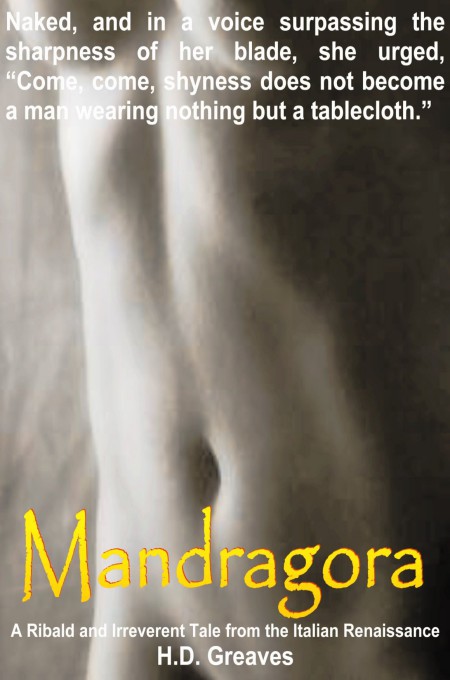
Mandragora by H.D. Greaves

Mandragora by H.D. GreavesA ribald and irreverent tale from the Italian renaissance - Add a conniving servant and his amoral master; a murderous priest and his equally homicidal sidekick; an odious mother-in-law; a beautiful but barren wife wed to an ancient attorney; and a potion brewed from the root of the Mandragora, a plant alleged to help women conceive, and you have a prescription for pandemonium, especially when Mandragora (known in less reputable circles as “God’s Little Joke”), possesses a fatal flaw: after a woman drinks the potion, her body becomes a temple of poison. The first man to have sex with her will be dead in seven days. What's a man to do?
Based on Niccolo Machiavelli’s play, The Mandrake, this is a tongue-in-check story of a rake desperate to sleep with a certain woman, a husband desperate for a child, and a wife desperate for control of her own life. The heart of the novel lies in the question, “Does the end, when a noble one, justify the means, however wicked?”

The story starts with a hanging, and who doesn’t love that? I’m reminded of another great historical fiction tale that does this well, Pillars of the Earth, which starts (and ends) with a hanging. This immediately pulls the reader into the setting, and the story making them curious about how these characters got here and how they relate to or foreshadow events surrounding the main characters. Greaves holds up his end of the bargain, keeping the reader’s attention with one crazy scheme gone wrong after another.

In addition, Greaves expands on the characters in the original play, making them well rounded and more believable rather than the caricatures of the original play.  The servant, Siro, is now the catalyst for Callimaco’s antics rather than just being strung along.  With this transformation of Siro, the need for another facilitator of the plot is now almost non-existent.  So the character of Ligurio (a marriage broker and the “brains” behind the plan in the original play) is instead a downtrodden, almost destitute, filthy con man that Greaves uses to illuminate the darker reality for the non-elites of the time period.

One of the things that I enjoyed most about Greaves’ writing style was his conversational storytelling and his often wink, wink, nod, nod asides to the reader.  Occasionally he would break down the fourth wall to address the reader directly, such as:

“Regrettably, this cannot be said of lechery itself, for since evil was created at the beginning of the world lechery has been an all too common sin (as you and I, being virtuous, know very well).”

While I enjoyed this writing style, it became one of the things that I began to dislike at times.  Greaves had great lines such as:

“A hanging without music is as boring as a Borgia banquet without at least one goblet tainted with poisoned wine.”

But then at times it felt a bit much:

“So pitted by the corrupting hand of Man and so pockmarked by Church dogma, how could it ever be the honest face of The Truth:  Truth unbiased, factual, and as clear as cool water drawn from a deep and unpolluted well."

The supplemental material at the end of the book was almost as interesting as the story itself.  Like many great works of historical fiction, Greaves provides a list of discussion questions for book clubs and reading groups.  I found these questions to invoke thoughtful contemplation.

It is hard to believe that this is H.D. Greaves’ first published novel (he had written several short stories).  Mandragora is a well-written, well-edited, funny, and thoughtful comedic tale that, while it may divert at times from Machiavelli’s play, stays true to the original.

I, personally, am looking forward to his current work in progress: Clizia – A Tale of Scandalous Surprises.

You can learn more about H.D. Greaves and his works at Smashwords.

For more reviews from the Bookworm, stop by the Bookworm's Fancy!

Monday, March 3, 2014

Adam Copeland's Kickstarter

Adam Copeland, fantasy author and friend of the blog, has launched a funding campaign for Ripples in the Chalice, the sequel to his debut opus, Echoes of Avalon, on Kickstarter.

If you read Echoes of Avalon or are a fan of historical fantasy a la Marion Zimmer-Bradley, you owe it to yourself to check it out.

Tuesday, February 18, 2014

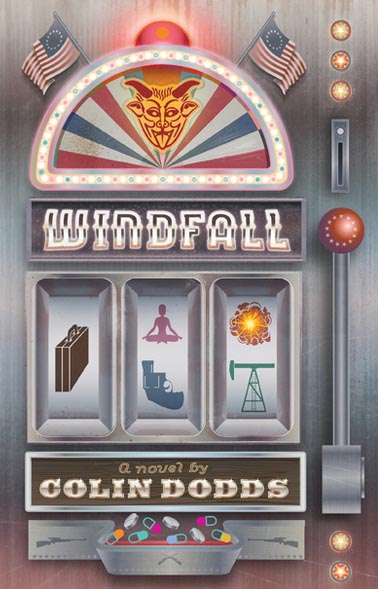
Windfall by Colin Dodds

WindfallSeth Tatton is a "middle-of-the-pack attorney" struggling to help his suburban family keep up with the Joneses. Through his firm, he becomes a fixer; he gets things done no matter what the job entails. He's clean, methodical, and a stickler for detail.

The opening of Windfall introduces us to Seth and his accomplice, William, while out on a job. Seth is clearly in charge and instructs William to wait in the car while he approaches a target that can help cover up a murder committed by a client. Posing as a police detective, Seth conducts the interview with aplomb. His knowledge of the law enables him to play the part, extracting all the information from the target for Seth to construct the perfect coverup.

Seth's boss is part of a cabal of the wealthy and political elite who are scheming to take control of several western states and secede from the Union. Culled from the political chatter that's out there now, I wouldn't be surprised if it went down like this. The cabal recruits governors, senators, CEOs, assorted VIPs and military figures with the promise of them becoming a cadre of new Founding Fathers. Unburdened by D.C. debt, this new country will be prosperous thanks to an unusual shale oil discovery. All they need to do is put the right people in positions of power and arm the militias. But secret organizations need skilled specialists on the ground to make things happen and that's where Seth comes in.

As Seth completes each assignment, he picks up bits and pieces of the cabal's plan. He's drawn deeper inside the organization and meets the key players and listens to their plans and dreams. Part of him is on board with the plan; part of him questions whether it will lead to a bloodbath.

While it might seem that Seth is a cold-blooded killer, he isn't. He buries his guilt deep down inside with the help of alcohol and something that dwells within him. It was this paranormal element that drew me in and makes this thriller stand out from every other political thriller out there. This entity is his steadfast companion. It suggests courses of action and prods him forward on an amoral path that will see Seth rise to greatness.

Seth is assigned to keep an eye on Sarah, the plaything of a powerful Senator in the cabal. She's a mess and Seth falls for her, much to the chagrin of the thing within him. She threatens to unravel the Gordian Knot that has kept his conscience in check. Dodds could've played the old devil on one shoulder, angel on the other bit but doesn't. Instead, Dodds sends Seth stumbling along a hazy path of morality with a malfunctioning compass that takes him through a maze of airports, hotel rooms and casinos in search of his identity.

While the novel's focus is on Seth and his mysterious companion, Dodds gives us an interesting bunch of characters. Even those that have a bit part to play are well-defined, leaving the reader to wonder if they'll be back for more. But the crux of the novel is the relationship dynamic between Seth and the thing that dwells within him. Through a series of flashbacks, we learn about Seth's companion from its point of view and how the two came together. Rather than relying on some cheap cardboard cutout of evil, Dodds crafts a unique being with an intriguing origin story.

Besides some comma issues, my only real complaint would be with the climax. There are three figures that Seth needs to deal with on his journey, but he only handles two of them. The third is taken care of by someone else. I would've liked to have seen him handle all three, but the way the story unfolds it would seem that the logistics weren't possible. While I would've liked to have seen how that went down, considering what that character shared with Seth, I still found the ending satisfying. I don't want to spoil it, but Mr. Dodds and readers of Windfall will know who I am talking about.

Windfall is not your typical political thriller. Dodds deftly weaves in a solid paranormal thread that explores ambition, myth and morality in an indifferent America without resorting to pulpit thumping or cardboard villains. His protagonist wanders through the amoral battleground of the American political class with a spirit guide whose theme song could very well be "Sympathy for the Devil".

For more information about Windfall, check out the author's website.