Showing posts with label Rant. Show all posts

Friday, April 17, 2026

Draft2Digital Adding Fees

Draft2Digital logo

If you're an author who uses Draft2Digital for publishing your work, then you already know what I'm about to post. For the rest of you, read on.

Draft2Digital sent out an email this week informing its clients that they're going to add user fees to their platform. The first is account activation fees. Due to "automated content farms" overwhelming them with "slop," (in other words, AI written books) they're requiring a one-time $20 fee to set up an account. Combined with "verification tools and human reviewers," they hope to cut down on those clowns that are abusing the system.

I'm ok with this. Granted, I'm an existing account holder so I'm exempt from this fee. However, the next one hits me, and I'd imagine probably about 90% of the authors who use their service.

There will now be an annual maintenance fee of $12 applied to all "accounts whose earnings from book sales, meaning your net proceeds after D2D's commission, total less than $100 over the preceding 12-month period. If you earn $100 or more from your book sales over 12 months, you will not be charged this fee." (emphasis on "net" is mine)

So if your book sales suck, which admittedly is most of us indie authors, you're not pulling your weight. We apparently need to up our game because we're a drain on their margins. As if we're not dealing with enough production costs (editing, typesetting, cover art) and marketing costs (ad campaigns, giveaways, paid reviews, etc.), we now have the added pressure of meeting our digital printer's revenue quota or else pay an annual fee. Swell.

As Smashwords is a D2D property, expect to see their FREE section to dwindle to next to nothing (well, successful authors can introduce the first book in a series for free to lure readers in and hope they can hook them for the rest of the series). In the past, Smashwords published statistics showing that the vast majority (90+%) of books that were purchased from them were books listed for free.

Needless to say, I am unhappy about this. I typically list my books for $2.99. After D2D takes their cut, I get $1.78. So I need to sell 57 copies to avoid the additional $12. If you think that's easy, then you don't know how difficult indie publishing is.

\_/
DED

Tuesday, September 9, 2025

Anthropic to Pay Authors $1.5 Billion to Settle Lawsuit

Back in June, a judge ruled that Anthropic could use books to train its AI without the permission of the authors who wrote said works. But the case wasn't quite settled. There was still the matter of how Anthropic got the books that it used. Apparently, they were pirated copies downloaded for free.

It seems that the "fair use" principle on which Anthropic's lawyers were hanging their hats on wasn't going to hold up. Since the books were essentially stolen from the authors, there was nothing fair about how they were acquired. To avoid a ruling against them later this year (and possibly being forced to pay even more), Anthropic settled last week for $1.5 billion.

While I think that it's great that the authors and the Authors Guild won, I think that $1.5 billion is a paltry sum when taken as a whole for the entire industry past, present, and future. That last part is what bothers me. As corporations choose AI over people (and I'm not just talking about creatives but software programmers, data analysts, and other technical professions), more and more of us will find ourselves displaced. We'll have to hope that consumers prefer works written by humans over computers.

There are still a couple of cases out there that might be influenced by this one. Newspapers are suing OpenAI and Warner Bros. is going after Midjourney for snagging Tweety, Superman, and many other copyrighted characters. Maybe corporate lawyers will be a bit more successful than those of the Authors Guild.

\_/
DED
J.A. Konrath offers a more detailed analysis of the implications of this decision.

Wednesday, June 25, 2025

Judge Rules AI Can Use Books Without Permission

Yesterday, a judge ruled that Anthropic can use copywrighted material without the author's consent when training its AI. This is a terrible setback for not only the rights of authors and artists, but publishers as well.

One possible silver lining, albeit a weak one, that may come out of this is that literary and artistic content may have to be purchased in order for the "fair use" prinicple to apply. Anthropic may have to purchase a copy of an author's book in order to use it for AI training. The plaintiff in the case insisted that Anthropic used pirated material to create its "central library." In my opinion, getting a few bucks is a paltry sum to be paid by a company that's worth over $60 billion (for the moment, anyway).

\_/
DED

Thursday, February 13, 2025

The Big Five Publishers Have Killed Literary Fiction

Need another reason to support indie writers? Consider reading this post by Elizabeth Kaye Cook and Melanie Jennings, wherein they discuss how consolidation in the publishing industry has basically reduced your reading options to what algorithms recommend.

But who needs authors, right? Just let AI do it. 🙄

\_/
DED

Wednesday, August 11, 2021

Goodreads Has a Problem With Trolls and Extortion

I just learned about this today. In a nutshell, indie authors with a high visibility on social media—particularly those with progressive politics—are being targetted by extortionists. Typical message:
"EITHER YOU TAKE CARE OF OUR NEEDS AND REQUIREMENTS WITH YOUR WALLET OR WE'LL RUIN YOUR AUTHOR CAREER. PAY US OR DISAPPEAR FROM GOODREADS FOR YOUR OWN GOOD."
Failure to comply with these demands results in authors getting slammed with hundreds of one-star reviews on Goodreads. The company is typically slow in its corrective actions.

All indie authors know how difficult it is to get readers to check out their work. It means putting yourself out there on social media (the introvert's equivalent of smelling sweaty socks) to get the public's attention. Many authors choose to discuss topics of personal interest to them. And if there's anything we've learned over the last few years, doing so puts a target on your back. As their audience grows, the trolls take notice.

Amazon used to have a sock puppet problem, but then it found ways to restrict reviews to verified accounts by simply making use of data it already had (verified contact info, purchasing history, etc.). Since Amazon owns Goodreads and offers potential readers easy to access links to buy said book, you would think that they would make every effort to ensure that the number one social media site for books was free of crippling attacks on their revenue stream.

Thanks to Monica for bringing this to my attention.

\_/
DED

Thursday, May 5, 2016

How NOT to Take a Rejection from Us

While stumbling around the internet today, I came across this. In essence, it was an author bemoaning a rejection letter he received from us. He was having a bad day and chose to rant on his blog about it. I've copied the pertinent part below, but you can click on that link to read the whole thing and verify that I'm not misquoting him.

My magnum opus received a rejection today, not for publication, but rather, that it was not qualified for a review by any “reviewers” on the website “The New Podler Review of Books: Small Press and self-published books worth reading”. Now I don’t remember ever submitting a review request to this site, although it’s possible. I don’t normally ask for reviews except when I am just putting a book out there and need a few ARC reviews posted so that the almighty ad sites will consider my money worth spending (and then I normally impose shamelessly on fellow authors).

Now the facts that the aforementioned review site is built on the most hideous of the free backdrops on the free “blogspot.com” and that my rejection came from a (free) Gmail address notwithstanding, their subtitle would suggest that my self-published book is “[not] worth reading”. Now had the site just said “Podler Reviews” I probably wouldn’t have given it a second glance. Okay, that AND if the current book under review didn’t have a cover (and writing) quality equivalent to that of a sixth-grader (no, that’s not true—not true at all. Such a commentary insults the sixth-grader).

I know, we’re supposed to have thick skin. And I usually do. Or pretend I do. But just as each time a reader enjoys my work it makes my day, not matter how many books I ever sell or have reviewed, it also stings when someone takes time out of their day to reject you. Doesn’t it? Or am I alone here, wandering in the literary desert of criticism with eyes gouged out and a bloody wrap around my head? It’s a bummer when people that consider dog poop as literature reject you as unreadable. I know, I know, it actually defies logic, but what can I say?

Now while this post was made three years ago, I couldn't help but reply. Things posted to the internet live forever or, at least, until they're taken down. As I write this, my comment is awaiting moderation. So here it is just in case it's rejected:
Ha! This is wonderful. I’ve only just now stumbled upon this post, so I shall respond on behalf of the New Podler Review of Books.

Your scathing criticism of our usage of free stuff is spot on and accepted. But we’re hardly alone in this.

We have changed the motto since you visited us. It was there from the beginning and was established by the site’s founder, who is no longer with us. I never thought that it was intended to alienate authors whose work was rejected by us. More like, “Here are some indie books that we came across that are good. Obviously, there are more, but [insert lame reason here].” We didn’t get to read The Martian or Wool when they were indies. Doesn’t mean they sucked.

I won’t apologize for the lame covers of some of the books on the site. Indie publishing has been plagued with that from the start. Instead, we’ve had a page dedicated to sites where indie authors can find affordable book cover designers.

Yeah, Blood Land was submitted to us via MailChimp, that mass mailing service. I don’t know if you used them or someone did it on your behalf. Regardless, it means that someone didn’t read our submission guidelines. Mystery/Thrillers really aren’t our thing. Maybe one of the available reviewers at the time was into it, but he/she took a pass for whatever reason.

If you had read our submissions page, at the bottom you would’ve seen this:

“We reject over 95% of the submissions we receive, and that includes the very good along with the not so good. If you’re rejected, you’re in good company. One author we reviewed posted that he only received five reviews out of 144 submissions to book bloggers. Keep trying!”

We send out form rejections because it consumes less time, and when managing a slush pile, I like to take the easy route. Kind of like using MailChimp to send out a bunch of submissions to prospective reviewers.

I’m sorry if the rejection letter that was sent to you hurt your feelings. It wasn’t meant to do that. It was sent to provide closure. Some authors like to have that. Also, I’m sorry that you felt that rejecting your work meant that we thought it was crap. That was not the case. Yeah, the book cover on the site at the time was amateurish, but the writing was not. Judging books by covers…yeah, I know.

Anyway, I’m sure that you’ve moved on. I hope that this reply clears things up for you. I also hope that when you get rejected, you shrug and move on.

It just goes to show that you can't please everyone. Oh, and the book currently reviewed at the time was Embustero. I guess sci-fi isn't his thing.

\_/
DED

Monday, January 12, 2015

Blog It and They Will Come

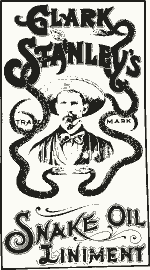
Clark Stanley's Snake Oil LinimentLast week I received an email from a reputable indie publishing blogger inviting me to a webinar where I could learn how to double my sales from a successful indie author. It sounded too good to be true, but since this was a reputable indie publishing blogger, I decided to give it a shot.

The webinar was packed full of writers, and many went around introducing themselves and where they were from. Judging from the introductions, many were either new writers working on their first book or veterans struggling with limited sales of their first book or two. You can put me in the latter category.

The successful indie author hosted the webinar and (surprise) primarily spent his time plugging his new book, which featured ways that indie authors everywhere could double their sales. He started off relating what he did and gave case studies demonstrating how so-and-so applied the techniques from the book and saw their sales blossom. But every example he gave involved a non-fiction author. And our successful host was a non-fiction author as well. I complained in the audience chat that all we were seeing were non-fiction examples. Anyone with a clue about publishing knows that selling non-fiction is completely different from selling fiction. Several other attendees agreed with me.

People buy non-fiction for a very specific purpose, and it can be anything. You can look up books on shade gardening in New England, building websites for mobile devices, Theodore Roosevelt's childhood years at Oyster Bay, or meatball recipes. People buy fiction just to be entertained, but the specifics are limited. It typically isn't anything more than "alien invasion sci-fi", assuming that "sci-fi" isn't as far down the genre tree as one can go. Nobody looks for "alien invaders from Barnard's Star with trilateral symmetry who choose Africa as ground zero". And even if they wanted to, they couldn't as that level of detail in sub-categories doesn't exist.

I'm not sure how much of the webinar I can relate here without trampling on someone's copyright, but I'll try anyway. One major suggestion was to convert readers into fans. The thinking was to sell product to the fans like how projects on Kickstarter offer tiers of rewards to people who donate more money to their projects. It's an interesting idea, provided you already have a readership, and someone willing to spend $50 on your 3D printed figurine of the half-elf heroine from your epic fantasy.

Fortunately for successful non-fiction indie author, he already had a readership when he applied this method. I consider that an unfair advantage. Indie fiction authors want to know what they can do to make their first paranormal romance novel, for example, stand out from the thousands of other paranormal romance novels. How does one build that initial readership?

The suggestions for fiction authors were limited. We're supposed to give away short stories for free on our website, and we should blog about the writing process.

That was it.

Don't sell your short stories to zines, give them away for free on your website. But the real kicker was: Blog it and they will come. Because people looking for books to read really want to just read the random thoughts of some random person.

Now blogging has been incredibly successful for some people, though they tend to be journalists and pundits. John Scalzi sold his first book to Tor because one of its editors read his blog (He didn't even have to bother with the indie scene). But how many of these success stories are out there? And why was that gentleman reading that blog in the first place? There has to be some sort of connection to the blogger and his/her readership. But if I had a dollar for every blogger that fizzled out, or never got past a dozen readers (like my old blog), I could pay off my mortgage (and then some).

I don't have an answer for you. I'm certainly not a best-selling author. I'd say keep trying your hand at social media. Make sure your work has been edited and hire a professional to create your cover. Whether you view it as art or product, it's important that you produce your best work. One option to try is to keep writing. Maybe if you have enough books out there, someone will stumble into one and it'll start a chain reaction.

Anyone who's found a technique that works should feel free to share it in the comments. Please, share it. Though we've hoped and tried, book reviews aren't enough to help your fellow indie authors (there might be a couple exceptions). We don't mind you plugging your success, so long as you don't try to sell us a book claiming that it will make us successful, cure baldness, have us waking up every day feeling rejuvenated, or help us lose ten pounds without dieting or exercise.

\_/
DED

Saturday, February 9, 2013

Ellipsis Tirade

el·lip·sis – noun \i-ˈlip-sÉ™s, e-\
  1. a : the omission of one or more words that are obviously understood but that must be supplied to make a construction grammatically complete;  b : a sudden leap from one topic to another
  2. : marks or a mark (as …) indicating an omission (as of words) or a pause

The above definition is taken from the Merriam-Webster Online Dictionary.

Since I’ve begun to read indie author works, I’ve noticed that writers seem to be in love with these three little dots. So much so that they misuse them all the time. At first, I thought it was just one book or author but after ten plus books where 75% of them misuse the ellipsis, I feel the need to step in.

The main use of an ellipsis is to shorten a quotation or to show a trailing off in speech. Here is an example of each. For the quotation, let’s take a simple quote from Cicero:

Original – “A friend is, as it were, a second self.”

Ellipsisfied – “A friend is... a second self.”

Notice that is replaces an unnecessary portion of the quote. The addition of the ellipsis does not change the meaning of the quote. Now let’s use it to show a trailing off in speech or thought in dialogue.

“Fiddlesticks! Where did I leave those darn... ?”

But what about using an ellipsis to build tension? Even though it seems to be a widely used (and accepted) practice to use the ellipsis this way, I cannot find any book/site on writing styles that states that it should be used this way. But I’m not going to fight against the stream here. Language and grammar are ever changing creatures.

I tend to agree with the Writing Forward Blog which states:

“We can also use an ellipsis to indicate a pause or unfinished thought. At the end of a sentence, an ellipsis represents trailing off into silence. Using an ellipsis to represent a pause can get a writer into trouble.
We tend to pause a lot in speech. Pauses give us a moment to collect our thoughts or add emphasis to what we’re saying. But in writing, a page peppered with ellipses wreaks havoc on the eyes. The same applies to unfinished thoughts.
A lazy writer might use ellipses to indicate, “and so on,” or “et cetera.” In text messaging and social media, many people use ellipses where they believe the reader will implicitly understand what would be stated next. In professional-grade writing, we finish our thoughts, so ellipses used for this purpose should be rare.
However, when we are writing dialogue, an ellipsis can come in handy, especially if we want to show a character’s speech trailing off. Keep in mind, though, that ellipses, like exclamation points, should be used with caution and only when truly needed for emphasis. As a general rule, don’t use it unless you must.”

PLEASE, AUTHORS!  I BEG OF YOU! When writing your novels, use ellipses sparingly! Also remember that ending a chapter in an ellipsis is redundant. The tension builder is already there. A well written story already has me thinking, “Oh! I so need to read the next chapter to find out what happens to [insert character here]!”

Here are three great resources for using ellipses:
  1. Grammar Girl’s Quick and Dirty Tips for Better Writing
  2. Capital Community College’s Grammar Page (with handy drop down menu)
  3. Writing Forward’s Ellipsis Page

</end rant>

This post originally appeared over at The Bookworm's Fancy.

Thursday, October 4, 2012

Separating the Wheat from the Spam

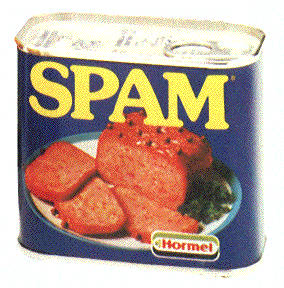
Spam - good to eat, not to read.Our email address has been snatched up by an email marketing company. No real surprise there. This is the Internet Age after all.

We don't mind having our site listed on indie book reviewer lists. Most of them are courteous to both author and reviewer. They list the reviewer's likes and dislikes and other submission guidelines, and even provide a link to the reviewer's site. This is the right way to go about it. They save the author time in their hunt for reviews and the reviewers from having to deal with books they're not interested in.

But that's not how this marketing company operates. Authors pay a fee to generate an email marketing campaign. Judging by the format of these emails, they fill out a form listing pertinent info about themselves and their book. Upon completion, it gets shot out to every book reviewer in their database, regardless of the reviewer's book preferences.

We're tired of this.

There's a reason why we have submission guidelines. There's a list of what we're not interested in and who's available and what they like to read. It's a waste of our time to have to go through these blind submissions, telling Joe Schmoe that his 101 Ways to Serve Lima Beans cookbook isn't what we want to read.

The other interesting trend to these spam submissions is the quality. There's a definitive lower level of quality to this group. As a sweeping generalization, I'm going to accuse the mass mailers of trying to do things on the cheap. Many (not all) don't utilize an editor or spend the extra time proofreading their own work. Acceptances are far lower for this group than for those who follow procedure. We still have to read the submission, track down some sample chapters on the Web, and, after confirming the material is third rate, send out a rejection letter. More time lost.

As a whole, authors who take the time to check us out and follow our submission guidelines have invested more time in their work. And it shows. Even if we reject them (we have to; there's just too many), 80% of the time quality is not an issue.

We could just ignore everyone who lacks "submission" in their subject line, but that would be rude, right?

Instead, filters are in place to weed out spam-like marketing campaigns. Submissions from people who blindly submit to us via these mass mailers are deleted unread. We're not completely heartless though. An auto-responder lets them know that their submission is "improperly formatted" and provides a link to our submission guidelines page.

I'm hoping that the lazy authors will see what they have to do and either improve the quality of their work or just go away.

I don't know if this post comes across as a rant, whining, or rational. Frankly, I don't care. We're up to 30 submissions a month again. There's only time to review a fraction of those books. The less time spent sifting through the slush to find something of quality we want to read, the better.

If you have the time and the desire, why not join us? Take on some of the load. It doesn't matter if it's just one book review per year (though the more the better). Help us shine a light on those indie authors who deserve some time in the spotlight.