Mick Rooney of The Independent Publishing Magazine offers a link to a Forbes article about a new indie outlet: Libiro.
The article claims that Libiro is intended to compete with Amazon. One of the site's founders laments that indie authors get lost in the sheer volume of books offered by Amazon, not to mention the mammoth marketing budgets that the big publishing houses have at their disposal. No argument here, but there already is an alternate outlet for indie authors: Smashwords.
Smashwords, for those unaware, offers indie authors (and small presses) a venue to sell their work as well as distribution to the major online retailers. Name the outlet and Smashwords probably distributes to them. While the site isn't without its problems (the manuscript upload engine is called the "grinder" with good reason), it provides a valuable service to indie authors.
Unlike Smashwords, Libiro isn't offering distribution to major online retailer outlets. It intends to be an online retailer in its own right. The only formats it intends to sell are ePub and pdf and it is the author's responsibility to convert her manuscript into those formats whereas Smashwords does the work for her.
Libiro is based in the UK so for American readers, there may be some sticker shock as the prices are listed in pounds. As I write this, 1 £ is equal to $1.60. While exchange rates vary daily, this isn't far from the historical average.
I'll give Libiro points for its clean interface and recommendation engine ("people who bought this book also bought") but there's no preview feature. As a reader, not to mention a reviewer, it is important for prospective customers to be able to preview an author's writing. For me it's essential. I've seen many a book fail to live up to the promise offered by the book description and I have little patience for poorly edited work. This isn't anything new. Before Smashwords and Amazon offered it, we went to bookstores and picked up books to read a few pages.
As of right now, there's little incentive for readers to shop Libiro. The selection is limited—they have 70 books as of Tuesday—and the prices are higher. For indie authors, it's great to have another outlet to sell their work, not to mention the 80% royalty. But if no one visits the store, that doesn't mean much. There's nothing wrong with competition. As Libiro grows and improves, it should force Smashwords to improve its services in order to retain its UK business. But as for taking on the mighty Amazon, keep dreaming. People aren't looking for indie authors; they're looking for books. And, in that, Amazon is king.
\_/
DED
Showing posts with label ebook. Show all posts
Showing posts with label ebook. Show all posts
Thursday, September 19, 2013


Saturday, February 18, 2012
Ebook Pricing Wars: Episode 1,209,843
Zoe Winters wrote a thoughtful and reasoned post on ebook pricing the other day that's worth the read for all you indie publishers struggling with the pricing question. An excerpt:
My own experience corroborates Zoe here. I almost fell into this trap last year when I considered tinkering with the price of my fantasy novel, THE LAST KEY.
Should I go high or should I go low?
If I go high, I thought, why would anyone pay $4.99 for my book with all the 99-cent/free books out there?
But then I wondered, If I go low, how would anyone notice my book with all the 99-cent/free books out there?
I decided to go high and priced THE LAST KEY at $4.99 (a common price-point for novels with 75,000+ words). Since I did that in December, my sales rates have...stayed the same.
And that's good. It means I'm getting the same number of sales and making more money than when the book was priced lower. I may not be tapping into the BARGAIN market, but I am getting noticed by a different market. I like to think it's the LOVERS OF HIGH QUALITY FANTASY market...
Originally posted at Quarkfolio by Rob Steiner.
I am bolding this next part because if you don’t hear any of the rest of this, please hear this:
99 cent and free ebooks are not glutting the ebook market. They are glutting the BARGAIN ebook market.
If you are selling to that market or you are a reader in that market, it’s very easy to imagine it’s the only market and OMG we all have to price at 99 cents because other people are MAKING US with their low-priced ebooks.
Not so.
My own experience corroborates Zoe here. I almost fell into this trap last year when I considered tinkering with the price of my fantasy novel, THE LAST KEY.
Should I go high or should I go low?
If I go high, I thought, why would anyone pay $4.99 for my book with all the 99-cent/free books out there?
But then I wondered, If I go low, how would anyone notice my book with all the 99-cent/free books out there?
I decided to go high and priced THE LAST KEY at $4.99 (a common price-point for novels with 75,000+ words). Since I did that in December, my sales rates have...stayed the same.
And that's good. It means I'm getting the same number of sales and making more money than when the book was priced lower. I may not be tapping into the BARGAIN market, but I am getting noticed by a different market. I like to think it's the LOVERS OF HIGH QUALITY FANTASY market...
Originally posted at Quarkfolio by Rob Steiner.
Saturday, December 10, 2011
Thinking of KDP Select? Read the fine print...
Amazon just gave a big fat middle-finger to all the other ebook stores out there with the announcement of their KDP Select program. It sounds great:
But as with all things that "sound great," you need to read the fine print:
In other words, if you also published your ebook on Smashwords, Barnes & Noble, iBooks, etc., you'll have to remove it from those sites while you're in the KDP Select program.
Now this is a brand new program, so I don't pretend to know if placing my ebooks in it is worth the lost sales from the other online bookstores I use. I'll wait for all the first-adopters to be my guinea pigs.
But the program's costs/benefits aren't the most interesting thing about it to me.
What's interesting is that KDP Select's "Exclusivity" clause means Amazon has just declared war on every other ebook store. Now authors will have to think about whether their ebooks will get more exposure/sales from KDP Select's -- admittedly -- large marketing mega-phone, or if they'll do better on the virtual shelves of multiple ebook stores. Many authors will choose KDP Select and give up placing their ebooks elsewhere.
The other ebook stores must respond to this. They have no choice. Whatever they do, though, it'll only benefit authors. They're fighting over us and want to lure us into their stores with the better deal. Without authors, they have no product to sell.
Feels nice to be fought over.
Originally posted at Quarkfolio by Rob Steiner.
KDP Select gives you access to a whole new source of royalties and readers - you not only benefit from a new way of making money, but you also get the chance to reach even more readers by getting your book in front of a growing number of US Amazon Prime customers: readers and future fans of your books that you may have not had a chance to reach before! Additionally, the ability to offer your book for free will help expand your worldwide reader base.
But as with all things that "sound great," you need to read the fine print:
1 Exclusivity. When you include a Digital Book in KDP Select, you give us the exclusive right to sell and distribute your Digital Book in digital format while your book is in KDP Select. During this period of exclusivity, you cannot sell or distribute, or give anyone else the right to sell or distribute, your Digital Book (or content that is reasonably likely to compete commercially with your Digital Book, diminish its value, or be confused with it), in digital format in any territory where you have rights.
In other words, if you also published your ebook on Smashwords, Barnes & Noble, iBooks, etc., you'll have to remove it from those sites while you're in the KDP Select program.
Now this is a brand new program, so I don't pretend to know if placing my ebooks in it is worth the lost sales from the other online bookstores I use. I'll wait for all the first-adopters to be my guinea pigs.
But the program's costs/benefits aren't the most interesting thing about it to me.
What's interesting is that KDP Select's "Exclusivity" clause means Amazon has just declared war on every other ebook store. Now authors will have to think about whether their ebooks will get more exposure/sales from KDP Select's -- admittedly -- large marketing mega-phone, or if they'll do better on the virtual shelves of multiple ebook stores. Many authors will choose KDP Select and give up placing their ebooks elsewhere.
The other ebook stores must respond to this. They have no choice. Whatever they do, though, it'll only benefit authors. They're fighting over us and want to lure us into their stores with the better deal. Without authors, they have no product to sell.
Feels nice to be fought over.
Originally posted at Quarkfolio by Rob Steiner.
Wednesday, August 10, 2011
Borders Post-Mortem
You've all heard about the death of Borders. There have been some who were quick to accredit its demise to upheaval in the publishing industry, but it's actually amazing the company lasted as long as it did. Rather than there being one cause of death, Borders suffered from several mistakes over the last two decades.
1. Hijacked by Kmart. Kmart was struggling to properly manage Waldenbooks. After eight years of mediocrity, they bought Borders in 1992 hoping that the executives there could help them out. Instead, they jumped ship. The Kmart execs never figured out how to sell books so they spun off the two companies in 1995 as Borders - Walden Group (the latter half of the name was dropped before the year was out).
2. Bits Beat Bricks. Internet business whiz, Jeff Bezos, realized that the Internet allowed him to sell books (and later many more products) all over the world without physically being there. With the costs of running a website far less than that of running thousands of stores, Amazon is able to offer books at a discount and ship them to your house (for free if you buy enough of them). Browsing a bookstore in your pajamas? Great!
3. Selection, selection, selection. Amazon deserves a second dagger in Borders' heart here: the selection is unbeatable. In a brick and mortar, you've only got so much space to work with. You've got to keep those cash registers ringing so that means going only with the titles that sell. Amazon can stock them all because the books just occupy a spot on the rack in the warehouse. So if a customer is looking for something specific and not well known, the odds of them finding it on Amazon are great. In a Borders store? Not so much. That means missing out on the Long Tail, not to mention future purchases from now disgruntled customers.
4. Asleep, with the enemy at the wheel. Borders couldn't figure out how to make their website profitable. In 2000, they had $27 million in revenue from the website but the cost of operations led to an $18 million loss. So, like Toys-R-Us, they partnered with Amazon, the very company that was eating their lunch. Amazon was quickly becoming a paradigm of order fulfillment while Borders threw in the towel. But as people learned Amazon was running things, they wondered why they should bother going through Borders.
5. Coffee is just coffee. In 2004, Borders partnered with Starbucks' subsidiary, Seattle's Best Coffee, to operate the coffee shops in its bigger stores. Borders hopes that the lure of good coffee will get more people into its stores. The deal works for Seattle's Best, but not so much for Borders. Sure, people will sit down and read a book, but it's not making them buy more books. And once free Wi-Fi becomes available, people begin accessing the Web rather than browsing the bookshelves.
6. Another failure to innovate or adapt. Amazon released its first e-book reader, the Kindle, in 2007. You know its story well: less expensive books, no more crowded bookshelves, near instantaneous deliveries. Bibliophiles gobbled them up. Many other companies followed suit with either dedicated devices or provided apps in their web-enabled phones and PDA's so that readers could download electronic versions of their favorite books. The growth of the e-book market has been nothing short of meteoric. But Borders totally misses the boat. Not only do they not offer e-books, but they failed to partner with any of the e-reader manufacturers. It isn't until July of last year that they open an e-Book store and offer an e-reader app of their own. The Kobo is also plugged as a preferred e-reader but by then Amazon, Apple, Barnes & Noble, and Sony have staked their claims on the market.
By now it's too late. Borders hasn't made a profit since 2006. Throw in the Great Recession of 2007-09 and the death spiral is complete.
Don't get me wrong. I was disappointed in seeing Borders go under. For new books, it was either Amazon or Borders. I'll have to drive the proverbial extra mile to Barnes & Noble or stay home and browse Amazon. The two used book stores in town are always worth a look, but their selection is limited. The failure of Borders to survive is the result of a succession of bad business moves and the inability to adapt to the changing times. But you can't pity them, that's capitalism: innovate, adapt or die. Well, unless you can con your government into a bailout, but that's outside the scope of this blog. ;-)
1. Hijacked by Kmart. Kmart was struggling to properly manage Waldenbooks. After eight years of mediocrity, they bought Borders in 1992 hoping that the executives there could help them out. Instead, they jumped ship. The Kmart execs never figured out how to sell books so they spun off the two companies in 1995 as Borders - Walden Group (the latter half of the name was dropped before the year was out).
2. Bits Beat Bricks. Internet business whiz, Jeff Bezos, realized that the Internet allowed him to sell books (and later many more products) all over the world without physically being there. With the costs of running a website far less than that of running thousands of stores, Amazon is able to offer books at a discount and ship them to your house (for free if you buy enough of them). Browsing a bookstore in your pajamas? Great!
3. Selection, selection, selection. Amazon deserves a second dagger in Borders' heart here: the selection is unbeatable. In a brick and mortar, you've only got so much space to work with. You've got to keep those cash registers ringing so that means going only with the titles that sell. Amazon can stock them all because the books just occupy a spot on the rack in the warehouse. So if a customer is looking for something specific and not well known, the odds of them finding it on Amazon are great. In a Borders store? Not so much. That means missing out on the Long Tail, not to mention future purchases from now disgruntled customers.
4. Asleep, with the enemy at the wheel. Borders couldn't figure out how to make their website profitable. In 2000, they had $27 million in revenue from the website but the cost of operations led to an $18 million loss. So, like Toys-R-Us, they partnered with Amazon, the very company that was eating their lunch. Amazon was quickly becoming a paradigm of order fulfillment while Borders threw in the towel. But as people learned Amazon was running things, they wondered why they should bother going through Borders.
5. Coffee is just coffee. In 2004, Borders partnered with Starbucks' subsidiary, Seattle's Best Coffee, to operate the coffee shops in its bigger stores. Borders hopes that the lure of good coffee will get more people into its stores. The deal works for Seattle's Best, but not so much for Borders. Sure, people will sit down and read a book, but it's not making them buy more books. And once free Wi-Fi becomes available, people begin accessing the Web rather than browsing the bookshelves.
6. Another failure to innovate or adapt. Amazon released its first e-book reader, the Kindle, in 2007. You know its story well: less expensive books, no more crowded bookshelves, near instantaneous deliveries. Bibliophiles gobbled them up. Many other companies followed suit with either dedicated devices or provided apps in their web-enabled phones and PDA's so that readers could download electronic versions of their favorite books. The growth of the e-book market has been nothing short of meteoric. But Borders totally misses the boat. Not only do they not offer e-books, but they failed to partner with any of the e-reader manufacturers. It isn't until July of last year that they open an e-Book store and offer an e-reader app of their own. The Kobo is also plugged as a preferred e-reader but by then Amazon, Apple, Barnes & Noble, and Sony have staked their claims on the market.
By now it's too late. Borders hasn't made a profit since 2006. Throw in the Great Recession of 2007-09 and the death spiral is complete.
Don't get me wrong. I was disappointed in seeing Borders go under. For new books, it was either Amazon or Borders. I'll have to drive the proverbial extra mile to Barnes & Noble or stay home and browse Amazon. The two used book stores in town are always worth a look, but their selection is limited. The failure of Borders to survive is the result of a succession of bad business moves and the inability to adapt to the changing times. But you can't pity them, that's capitalism: innovate, adapt or die. Well, unless you can con your government into a bailout, but that's outside the scope of this blog. ;-)
Thursday, June 23, 2011
Stigma Erased
 It is done.
The stigma of self-publishing has been slowly subsiding for the last couple of years, but this year its demise has accelerated. And today I can say with certainty that it doesn't mean a damn thing anymore.
Amanda Hocking, Jeremy Robinson and Zoe Winters are just a few authors that have had tremendous success with indie sales. A couple of months ago, Ms. Hocking used her indie success to land a deal with a big publisher. Apparently, they didn't mind how she sold her books. Joe Konrath, a successful traditionally published author, went indie and has had tremendous success. Barry Eisler, another best-selling traditionally published author, spurned a deal from St. Martin's Press to go indie.
And the names keep coming.
Earlier this week, Amazon announced that indie author John Locke sold 1 million ebooks on the Kindle in 2011. Take a few seconds to absorb that one. 1 million. That's hundreds of thousands of people who didn't care one iota that this guy published his books on his own without an agent or a big publishing house to back him.
Wired UK reported today that J.K. Rowling is going to self-publish the Harry Potter series. In essence, indie publishing has been blessed as acceptable by one of the most successful authors of all time.
Traditional publishing purists may continue to sneer with contempt at indie authors, but they can pretty much go stuff themselves because no one cares anymore. Readers don't care how books come to market so long as they're entertained. They don't need any self-appointed "gatekeepers" (nannies of literature, if you will) to tell them what's OK to read because the Readers can figure it out on their own. Or they'll ask their friends. Or they'll read reviews on blogs or booksellers' sites. Readers want to read what they want to read! And that's all that matters.
Saturday, May 15, 2010
"The Final Page" Tip of the Week: E-books as a promo tool
"The Final Page" column provides a weekly tip for avoiding common self-publishing mistakes. A professional final product makes the difference between being reviewed on The New Podler, or being one of the millions of books that sink through Amazon's sales rankings to languish below the 4-million mark.
Books That Sell Themselves
You've cut open your first shipment of books, handled the top copy reverently, and fulfilled pre-orders from family and friends. You still have 30 copies in the box. You give copies to the local library, and send more out for reviews. That leaves 20. Your Amazon sales rank looks a bit dismal, and now it's been a month and orders have tricked to zip. You leave a few more copies on the tables of local coffee shops. You're learning that books don't sell themselves.
But in a way, they can. Digital Book World's blog recently posted a study of what happens to paper book sales when the e-book is given away for free. Slight evidence suggests that giving away the e-book version impels more readers to buy the paper version. The study is imperfect in that it compares apples to oranges--the books it compares are of different genres and released by publishers of different sizes. Yet a correlation existed between free e-books and paper book sales.
As a promotional tool, e-books give you little to lose. By generating the multi-format book on Smashwords, readers can download the file to their computer as a PDF or read it on iPad, Nook, or Kindle. The process is relatively easy if you follow Smashwords's style guide, and free. Your book will then be available on the Smashwords site, as well as Amazon, B&N, and Apple's bookstore.
If giving your book away feels uncomfortable, you can always set a price for it now and generate a free coupon code for it later. Then, by sharing the coupon code promo through your social network online (you do have one, don't you?), you've allowed readers anywhere to perceive value in your offer and share it with others.
While no method guarantees success, who would you rather advertise to? Your family and local coffee shop patrons, or everyone with Internet access? Good luck!
Sarah Cypher is the author of "The Editor's Lexicon: Essential Writing Terms for Novelists" (Glyd-Evans Press, 2010) and runs a two-woman editing and book design shop, The Threepenny Editor.
Books That Sell Themselves
You've cut open your first shipment of books, handled the top copy reverently, and fulfilled pre-orders from family and friends. You still have 30 copies in the box. You give copies to the local library, and send more out for reviews. That leaves 20. Your Amazon sales rank looks a bit dismal, and now it's been a month and orders have tricked to zip. You leave a few more copies on the tables of local coffee shops. You're learning that books don't sell themselves.
But in a way, they can. Digital Book World's blog recently posted a study of what happens to paper book sales when the e-book is given away for free. Slight evidence suggests that giving away the e-book version impels more readers to buy the paper version. The study is imperfect in that it compares apples to oranges--the books it compares are of different genres and released by publishers of different sizes. Yet a correlation existed between free e-books and paper book sales.
As a promotional tool, e-books give you little to lose. By generating the multi-format book on Smashwords, readers can download the file to their computer as a PDF or read it on iPad, Nook, or Kindle. The process is relatively easy if you follow Smashwords's style guide, and free. Your book will then be available on the Smashwords site, as well as Amazon, B&N, and Apple's bookstore.
If giving your book away feels uncomfortable, you can always set a price for it now and generate a free coupon code for it later. Then, by sharing the coupon code promo through your social network online (you do have one, don't you?), you've allowed readers anywhere to perceive value in your offer and share it with others.
While no method guarantees success, who would you rather advertise to? Your family and local coffee shop patrons, or everyone with Internet access? Good luck!
Sarah Cypher is the author of "The Editor's Lexicon: Essential Writing Terms for Novelists" (Glyd-Evans Press, 2010) and runs a two-woman editing and book design shop, The Threepenny Editor.
Wednesday, March 4, 2009
Ether
 Ether
Etherby Kristine Williams
Daniel's uncle Frank was a man with a penchant for the fantastic. He was certainly a source of great stories that Daniel fondly recalls from his childhood. But there were also props, toys and objects that his uncle claimed were proof that his fantastical stories were true after all.
When Daniel inherits his uncle's house, he does not expect to receive a key that opens a doorway into an alternate reality and adventure. But when Daniel uses the strange key on the key ring to the house, he falls out of his reality and right into the path of oncoming traffic. The traffic altercation brings Daniel and Ian Foster to the attention of Sheriff Murphy, who interprets Daniel's disoriented behavior as proof of his otherworldly status. He's had plenty of experience, for there were others, visitors from Daniel's world, who had come passing by on their travels through Ether. Daniel has a problem, however; in order to get back home, he must use the key, but his key is left back in his reality, still stuck in the door lock. His only hope now is to find another key, hidden somewhere in Ether.
Soon, Daniel faces his new reality and a quest for the second key, traveling through Ether courtesy of Ian Foster and his balloon ship, which is not completely unfamiliar to Daniel—he had seen it before, a model of it in his uncle's house. Their journey takes them to a giant forest, where people dwell inside trees hollowed out by enormous worms. Daniel takes part in a worm hunt and earns a tooth keepsake from the beast.
Each environment they pass through offers some sort of danger. In the swamp there is the Tree of Lives, a particularly nasty things that uses the sense of the victims for its own. And in the maze there is the mold that can make you forget your name, then more, until you forget to live. Then there are the zombified, who have lost their memories due to the spores, roaming the maze aimlessly until they die.
Ether is an imaginative adventure story that's worth checking out if you love Dr. Who or watched Sliders or the Stargate series. Though smaller in scope, Ether still manages to be entertaining for those who love the idea of traveling between different worlds.
Friday, January 16, 2009
The Curse of the Red Dragon * * *
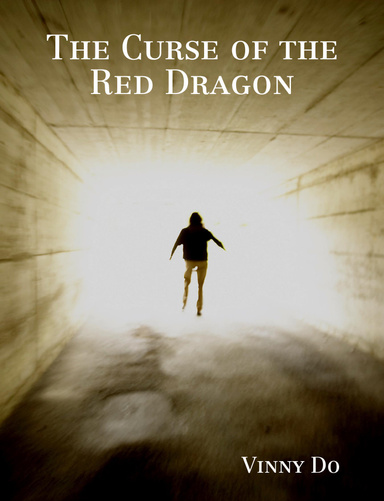 Title: The Curse of the Red Dragon
Author: Vinny Do
Genre: crime drama
Pages: 136
Available from Lulu
Lee is a teenage boy living with his mother when he first kills a man in an initiation into one of Melbourne's underworld factions, a triad called the Red Dragon. Will he continue on his path of violence, encouraged by the dark father figure of John Lang, the triad boss, or will he bail out before he becomes like John?
Lee's home life is saddening, for it is filled with deep emotional pain. There are many reasons for this pain: he doesn't have a father in his life; he is a failure, unable to be the man of the house and take care of his mother; and he is unable to succeed in the mainstream world. Understandably, he also wants to make good in the only way that seems, to him, to make sense.
Gangster John Lang, the boss of the Red Dragon triad, takes Lee under his wing, testing him, shaping him through various assignments into a gangster like himself all the while remaining unusually gentle with the boy. But Lee's course is complicated by the desire of his heart for meaningful human contact, which he finds in the embrace of a prostitute, who listens to his story. She is the only person he opens up to, revealing to her the hole in his heart. But in revealing this he makes himself vulnerable and puts himself in danger. It also causes a problem for John, for Lee is more than just another kid to him.
The Curse of the Red Dragon presents characters with real dilemmas. A young man searching for fulfillment. A deeply flawed father who tries to make his son see the world in the way that it appears to him. And the rest of the cast whose lives are empty and flawed because they have given up on faith in love and in humanity. One of the lessons that John wants to teach Lee that love doesn't exist. His intent is to spare his son the feelings of failure and despair that come when love ends. Money is the source of power, John believes, and the only saving grace. To teach these lessons to Lee, John orders him to kill two members of a rival triad.
One thing that's missing in this book, and in many self-published books for that matter, is a better sense of place and time. Some writers may feel that by generalizing, they make their work universal. But nothing could be farther from the truth. Don Maas, in his masterful book, Writing the Breakout Novel, argues that it is the powerfully evoked sense of time and place, which creates a powerful sense of reality, that marks the breakout work from the average. I tend to agree. For example, I would like to see the place and time of The Curse of the Red Dragon more clearly evoked in the story. It would certainly add to the story's power if the reader knew more about the particulars of the life of Lee, John Lang, and the Asian world in Melbourne.
Tuesday, December 9, 2008
Waiting for Spring * * * *
by R.J. Keller
Available from Amazon
Waiting for Spring opens with an image of a path on which nothing will grow. The earth is just too hard, having been long trodden, to admit new life. Such is the heart of Tess Dyer, the protagonist, who lives in a world marked by emotional abuse and the absence of love. Tess yearns for spring.
The place was hidden from the road by thick, bushy pines and naked maples. The driveway was a little rough but already plowed, which was a good sign. The house itself was white. Two story. Small and very old. Old enough to explain the low rent. Enclosed porch with lots of windows. There was no garage or barn, but there was a decent sized shed beside the house. It was white, too, but looked much newer than the house. And beside that stood a little orchard; five bare, snowy apple trees.
There were no other vehicles in the driveway. I parked facing the orchard, kept the car running. Stared out the window at the trees. The heater was running at full blast. I still shivered. I’d been shivering for five months. No. I’d been shivering longer than that.
My heart was Titanium White. Arctic Wasteland. Hard, trampled soil covered with ice. The frozen orchard seemed to say that it always would be and the tears came. Finally. Stinging and bitter, but quiet like always, and I looked away from the trees, looked down at the dashboard. Oil light flashing, neon red. I stared at it, tried to imagine my engine; tired, hot, low on precious blood. The neon light liquefied, blurred, floated as my eyes filled past the point of choking it all back. I glanced up to let them spill over, hoping I’d be able to dam up what would want to follow. Squinted my eyes against the tears.
And that’s when I saw it.
Bare, icy trees; eerie and still. They almost looked dead, but they were really only sleeping. Waiting for spring. The red light caught in the pool of tears; refracted, projected, and I could see it. I could see what the orchard would look like covered with blossoms. In the spring. Alizarin Crimson, Dusty Pink--starry, superimposed on the wintry scene. Like covering a photo with a clear sheet of plastic then drawing on it with dried out marker; shadowy and transparent. But real. So real.
When her marriage to the small town sports hero ends in a divorce, Tess, an unsuccessful artist making a living as a cleaning lady, moves to a small rural Maine town of New Mills, where the beloved local cleaning lady had been murdered by rampaging teens, to start a new life. Conveniently, her new neighbor, Brian LaChance, happens to be an available attractive male with whom she can start something new. Despite a wound of a broken marriage, Tess finds herself attracted by the small-time charm of the younger man as she tries to fill her life with something. Will she be able to find love or will spring never come? What can break through the hardness of heart?
There are many impressive things about Spring that I want to mention. What impresses me about Waiting for Spring the most is the writing. R.J. Keller is a good writer, as you can tell from the excerpt above, and there are some good lines in the book that are worthy of a good independent film.
But Ashley had a suggestion.
“You can come, Brian. If you want. That way you can keep an eye on her.”
He didn’t even miss a beat. “Nope. We already have plans.”
She looked at me and I gave her an eyebrow.
That’s right, honey. While you’re getting drunk and stoned with your little friends he’ll be in my bed. Fucking me. Stuff that in your training bra.
Another impressive aspect of Spring is the humanity of its characters—Tess and Brian seem human for two reasons. They have personal struggles resulting from understandable yearnings and conflicting emotions. But the two are not the only characters who seem real. All of the characters in the book are trying to make love grow but fail miserably in their attempts, generating only enmity and conflict. All are deeply flawed. Brian's sister, Rachel, struggles with a drug problem that boils over into violence. All are deeply needy, but they are unable to give one another what they need. All have become hardened of heart as a result of being in one another's lives. And all are yearning for rebirth. Perhaps the most awesome moment in terms of character comes at Thanksgiving, when Tess and Cass have a conversation. The contrast between what Tess had been told and what she herself tells Cass reveals how she had evolved as a person in a moving and poignant way. Not only are the characters real, they inhabit a realistically portrayed world populated by secondary characters who seem alive. Someone once said that you should write about that which you know, and R.J. Keller certainly knows the world that she chose to portray in her novel. I think that there are more books to be written about the characters in these two towns.
Waiting for Spring deals with a perennial theme in popular American literature—the yearning for rebirth and the desire for a second chance—in an honest and human way. But there is a way to be too honest, and Spring is not what it could be because it does not stray from reality much. Part of the tragedy of the characters in Spring is their inability or unwillingness to express themselves or to understand others. Tess's tragedy is that she has no actionable goal, and therefore no hope of achieving it. Wanting a new life is not a goal; it is a desire that is dramatically irrelevant until a character particularizes it in terms of a specific goal. She lives a real life, and failures and pain are a part of that life. But we don't want to read about how characters fail or about how life really is. We want to read about the potential for hope expressed through struggle for something that stands for that hope. Characters who hope for something are deliberate in their action. They are always moving toward some goal. Tess isn't acting toward a goal. When Rachel dies, there is nothing she can do to keep Brian in her life. But Tess should have something, some lifeline, that she can use to stay with Brian. She must be able to do something.
Waiting for Spring is a story of lives in the small world of rural Maine, filled with ordinary humanity of flawed men and women as they hope, pray, and suffer their way toward rebirth of spring and new life.
Subscribe to:
Posts (Atom)