Showing posts with label diaspora. Show all posts

Wednesday, September 2, 2015

I Truly Lament: Working Through the Holocaust by Mathias Freese

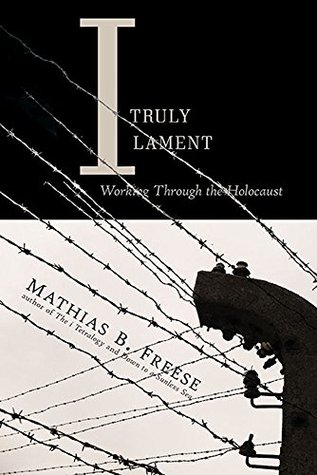
Book cover for I Truly LamentIn this anthology, Mathias Freese has composed twenty-seven short stories about the Holocaust. They're an attempt to gain some form of understanding about it. In the Preface, Freese states: "All literary depictions of the Holocaust end as failures..." and "Every artist who struggles with the Holocaust must begin with an acceptance of failure, and that must be worked through before art begins." If I'm interpreting him correctly, the reason why all attempts end as failures is because no mere words on a page can ever truly convey what it was like to have been there. But nothing short of a fully immersive virtual reality program (and none has been created yet) ever could, so why set the bar so high?

I'm not sure why Mr. Freese wrote this book. A tribute to the dead? The survivors? He states that: "No piece of art...can ever expunge the Holocaust." To which I rather flippantly say, "Well, duh." If this was ever his intent, it's a fool's errand. But no, this is an attempt to "work through it" despite his insistence that: "We will never work it through."

So it was after reading this conflicted preface, written by a man who so desperately wants answers to the questions he poses, that I read this book.

Obviously, this was no beach read. Rather than compose these stories as entertainment (Can the Holocaust, or any genocide for that matter, ever be formed into entertainment?), they're more like twenty-seven fictional biographies. Alas, they're repetitive. There were three stories involving golems. There were several stories each about Jews fleeing Nazi pursuers, life in the camps, and survivors trying to eke out some kind of life afterwards. While each was slightly different, too many elements were the same. For instance, all but one survivor story took place in Tuscon, Arizona.

But there were stories that broke out of the mold. "Max Weber, Holocaust Revisionist" was more of an essay. Freese explains that when he was writing a story he was derailed by a historian's contention that the Nazis did not make soap out of Jews. Freese researched the historian and learned that the man was a historical revisionist. Freese submitted his The i Tertralogy to him for a book review and published it herein as "Sincerely, Max Weber". I'm assuming both are true. Freese skewers the man in a story entitled "Soap", one of the best stories in the collection.

There are two fictional interviews: "Herr Doktor" and "Der Fuhrer Likes Plain". Both of these were among the better stories. The first one is an interview between an American doctor and a camp doctor. The interviewer is trying to determine at what point the camp doctor lost his ability to follow his Hippocratic Oath. The latter story is a fictional interview with Eva Braun just a few days before her death in Hitler's bunker. While it got off to a good start, it veered off into details about Hitler's sex life that have been gossiped about but never substantiated.

"The Disenchanted Golem" starts out with a golem discussing a few events over the course of his incarnations and what it's like to be a golem. But midway through his conversation with the reader, he tells us about the one he has with a rabbi. It has a bit of a Pinocchio quality to it, but without the Disney effect.

My favorite story was "Cantor Matyas Balogh". The titular character meets a woman in a sweets shop, and the two strike up a conversation. The conversation leads to tea and then to romance. It's a story about finding love when the world is going to hell. Both are aware of the dangers around them, but continue on because love has a power all its own.

In summary, I Truly Lament is a collection of stories centered on the Holocaust. While there are many repetitive story elements, individually, they offer poetic glimpses into the brutality endured. There are standout stories that rise from the miasma of the subject matter. It is a difficult read at times, for the subject matter and the associated suffering can be a bit much. If you can separate the entertaining tales from the pseudo-biographical cathartic soliloquies, then this book could be for you.

For more information about I Truly Lament and Mathias Freese, please visit his website.

Sunday, June 6, 2010

Review Roundup by Libby Cone

by Libby Cone

I have been on another Smashwords adventure, catching book samples on my hard drive as they drop from the conveyor belt of the literary fiction genre. Using this method, I hope to save readers time, energy, and money by reporting on books worth reading, worth sampling, and worth letting fall into oblivion.

Brakenstroom by Jacob SingerThe latest offering is Brakenstroom by Jacob Singer, a book of short stories about Jewish emigrants to South Africa. When I noted that only the first ten percent of the book was offered as a free sample, I was concerned that I might not appreciate its essence by reading such a small excerpt. I need not have worried, though. I invite experts on the complicated and tragic history of South Africa to comment on the accuracy of the author's account in the introduction. No expert is needed, however, to find “it's” being used as a possessive pronoun, or an implement for blade sharpening being described as a “wet-stone.” I began to have serious doubts when I read this sentence: “He worked hard, the hours spent pouring over accounting books giving him the stooped scolitic back and chronic myopia that on his tall thin frame, offered a portrait of the Scrooge circumstances had made him.” Then I read this sentence and gave up: “As a boy he was always a head and shoulders taller than others his own age, as thin as a stick, with two large ears on either side of a very Jewish nose.”


To Come Back So Far From Nowhere in ParticularNext is “To Come Back So Far From Nowhere in Particular” by Jon Thorpe. This is a free short story. Unlike the previous work, which dealt with a skinny, four-eared Jewish kid, this story describes the challenges facing suburban Christian youth devoid of bizarre physical deformities. I stopped reading after Page 6, which contains this sentence: “One young woman, Virginia Talbot, someone who would proclaim that Lubeck had seduced and corrupted her and led her astray from her good Christian values, had come forward and admitted Lubeck had arranged meetings with her in seedy hotel room where the two would smoke crack and Lubeck would masturbate as she pleasured herself with a crystal dildo.”

The next book in line is “The Sister City Initiative,” also penned by Mr. Thorpe. Forgive me, readers, for skipping his other ouevre, and the next book in line, which is written in Japanese.


The AlbumThe next book is “The Album” by Sandra White. It is actually published by “The Fiction Works.” POD purists may skip the rest of this paragraph. Ms. White gets brownie points from me for correct usage and spelling of the words “pored” and “its.” However, after wading through onslaughts of telling-and-not-showing, I was finally defeated by this bit of dialogue: “'It's beautiful out here, Jack. Blakefield's city fathers have done a superb job expanding and building without totally demolishing the wonder of Mother Nature.'”


Never, Ever, Bring This Up AgainEveryone knows the conflicting urges to look, and not to look, at something ghastly. I decided to give in to the desire to look at another short story of Mr. Thorpe, the next story in line, called “Never, Ever, Bring This Up Again.” I am happy that I did, because this cold-war-era story of a failing oil platform (sound familiar?) while somewhat difficult to follow, is actually an attempt at satire. It led me to return to the previous story by Mr. Thorpe, about the crystal dildo, and indeed, satirical narrative followed. My bad. While I did not think either satire was very clever, far be it from me, hoodwinked as I was, to reject Mr. Thorpe's pieces out-of-hand. You may wish to sample them yourself.

As that wasn't much of a ringing endorsement, I proceeded to the next book, “Chips & Gravey,” only to find that it does not seem to be self-published, having already garnered advance comments from the likes of E. Annie Proulx and Atom Egoyan.


book cover for Wherever You May be SearchingNext in line is Wes Patterson's Wherever You May be Searching. A weird book. A motormouth know-it-all boy has a creepy, borderline-incestuous relationship with his sister, who is just a couple of years younger than he. I think he's supposed to be a "bend-the-rules", "different drummer" sort, but he comes off as controlling and manipulative. Sample it if you wish.


107 Degrees Fahrenheit“107 Degrees Fahrenheit” is another short story by Barry Rachin, whose “Just Like Dostoyevsky” I have reviewed previously. Barry, Barry, Barry, what's with the weird commas? What's with the snappy dialogue like: “'Marauding insects and harsh weather often destroy the eggs. Raising them in captivity helps even the odds they’ll survive to adulthood and reproduce.'”?


Beyond Redemption - The ForbiddenBeyond Redemption – The Forbidden by Jax Alexander. Adjective-noun, adjective-noun, adjective noun, ad nauseam: “Gagging down bile mashed up by the crushing grip, Mike was assaulted by the stench of decaying carrion as he oozed through the clashing colors into the center of the stinking swirl. Toxic thoughts filled with ancient anger forced their way into his head and fouled his mind with an oily presence.” Need I say more?


Embrace The RainFinally (my eyes are crossing), Embrace the Rain by Michael Holloway Perronne. I only read the first thirty pages or so, but it looks good. Technically, it's published by Chances Press, which seems to specialize in gay erotica, but I don't see any encomiums by Edmund White or Sarah Waters, so I'll include it in the self-pub category. A bunch of couples and families, gay and straight, are affected by the devastation of Hurricane Katrina, some in a completely negative way, some in an opportunistic way. The writing is good. Take a look at it.

Wednesday, December 17, 2008

The Ant King & Other Stories * * * * *

book cover for The Ant KingThe Ant King & Other Stories
Benjamin Rosenbaum

A surrealist masterpiece of fantasy that's hilarious and macabre, reflecting our strange reality in its mind-bending world, The Ant King is filled with soul-shuddering wisdom. This brilliant collection is about integrity, love, belonging, the loss of place of the male in the social order, Jewish Diaspora, God, good and evil, and being alone in a universe that is ambivalent, unavailable, incomprehensible and filled with suffering. Rosenbaum begins in fantastic places, then adds on more layers of fantasy besides and before long you seem to lose your footing, carried along on a fun house ride through the absurd landscape of the human experience.

In the first story in the collection, Stan goes on a quest to rescue his former love from the Ant King while his gumball empire evolves and mutates to the point where Stan, it's founder, ends up seeking employment at the company which he founded. The story expresses the absurdity of corporate and personal life in which people no longer act like people Stan imagines that they should act. They act as they want: they lack integrity, change at a moment's notice, and ultimately leave him alone and abandoned. But reality changes in bizarre and incomprehensible ways and before long Stan is back in the revolving kaleidoscope, stumbling toward some unknown end like a character in a computer game.

In "The Orange," an Orange rules the world from a Florida orange tree branch, but is then picked, traveling from the branch, through the national fruit distribution system, dispensing miracles and graces along his way, finally ending up in the mouth of the narrator. The last two paragraphs come like a thunderclap:

I bought the orange who ruled the world for thirty-nine cents at Safeway three days ago, and for three days he sat in my fruit basket and was my teacher. Today, he told me, “It is time,” and I ate him.

Now we are on our own again.

In a story titled "Fig," a tragic story of unrequited loyalty runs its sad course. Another stunning piece is "The Blow," where detective receives a blow to the head from the villain, then spends the holidays at the villain's house, unaware at whose table he's eating his sweet yams and ham.

A theme that runs through the collection is that of a problem of perception and the sorrows that it confers on those unfortunates whose perception is flawed. The more we hang on to what we imagine the world should be like, the more we suffer because the world isn't nice, denying us our dreams. Where have these perceptions come from? The perfidious Greeks: Aristotle and the Athenians imagined an orderly world which is surmounted by the ideal of ideals, the highest good. The Medievals continued this hopeless project, imagining a hidden order and a Plan. But the world isn't simply that simple. It's much more complex and our attempts to reduce it to a formula we can comprehend is at once a sad expression of our arrogance and hubris and a lost cause that brings us only suffering.

Rosenbaum's genius excavates an unknown world of wonder and terror that lies buried just under the surface of our perception, showing us that reality is much more complex and unknowable than we thought.

Rosenbaum's interview at Locus
Rosenbaum's website