
Part speculative history, part fantasy, and definitively steampunk, Secrets is the first novel in the Clockwork Skies series. Action packed and full of political intrigue, romance, and richly detailed fantasy settings, Secrets will entice you from the first page and keep you guessing until the last.
Clockwork Skies: Secrets starts strong. The reader is introduced to Gelton, a gefling in the services of a high-ranking Braelish ambassador. The relationship between Gelton and Ambassador Grayson is charming, paternal, and the most well executed in the whole book. Grayson both nurtures and skillfully handles Gelton’s childlike wonder and curiosity. Gelton is especially bright for a gefling.
J Cunningham never really describes what a gefling is/looks like outside of phrases such as “single meter height”, “not overly strong”, and “one of the most clever of all races.” I’m assuming that geflings are similar to gnomes (but that is just my assumption).
Some authors can get away with this vagueness. Most notably, Dickens did this with the character of Pip in Great Expectations. Dickens succeeds because the character of Pip is one of transformation. While Gelton may indeed be a character of transformation, he is no Pip.
The extremely, exceptionally talented Gelton (Cunningham never wastes an opportunity to have another character remind you of how clever Gelton is) does go through a series of transformations. But rather than having these transformations bubble up organically from within Gelton, they are almost exclusively a result of some sort of deus ex machina (e.g. Gelton loses his fear of public speaking and social awkwardness thanks to the mystical workings of a Elvorian shaman).
While I’m on the subject of deus ex machina, Cunningham uses it almost as a crutch. For example, there is a scene where two geflings are on the run and hide in a barn. The farmer finds them and instead of turning them in (or worse) invites them inside and his wife feeds them. They give them a place to stay for the night and clothing. Oh, and this benevolent farm couple (who are never mentioned previously or again) just so happen to have the key to unlocking a puzzle in the form of a book of braille that apparently was/is for their daughter. Before this intervention, it was obvious that even our super smart gefling was not going to be able to solve this puzzle.
One of my biggest gripes about the book is the setting. The story takes place during the Victorian era, during which there was an event known as the Great Opening, after which the dwarves, geflings, and Elvorians (ice elves?) revealed their presence to the world. Something about the Great Opening caused all the water in the world to become toxic. Cunningham never explains why but the rain/fog is now acidic (which in itself could be a very awesome plot line if executed correctly) and the only drinkable water is from ice, which is in the control of the Elvorians.
This setting device can be done with success and Kim Harrison’s The Hollows series is a great example of this. But whereas Harrison keeps things familiar within a political/social/economically changing setting, Cunningham changes without reason or direction. Rather than use British, Irish, Scottish, Cunningham uses Braelish, Ire’lads, and Scot’rs. It was just too much for me personally.
Author and blogger Mike Reeves-McMillian (whose book Realmgolds we previously reviewed) wrote that there are basically three type of steampunk: brass romance, pulp adventure, and steampunk that uses the setting to explore technological advancements’ effects on the social, political, and personal interactions. With a plot that ultimately goes nowhere, Clockwork Skies: Secrets nobly attempts to be all three but ultimately falls short on each level. The multiple layers of alienness in the setting and Cunningham’s penchant for deus ex machina tests this reader’s suspension of disbelief to its breaking point.
The book is available from Amazon.
For more reviews from the Bookworm, stop by the Bookworm's Fancy!


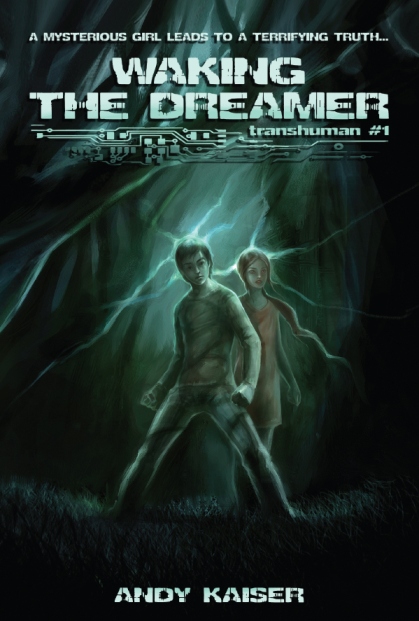 Tyler and Zack are thirteen- and fifteen-year-old brothers. Tyler sees himself as an out-of-shape video gamer, while looking up to Zack as a natural athlete and ladies' man. There are moments of tension between them, but their brotherly solidarity, and Tyler's own inner strengths, are affirmed when they go to a rustic lakeside resort with their parents for vacation and Tyler is attracted to a mysterious girl named Eena. The brothers are quickly swept up in a plot involving programmed human subjects, transferable supernatural powers, and a mysterious metal box. Their aloof survivalist father and hysterical ADD-afflicted mother are well fleshed-out, though they mostly stay out of the way of the two boys. Kaiser is good at character development and dialog; we see Tyler tap both his native and his newly conferred powers without jealousy on the part of Zack, who is less concerned with being #1 than Tyler realizes.
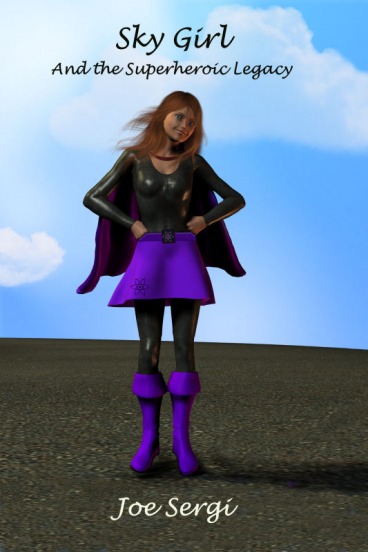 The story of Sky Girl and the Superheroic Legacy covers the adventures of Dede Christopher, a high school freshman with the usual crush on the captain of the football team. She is a gymnast with an archrival who happens to be dating said captain of the football team and is one of the most beautiful and talented gymnasts in town. Dede's best friend, Jason, is a comic book fanatic who has indexed every power of every superhero he has ever read about, along with their fictional life histories. When Dede starts developing strange abilities, it's Jason who realizes that her new powers are none other than the powers of SkyBoy whom everyone believes is nothing but a comic book legend.
 Chion is a magical story that's a must have. Perfect as a gift for a YA reader. The book is available at