Showing posts with label historical fiction. Show all posts

Tuesday, March 26, 2024

Lines of Deception by Steve Anderson

book cover for Lines of DeceptionWest Germany, 1949. Former actor Max Kaspar suffered greatly in the Second World War. Now he owns a nightclub in Munich—and occasionally lends a hand to the newly formed CIA. Meanwhile, his brother Harry has ventured beyond the Iron Curtain to rescue an American scientist. When Harry is also taken captive, Max resolves to locate his brother at all costs. The last thing he expects is for Harry to go rogue.

Max's treacherous quest takes him to Vienna and Prague to Soviet East Germany and Communist Poland. Along the way, dangerous operators from Harry's past join the pursuit: his former lover Katarina, who's working for the Israelis, and former Nazi Hartmut Dietz, now an agent of East German intelligence. But can anyone be trusted? Even the American scientist Stanley Samaras may not be the hero Harry had believed him to be...


In the fourth novel of the Kaspar Brothers series, Steve Anderson cranks up the dramatic tension. The story is set in a postwar Europe transitioning to the Cold War. The Soviets have begun to flex their muscles in Europe, and the Americans are trying to hold them off while the U.K. and France are busy mending their wounds. Weary of war, all sides have resorted to brinkmanship to see who takes the leadership role for the second half of the twentieth century.

Into this setting, we reunite with Max, who we first met in The Losing Role, where he was an operative in Operation Greif during the Battle of the Bulge. Max spent most of that novel running scared, fearing for his life. He wasn't a hardened soldier or zealous SS officer. He was just a down an out German actor conscripted into service.

But since the war, he's spent the time trying to forget it, except when he's called upon to do the right thing (as in Lost Kin) because the factions may have changed, but there are still evil men in the world bullying the weak and downtrodden. And it makes him angry. When he's visited by an odd, little man while working at his nightclub that anger resurfaces. The man claims that Max's brother Harry is being held for ransom, which Max must deliver. Max is furiously protective of his brother and can barely restrain himself from taking it out on the messenger. Later, when Max encounters the man responsible for the death of a dear friend, he so desperately wants the man to suffer, but as the man is necessary to complete the mission, he has to tamp down that anger.

As suggested in the book blurb, no one is completely forthright with Max. Whether that's to protect him or deceive him is dependent on the person in question. It leads to a constant string of surprises for Max (and the reader), forcing him to react quickly or change plans in order to find his brother and get home safely. He reacts differently to these deceptions. They become a way for him to work through his anger, on some level accepting what he cannot change, which leaves him exhausted.

Lines of Deception is another solid entry in the Kaspar Brothers series. The setting is thoroughly researched with Anderson dragging in historical events to craft a credible and entertaining story. Strong characterization leads the reader into believing what the characters are telling Max, but when their deceptions are revealed, it doesn't strike one as being out of character. One realizes that Anderson left clues all along the way. Ultimately, it enables Anderson to turn a spy thriller into catharsis for his protagonist.

4 stars

\_/
DED

Sunday, July 4, 2021

Lost Kin by Steve Anderson

Book cover for Lost KinAfter the events in Liberated Harry Kaspar has been relocated to Munich. As he enters the final weeks of service as an administrator for the military government, his life is good. He resides in a nice house with cushy amenities, has a former WAC girlfriend, and the locals appreciate his efforts to restore some semblance of pre-war normalcy. And then a cop shows up on his doorstep one night informing him that there's been an incident and his brother may be involved. Having not seen nor heard from his brother for several years, Harry's interest is piqued, though for a German-American, he knows this could be a scam, or worse. What follows is an investigation into a murder, black market sales of the spoils of war, and old scores that demand to be settled in blood.

There are elements of noir in this story. Harry's girlfriend has a bit of femme fatale to her which both excites and worries him. Meetings with informants take place in dark alleys and secluded rooms, forcing Harry to always be alert for the double cross. The atmosphere of downtrodden Munich is leaden with cold autumnal rain and early snow. And the American military government is seen through a lens of world weary cynicism.
She knew so many majors, colonels, and generals, all rearguard types who'd never seen combat but rode desks like gladiator chariots except their shields were their puffed-up chests done up with medals of every color, the swords their sharp tongues and stern memos, the feints and thrust their back-room whispers and leaks applied with extreme prejudice. Opponents cowered, colleagues awed, and mistresses swooned.
As with Liberated, Anderson has done the research. The deal that FDR and Churchhill made with Stalin in Yalta would soon turn out to be a Faustian bargain. I don't want to spoil it, but Anderson explores an aspect of that here as a way for the two brothers' paths to cross again.

Lost Kin is a strong addition to the Kaspar Brothers series. The noir elements spice up the intriguing plot, and Anderson's characters are well-developed. I got caught up in their predicament as Anderson entwined their fates with historical events. I'd recommend the series as a whole for WW2 historical fiction fans looking for something different from that time period.

4 stars.

Lost Kin was published by Skyhorse/Yucca Publishing.
Just to be clear. This book was not submitted to us. I went out and bought it on my own.

\_/
DED

Sunday, June 27, 2021

Liberated by Steve Anderson

book cover for LiberatedIn the early days of post-war Germany, Captain Harry Kaspar has been assigned by the US military government to oversee recovery efforts in the town of Heimgau. Unfortunately, the post is already occupied by Major Membre. It seems that the office that assigned Membre supersedes the one that picked Kaspar, and obviously the major outranks the captain.
Kaspar and Membre butt heads from the start. Besides smarting from missing out on the position that Kaspar feels should've been his—he trained for it after all—Membre comes across as a self-serving opportunist, more interested in personal gain than helping this Bavarian town start over. Kaspar heads off in a huff to survey the town when he discovers three German men lying in the road, evidentially tortured and murdered. He now has a mystery to solve.

With the aid of Katarina, a former German actress, Kaspar navigates black markets, systemic corruption, the aftermath of the Holocaust, and a disgruntled conquered populace in an effort to solve the murders and right some wrongs, all while trying to avoid getting killed.

Anderson's story was born out of research he did in Munich to get his master's in history. Besides touching on prejudice towards German-Americans stateside, the book calls attention to Allied looting in post-war Europe. While it might be dismissed as stealing from Nazis, it should be noted that the Nazis stole it from innocents. Be sure to check out the afterword to get an idea as to the extent of the theft.

While the story was intriguing and rooting for Harry was easy, Liberated didn't resonate with me quite as much as the previous work—The Losing Role, a story about Harry's brother Max who fought for the Germans—did. I feel that certain characters weren't as developed as I think they could've been. Still, I liked it and plan on reading the next book in the series.

3.5 stars

Liberated was published by Skyhorse/Yucca Publishing.
Just to be clear. This book was not submitted to us. I went out and bought it on my own.

\_/
DED

Wednesday, September 2, 2015

I Truly Lament: Working Through the Holocaust by Mathias Freese

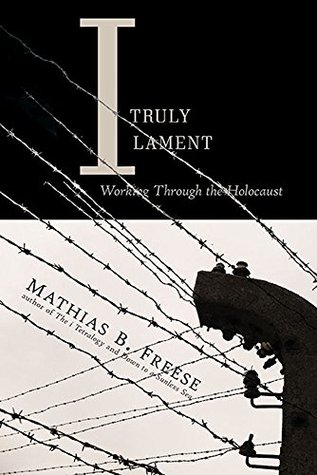
Book cover for I Truly LamentIn this anthology, Mathias Freese has composed twenty-seven short stories about the Holocaust. They're an attempt to gain some form of understanding about it. In the Preface, Freese states: "All literary depictions of the Holocaust end as failures..." and "Every artist who struggles with the Holocaust must begin with an acceptance of failure, and that must be worked through before art begins." If I'm interpreting him correctly, the reason why all attempts end as failures is because no mere words on a page can ever truly convey what it was like to have been there. But nothing short of a fully immersive virtual reality program (and none has been created yet) ever could, so why set the bar so high?
I'm not sure why Mr. Freese wrote this book. A tribute to the dead? The survivors? He states that: "No piece of art...can ever expunge the Holocaust." To which I rather flippantly say, "Well, duh." If this was ever his intent, it's a fool's errand. But no, this is an attempt to "work through it" despite his insistence that: "We will never work it through."

So it was after reading this conflicted preface, written by a man who so desperately wants answers to the questions he poses, that I read this book.

Obviously, this was no beach read. Rather than compose these stories as entertainment (Can the Holocaust, or any genocide for that matter, ever be formed into entertainment?), they're more like twenty-seven fictional biographies. Alas, they're repetitive. There were three stories involving golems. There were several stories each about Jews fleeing Nazi pursuers, life in the camps, and survivors trying to eke out some kind of life afterwards. While each was slightly different, too many elements were the same. For instance, all but one survivor story took place in Tuscon, Arizona.

But there were stories that broke out of the mold. "Max Weber, Holocaust Revisionist" was more of an essay. Freese explains that when he was writing a story he was derailed by a historian's contention that the Nazis did not make soap out of Jews. Freese researched the historian and learned that the man was a historical revisionist. Freese submitted his The i Tertralogy to him for a book review and published it herein as "Sincerely, Max Weber". I'm assuming both are true. Freese skewers the man in a story entitled "Soap", one of the best stories in the collection.

There are two fictional interviews: "Herr Doktor" and "Der Fuhrer Likes Plain". Both of these were among the better stories. The first one is an interview between an American doctor and a camp doctor. The interviewer is trying to determine at what point the camp doctor lost his ability to follow his Hippocratic Oath. The latter story is a fictional interview with Eva Braun just a few days before her death in Hitler's bunker. While it got off to a good start, it veered off into details about Hitler's sex life that have been gossiped about but never substantiated.

"The Disenchanted Golem" starts out with a golem discussing a few events over the course of his incarnations and what it's like to be a golem. But midway through his conversation with the reader, he tells us about the one he has with a rabbi. It has a bit of a Pinocchio quality to it, but without the Disney effect.

My favorite story was "Cantor Matyas Balogh". The titular character meets a woman in a sweets shop, and the two strike up a conversation. The conversation leads to tea and then to romance. It's a story about finding love when the world is going to hell. Both are aware of the dangers around them, but continue on because love has a power all its own.

In summary, I Truly Lament is a collection of stories centered on the Holocaust. While there are many repetitive story elements, individually, they offer poetic glimpses into the brutality endured. There are standout stories that rise from the miasma of the subject matter. It is a difficult read at times, for the subject matter and the associated suffering can be a bit much. If you can separate the entertaining tales from the pseudo-biographical cathartic soliloquies, then this book could be for you.

For more information about I Truly Lament and Mathias Freese, please visit his website.

Wednesday, March 19, 2014

Mandragora by H.D. Greaves

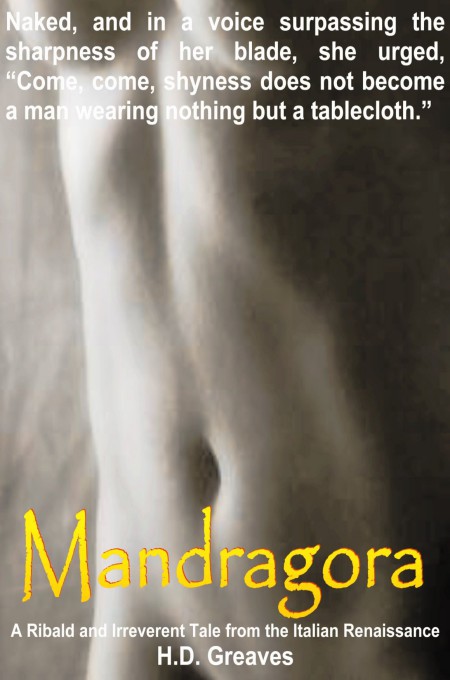
Mandragora by H.D. GreavesA ribald and irreverent tale from the Italian renaissance - Add a conniving servant and his amoral master; a murderous priest and his equally homicidal sidekick; an odious mother-in-law; a beautiful but barren wife wed to an ancient attorney; and a potion brewed from the root of the Mandragora, a plant alleged to help women conceive, and you have a prescription for pandemonium, especially when Mandragora (known in less reputable circles as “God’s Little Joke”), possesses a fatal flaw: after a woman drinks the potion, her body becomes a temple of poison. The first man to have sex with her will be dead in seven days. What's a man to do?
Based on Niccolo Machiavelli’s play, The Mandrake, this is a tongue-in-check story of a rake desperate to sleep with a certain woman, a husband desperate for a child, and a wife desperate for control of her own life. The heart of the novel lies in the question, “Does the end, when a noble one, justify the means, however wicked?”

The story starts with a hanging, and who doesn’t love that? I’m reminded of another great historical fiction tale that does this well, Pillars of the Earth, which starts (and ends) with a hanging. This immediately pulls the reader into the setting, and the story making them curious about how these characters got here and how they relate to or foreshadow events surrounding the main characters. Greaves holds up his end of the bargain, keeping the reader’s attention with one crazy scheme gone wrong after another.

In addition, Greaves expands on the characters in the original play, making them well rounded and more believable rather than the caricatures of the original play.  The servant, Siro, is now the catalyst for Callimaco’s antics rather than just being strung along.  With this transformation of Siro, the need for another facilitator of the plot is now almost non-existent.  So the character of Ligurio (a marriage broker and the “brains” behind the plan in the original play) is instead a downtrodden, almost destitute, filthy con man that Greaves uses to illuminate the darker reality for the non-elites of the time period.

One of the things that I enjoyed most about Greaves’ writing style was his conversational storytelling and his often wink, wink, nod, nod asides to the reader.  Occasionally he would break down the fourth wall to address the reader directly, such as:

“Regrettably, this cannot be said of lechery itself, for since evil was created at the beginning of the world lechery has been an all too common sin (as you and I, being virtuous, know very well).”

While I enjoyed this writing style, it became one of the things that I began to dislike at times.  Greaves had great lines such as:

“A hanging without music is as boring as a Borgia banquet without at least one goblet tainted with poisoned wine.”

But then at times it felt a bit much:

“So pitted by the corrupting hand of Man and so pockmarked by Church dogma, how could it ever be the honest face of The Truth:  Truth unbiased, factual, and as clear as cool water drawn from a deep and unpolluted well."

The supplemental material at the end of the book was almost as interesting as the story itself.  Like many great works of historical fiction, Greaves provides a list of discussion questions for book clubs and reading groups.  I found these questions to invoke thoughtful contemplation.

It is hard to believe that this is H.D. Greaves’ first published novel (he had written several short stories).  Mandragora is a well-written, well-edited, funny, and thoughtful comedic tale that, while it may divert at times from Machiavelli’s play, stays true to the original.

I, personally, am looking forward to his current work in progress: Clizia – A Tale of Scandalous Surprises.

You can learn more about H.D. Greaves and his works at Smashwords.

For more reviews from the Bookworm, stop by the Bookworm's Fancy!

Tuesday, October 22, 2013

I Am John, I Am Paul by Mark Tedesco

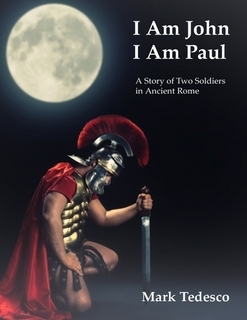
I Am John, I Am Paul by Mark Tedesco follows the lives of two real-life Roman soldiers in the fourth century, Ioannes (John) Fulvius Marcus Romanus and Paulus.  John and Paul form a strong bond of friendship during their days fighting on the German frontier, a bond that is never broken even when John is sent away to Alexandria by a sadistic centurion.

John spends years in Alexandria longing for home and corresponding with his family and Paul in Rome.  While in Alexandria, John is initiated into the Mithraic religion, but his faith in Mithras doesn’t seem to give him the peace he thought it would.

Political upheavals enable John to return to Rome, his family, and Paul.  John and Paul resume their duties in the Legion, and even volunteer to rescue a close family member of Emperor Constantine, who was kidnapped by a rival Roman general. The mission succeeds, and the Emperor is so grateful that he gives them both farm lands and a house in Rome, ensuring they and their families will never again know poverty.

While in Rome, John and Paul discover the ‘Way,’ the nascent Christian movement that threatens the old Roman gods. In the Way, John discovers the faith he always hoped would fill his heart, which strengthens both men when they suffer the inevitable persecution.

I’m a huge ancient Rome geek, so there were many things I liked about this book.

For one, it was well researched.  The author knew his history and provided illuminating details of the lives of average ancient Romans.  Tedesco had a clear understanding of Roman religions, including Roman pagan rituals, Mithraism, and the practices of the ‘christus followers'.  The book was beautifully written in a first-person narrative told primarily by John, with dialogue that had an ancient, almost biblical feel.

Now I offer the following as an observation and not a criticism, as it is more a warning about the book’s style. 

I felt like I was reading John’s personal journal.  And like the journals of real-life people, you won’t find the standard fiction novel plot twists and character conflicts.  For the most part, things just happened to John—he doesn’t really do much (besides plan and execute the rescue mission, which was the best part of the book for me).  Most of the conflict is internal, with John searching for spiritual meaning in Alexandria and Rome.  Tension between characters was minimal.

In other words, read this book for the thoughtful writing about a man searching for his spiritual home, or to experience the lives of everyday Romans during the fourth century.  But skip it if you’re seeking a page-turning adventure story set on an ancient Roman battlefield.

I Am John, I Am Paul is available on Amazon.

Tuesday, September 24, 2013

In Apple Blossom Time by Robert Wack

Note: The author has re-named this novel to Time Bomber. We don't know if there have been any revisions to the story.

In Apple Blossom Time by Robert Wack starts with an interesting Prologue—a time traveler jumps back and forth in time between different locations in World War II Europe tracking another man important to the time traveler’s mysterious mission. It’s a violent struggle, as the traveler sometimes kills his quarry and then sometimes loses him.

The Prologue promised a novel filled with paradoxes and alternate timelines. In my opinion, however, the novel did not deliver on that promise.

Dr. Willem von Stockum is an American mathematician who abandons a lucrative academic career to join the British Royal Air Force prior to the Pearl Harbor attack. He’s disgusted with America’s indifference to Nazi oppression in Europe and wants to do what he can to free his Dutch homeland from the Nazi invaders.

When his bomber is shot down over Normandy during the D-Day invasion, a group of lost American paratroopers rescue him from the wreckage.  They hide from the German army in a French home with members of the French Resistance and two strangers who tell peculiar stories about the fantastical theories von Stockum will one day develop. Von Stockum ultimately has to choose between believing the absurd stories of these strangers, or doing the right thing in the here and now.

There were quite a few good things about this book that kept me reading.

The author knew his material: Details of the Normandy invasion and the mathematics of quantum physics and the Theory of Relativity were all authentically presented within the narrative.

The dialogue was spot-on for the era and expertly rendered; whether it was Americans or British or even the French speaking, I could hear their accents without the author resorting to phonetically spelling them out (e.g., “ve have vays of making you talk!”).

What bothered me, however, was that the book felt like the author expanded a beautiful short story into novel length by adding flashbacks, reveries, and information dumps.  The first third of the book was filled with von Stockum thinking about his past, reminiscing with fellow pilots, or reading letters from home.  He didn’t do much.  I found myself skipping pages of von Stockum reveries just so I could get back to the American paratrooper story lines, which were quite exciting.

The second thing that bothered me was that the time travel element was not as important to the story as I had hoped.  The paratroopers and von Stockum simply thought of the time traveling strangers as either German spies or lunatics, and the strangers didn’t seem to impact the decisions of the main characters in any significant way; if they did, it was way too subtle for a promised 'time travel' novel.

Still, if most of von Stockum’s ruminations were cut out and a more impactful role given the time travelers, I think In Apple Blossom Time would have made a marvelous short story or novella.  But as a novel, I can only give it 3 of 5 stars.

Time Bomber is available on Amazon.

Thursday, July 21, 2011

Scimitar by Robin Raybould

Scimitar

This is exciting reading. We're in 15th century Europe at the end of the Byzantine era. All the rival city-states in Italy, Greece, and elsewhere are fielding networks of spies (some of them blackmailed), who move from place to place in disguise, trying to find out one another's designs on a moribund Constantinople, We follow the studly Eduardo Ferrucci, an orphan trying to make his way as a bookseller, as he is drawn into the Florentine network and begins his escapades. The background is Renaissance deluxe with lots of boastful merchants, dishonest servants, adulterous wives, and dramatic reversals of fortune.

A sociopathic and jealous spymaster working for the Bargello in Florentine security blackmails our hero into serving long years working for these baddies, who have their fingers on the pulse of Florentine society by way of access to the records of all the banks, plus the usual team of informants. Over in Constantinople there are lots of battles, skirmishes, swords flying, and blood spattering, while, back in Florence, the Security people exact their own kind of bloodless vengeance, bankrupting those they mistrust or see as obstacles to their own enrichment. When Eduardo isn't involve in battles, he is seeking out valuable books to send back to his bookseller boss. Some of the books he discovers trace back to ancient Greece, and were actual discoveries that influenced Renaissance thinking. There is a lot of bibliophilia throughout the book, as well as a lot of escapades of a more fleshly nature, as Eduardo can't seem to keep it in his tights.

I don't want to spoil the plot, so I won't tell you how the book ends, but it is fairly predictable.

The only problem I had with the work was with the omniscient narrator: using words like “life-style” and “rationalize” tends to spoil the suspension of disbelief in a novel set in the Renaissance. The author, a Renaissance scholar, also cannot refrain from using footnotes, further breaking the spell. Maybe some notes at the end, with suggestions for further reading, would be appropriate, but swashbuckling and footnotes don't mix. Also, the long sentences at the beginning of the book skate dangerously close to run-on territory. Raybould would do well to consult the masters of the long sentence, Yaacov Shabtai and Todd Hasak-Lowy.

Sunday, July 25, 2010

Flesh and Grass by Libby Cone

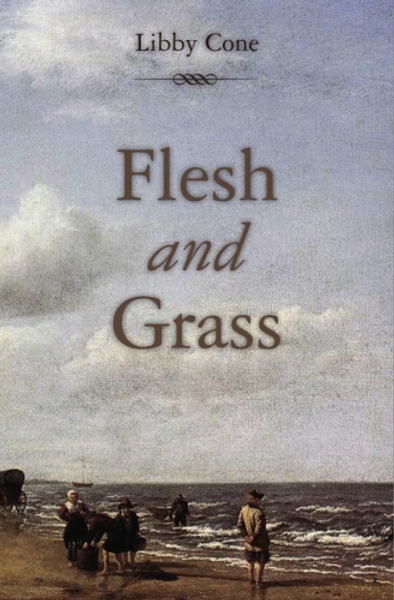
Flesh and GrassFlesh and Grass is the fictional memoir of Cornelis Plockhoy, the son of Pieter Plockhoy, the founder of the ill-fated Dutch settlement of Zwaanendael in what is now Delaware. As if a novel about a Dutch colony in North America weren't rare enough, Cone's protagonist is blind. As such, Cornelis recalls his life's experiences through his other senses, particularly scent. Nearly all of his memories have some olfactory attribute, whether pleasant or foul, associated with them. Cinnamon recalls his ever supportive mother while the odor of cooked meat is a horrific reminder of his father's death.
Like the Puritans in Plymouth, the Dutch in Zwaanendael are there for religious freedom. Much like his father, Cornelis is a pious man. But unlike his father, Cornelis is faced with one test of faith after another. Although he never questions his blindness, life in the New World brings enough calamity that he wouldn't be blamed for thinking himself a descendant of Job. The colony is caught in the crossfire between the British and Dutch Empires. Each round of battle between the two nations brings some form of tragedy to the settlement and Cornelis' life. While he prays for deliverance from the avaricious struggles of nations, part of him wonders why he and his brethren must suffer so.

Cone has painstakingly researched her novel. While she admits to taking liberties with a few of the characters, the historical events that transpired are factual. The dialogue, while obviously written in English, is peppered with enough Dutch and Old English to grant an air of authenticity to the story. While this should be considered an asset, it might turn off some readers uncomfortable with the vernacular of the time (mid to late 1600's).

While Flesh and Grass offers a window into 17th Century colonial America, it is the tests of Cornelis' faith that make up the crux of the story. Each newfound joy and sorrow over four decades of life spent in the settlement work at the foundation of that faith. In the end, we learn whether or not that foundation is on solid ground or sand.

Flesh and Grass is available in different eBook formats through the author's website.

Update 6/24/11: Now available in paperback.

Wednesday, July 7, 2010

The Losing Role by Steve Anderson

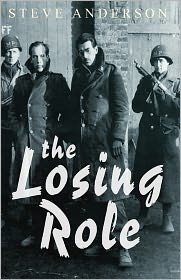
The Losing RoleLate in 1944, the German Army pressed westward along the western front in a desperate attempt to break the Allied advance. The offensive would later come to be known as the Battle of the Bulge. While plenty of novels and movies have portrayed the American side of the struggle in Belgium's Ardennes forest that winter, Steve Anderson's The Losing Role examines the story of a German soldier caught up in a cause he knows is lost.

Max Kaspar is an out-of-work actor drafted into the German Army to fight a war he doesn't have the stomach for. A former emigrant to America, Max's English speaking skills, not to mention his acting ability, lands him a part in Operation Greif, the brainchild of SS Colonel Otto Skorzeny. The plan is for English-speaking soldiers to sneak behind American lines and wreak as much havoc as possible to better the odds of Panzer divisions breaking through American lines. Max, however, has plans of his own.

Max has seen enough of the horrors of war to know that Germany is fooling itself if it can think it can win. The Russians are fueled by revenge on the Eastern Front and the Americans, well, there's no end to the resources at their disposal. It's Max's hope to use the cover of the operation to desert the Army and find passage back to America, where he can rejoin his family and renew his career. But any soldier can tell you that nothing ever goes as planned in war.

Anderson doesn't offer much hope for Max. It seems as if everyone has an ulterior motive and Max isn't sure who to trust, or for how long. Each encounter he faces could be the one where he gets caught or killed. Anderson deftly elevates the tension when Max stumbles over words, phrases or elements of American culture that any American would know. The story is told entirely from Max’s point of view but Anderson skillfully hints to the reader what other characters are up to through well placed conversational and body language clues that Max doesn’t always pick up on.

While it would be easy to root against Max simply because he’s a German soldier (our enemy at the time), Anderson sculpts Max as a likable guy, a victim of circumstance rather than a hero for Deutschland. Through a series of flashbacks, we learn of Max's struggle to fit in as an immigrant actor in America, forced to play German stereotypes. Disgruntled, he returns to a rejuvenated Germany where he finds success and love, at least until the bombs start to fall.

I would’ve liked to have seen more interaction with Max and his pre-war girlfriends on both sides of the Atlantic. While we got a good start with Lucy, Liselotte comes across as an ideal placed on a pedestal. We never really get to know her.

It's always refreshing to see a portrayal of a German soldier as something other than a mindless stormtrooper perpetuating Hitler's bloodlust for world domination. Max isn't a Nazi and he has no stomach for war. He's an actor who just wants to entertain his audience, but he's smart enough to know that those that speak out against the war effort disappear.

The setting is thoroughly researched, but Anderson uses it to bolster the credibility of the story rather than rehashing historical trivia. His masterful use of dialogue builds suspense every step of the way. The Losing Role is an excellent WW II espionage thriller that transcends the genre, making it a story that you don't have to be a history buff to enjoy.

The author's website contains links to other works as well as sample chapters of this one.

The Losing Role is available in multiple e-book formats from iBooks, Kindle, Smashwords, Barnes & Noble, and Scribd.

Friday, April 16, 2010

Low Light by Stanley J. Cutler

Reviewed for The New Podler Review of Books by Libby Cone

This book has a very engaging plot, dealing with a possible explanation for the legendary FBI chief J. Edgar Hoover's predilection for persecuting anyone he deemed Communist or otherwise subversive, while leaving the great organized crime networks of the US relatively untouched. It is common knowledge now that J. Edgar preferred the company of men; it was a career-destroying piece of information in the Twenties, and the only lever with which he could be controlled.

Low Light I have lived in Philadelphia for twenty years, and have been to Atlantic City once or twice, and find Cutler's descriptions of old Philly and the honky-tonk sounds and smells of Atlantic City to be quite evocative.

Cutler tells a tale of photographer Al Rubin, who has built a life in the United States after arriving as a penniless immigrant. Still mindful of the racism and anti-Semitism rife in everyday polite American society, he has been able to situate himself in the middle class. Of course, a middle class life in those days could be destroyed if you were a naturalized citizen with too much familiarity with the likes of labor unions, Socialists, and the like. The author mentions the Palmer raids, roundups and deportations of immigrants, legal and illegal, naturalized and non-naturalized, that were named after Woodrow Wilson's Attorney General. It was best to keep a low profile. In an interesting digression towards the end of the book, Al reflects on the gangsters who have tapped him for his services, namely Meyer Lansky and Enoch "Nucky" Johnson, and their ways of smoothing the cognitive dissonance inherent in the trade:
“Meyer was of the Robin Hood school; laws were enacted by an elite group to manage society for its own, narrow benefit. He, born poor, had an obligation to take from them…" Johnson, the Treasurer of Atlantic County, boss of the Republican political machine, and "Czar of the Ritz,"  "…saw himself as the benevolent engineer who kept everything running smoothly." 
Al, in too-infrequent moments of introspection, sees himself being sucked into this demimonde, attracted by the wealth and luxury. He gradually acquires his gangster sea-legs as the plot progresses, to the point of using his boyhood boxing experience without hesitation to get out of a jam. Does he have photos of Hoover in a negligee? Does Meyer? Are the photos destroyed? Hoover is kept guessing, and his weakness for the ponies as well as for tall guys is played like a violin.

I would have liked to see a bit more depth in Al's infrequent soliloquies on being drawn into the life. These are the only portions where Cutler ditches show-don't-tell ("The room pulled at me—I wanted to gamble"..."I didn't want to understand her; I had been completely seduced").

A bit more mention of some characters, such as investigators Dixon and Whitehead, would have been nice, so I didn't have to keep going back to the prologue (or whatever one is to call the pages before Part One), in which Al is spying on, and trying to photograph, Hoover and his lover Clement Talbot in flagrante delicto. The prologue would be perfectly fine in chronological order.

Cutler is spot-on in his research (indeed, I had forgotten that Woodrow Wilson, who is briefly mentioned, died in 1924; I thought he had died in 1920, but my plans to make snarky comments about this being an historical vampire novel were happily foiled). Other minor flaws were mentions of Al and his wife taking mass transit on Shabbos to Meyer Lansky's Bar Mitzvah, which had me busily dog-earing pages, only to be followed several chapters later by the mention that they were Reform Jews, and rather lapsed at that. A little more explanation earlier on would remedy that. I was very amused at one point where, when offered a lobster, Al turns it down in favor of a club sandwich (which contains bacon). It is a brilliant evocation of one of the little cognitive-dissonance smoothings many of us no-longer-really-kosher Jews do. Oh, no, not a big lobster! A little bacon buried in a sandwich? OK. But in Al's case, we have already seen him rationalize blackmail.

Now for the editing. As Al's wife Ida and I both tend to say when perturbed, vay is mir! I will be the first to point out the difficulties of self-publishing: it is extraordinarily difficult to keep some of the conventions in mind, such as not indenting a line of dialogue that starts a paragraph (I am guilty of this and am beating my chest right now). But, oy, the backwards quotation marks! On almost every page yet! Sometimes he uses single quotes, it seems, just for the hell of it. Plus "alright" used so many times, a middle school English teacher would plotz! The restaurant at Nucky's Ritz is called "The Bath and Turf Club." Bath and Turf? Is that a steak on a plate with a loofah? And why do the waitstaff keep changing genders?

The other things that bothered me were the portentous subtitles on the front and back covers. "Birth of Organized Crime in Jazz Age Atlantic City" and "Blackmail FBI Director J. Edgar Hoover," besides being non-grammatical, make the book sound like nonfiction. I only figured out it was a novel when I began reading the contents. A little subtlety instead of subtitles would be nice.

That said, it was an enjoyable read. I hope Mr. Cutler's style and editing really shine in the second and third volumes of what is to be a trilogy.

Author’s web site is: stanleycutler.com


Sunday, April 5, 2009

The Book Thief

The Book Thief
Markus Zusak
584 pages
Picador (2005)

"Five hundred souls. I carried them in my fingers, like suitcases. Or I'd throw them over my shoulder. It was only the children I carried in my arms."

This is a novel narrated by Death. It’s January 1939, and nine year-old Liesel Meminger and her young brother, Werner, are being taken by their mother to live with a foster family in Molching, a small town outside Munich. Liesel’s father was arrested as a Kommunist, and Liesel’s mother fears a similar fate. During the train journey, Death takes six year-old Werner, but not without noticing Liesel, too. It will be the first of many such encounters. By her brother’s graveside, Liesel’s life is changed when she finds a mysterious object, partially hidden in the snow: it’s a book, The Gravedigger’s Handbook, left there by accident. It’s the first of many she will steal.

So begins a fascination with books and words as Liesel, with the help of her foster father, learns to read. Soon she is stealing books from Nazi pyres. With the help of her new friend Rudy Steiner, she liberates several from the personal library of the mayor’s wife. As years pass, Death watches. Life with the Hubermann’s on Himmel Street is punctuated by the terror of the Allied bombings, but is otherwise as tolerable as a wartime childhood can be. Then her foster father repays an old debt by allowing a Jewish fist-fighter to hide out in their cellar, and Liesel’s life is changed in more ways than she could’ve imagined.

Does the world really need another Holocaust novel? Yes, if it's as good as this one. No, it’s not some German inversion of The Diary of a Young Girl despite what the synopsis might suggest. Nor is it Harry Potter and The Holocaust as more than one critic has quipped. Young Australian writer Markus Zusak is a prize-winning writer of children’s fiction, but The Book Thief is his daring adult debut.

And what a debut it is. The Book Thief is one of those extremely rare novels: an absolute page-turner as well as a serious work of art. It’s unsettling, provocative, triumphant and tragic, at times fanciful and at others relentlessly grim. It’s beautiful and harrowing in almost equal measure. More than anything, it’s emotionally gripping in a way that few novels are. I stayed up one night, determined to finish it, and brushed away tears for the last fifty pages.

Zusak says he was inspired by two real-life events related to him by his German parents: the bombing of Munich, and a teenage boy offering bread to an emaciated Jew being marched through the streets, ending with both boy and Jewish prisoner being whipped by a soldier. As Philip Ardagh in The Guardian noted, it’s the way in which Zusak combines such terrible events with such believable characters and the minutiae of everyday life in Nazi Germany that makes this book so special.

The genius, too, is in the voice. Death is arch, wry, and given to bad jokes about his profession, but he’s also moved by the plight of humans and amused by our attitudes to him. "By the way – I like this human idea of the grim reaper. I like the scythe. It amuses me." Death is closely involved with what’s happening in wartime Europe – and obviously very busy – but he’s also, for the most part, emotionally detached from it. This allows him to comment on man’s inhumanity to man without ever being ponderous or moralistic, and without taking sides. This is important. The novel could be painfully sappy or irritatingly didactic without such a detached perspective driving it.

Zusak uses a plain style, punctuated only occasionally by vivid images. The moments of joy and violence, when they come, are all the more striking for the economy with which they’re depicted. It’s an object lesson to writers who want to deal with complex moral issues or powerful themes. And the lesson is this: just get the hell out of the way. Your language doesn’t need to be dazzling and ornate; your plotting doesn’t need to trick and surprise; you don't need to lecture or berate. Carefully choose your narrative point of view. Then put the right characters in the right situation and describe what happens as clearly as you can. The rest will take care of itself.

This is an important indirect lesson in a book that takes as its subtext the power of reading and writing. As Janet Maslin in The New York Times commented: "It will be widely read and admired because it tells a story in which books become treasures. And because there's no arguing with a sentiment like that."

Saturday, February 21, 2009

The Reader

The Reader
Bernhard Schlink
224 pages
Vintage (1999)

Michael Berg, 15, is on his way home from school in post-World War II Germany when he falls ill and is befriended by the 36-year-old Hanna who takes him home. When he recovers many weeks later, he dutifully brings her flowers in appreciation, and the two become lovers. The relationship, at first purely physical, deepens when Hanna takes an interest in Michael’s education, insisting that he study hard and attend classes. Soon, their meetings take on a more meaningful routine in which after lovemaking Michael reads aloud from the classics. There are hints of Hanna's darker side: one inexplicable moment of violence over a minor misunderstanding, and the fact that Michael knows nothing of her life other than that she collects tickets on the streetcar. Hanna leaves the city abruptly and mysteriously, and Michael does not see her again until years later, as a law student, he sits in on her case when she is being tried as a Nazi criminal.

The Reader explores Germany's guilt-ridden relationship with its own past by objectifying it in the sexual and emotional coupling of a 15-year-old boy and a 36-year-old woman. On the face of it, that doesn't sound like the premise for one of the most engaging pieces of Holocaust fiction available, but it is. Far from eroticizing Nazism or trivializing the Holocaust, using the metaphor of a human relationship makes them both more accessible. Schlink provides a way into the unique postwar experience of the German people by relating it to things we have all experienced: guilt and romantic love. Issues and events which usually repel or dismay us with their enormity are taken out of the zones of History and Philosophy and reconfigured on a human, interpersonal scale - the scale on which they actually happened, and on which they must be confronted if we are ever to understand them fully.

I was surprised and moved to find a novel that treats the Holocaust in this way; a novel that risks being misunderstood in order to foster understanding. The erotic aspect of the novel is, in the end, a minor one and hardly the point: it's about so much more than that. Through careful characterization and plot development, Schlink manages not only to make plain the ease with which German civilians were drawn into unspeakable roles, but also to explore the difference between a legal conviction and real justice, between retribution and recompense, and, most importantly, the almost insoluble situation in which Germans born postwar find themselves - laden with guilt for things they did not do and for which they cannot possibly atone.

Interestingly, Schlink's book also becomes a sustained yet subtle commentary on the function of literature and literacy as ways of recording and recovering the past. Those interested in this subtext might like to read next W. G. Sebald's On The Natural History of Destruction which explores the historical unwillingness, and therefore the contemporary inability, of German literature to deal with the terrorist victimization of German civilians at the hands of the Allies, e.g. the bombing of Dresden. Anyone unfamiliar with W. G. Sebald’s work should read all of it. Immediately.

For all its high intent, and equally high achievement, The Reader is almost an easy read. Schlink's language (or Carol Brown Janeway's translation, at least) is smooth, spare and precise. Schlink's subject is dignified by such straightforwardness.

Thursday, May 10, 2007

The Father by Stephen Bruce (A)

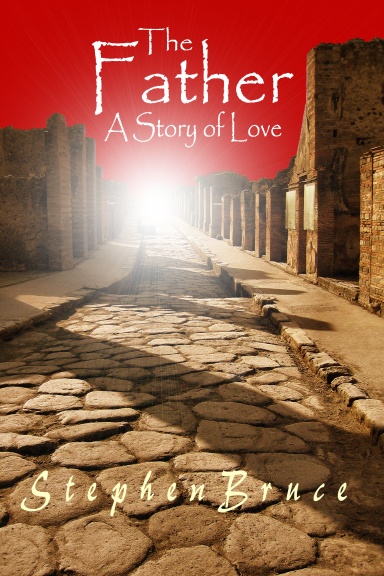
The FatherAvailable at LULU.COM

Strikingly evocative and populated with deeply human characters, The Father takes us back 2000 years into the lives of Joseph, Pilate, Hera, and Mary Magdalene, brilliantly presenting each as a living, thinking, feeling human being. The author's emphasis on characters brings the story to life and gives it a vitality that is missing from many mainstream efforts. The characters and their story are honest, deeply felt and richly imagined, making The Father a must read for anyone interested in historical fiction dealing with the circumstances and key people involved with the death of Jesus and its aftermath. The Father is a worthy companion to Gibson's Passion, and will be of interest to anyone who has seen that film.

The book opens with a highly emotional scene of Joseph's witness of his son's carrying the cross through the hot, dusty streets filled with jeering crowds. The father's internal anguish, confusion, and rage are deeply moving as one can't help but identify with Joseph and his pain. The poor man latter comes to Pilate seeking the release of his son's body, but becomes involved in Hera's insane intrigue, with the unexpected result of changing her in the end.

This change is one of the central themes of the book—change affected by Jesus upon those who knew him directly and those who came in contact, like Hera with Joseph, with those who knew Jesus.

Another aspect of The Father is the stellar writing, a kind of narrative that places us right in the dusty Jerusalem of antiquity:

It was one of the many narrow little back streets which criss-crossed Jerusalem, lined with beggars, stalls and one or two inns. She could see children running barefoot up and down, the soles of their feet turned to leather from running over the hot, sharp stones. She saw one young boy, no more than eleven, grab a small bunch of grapes from one of the stalls and run off with it. The owner of the stall was obviously inexperienced for he ran after the boy, leaving his stall exposed to a band of boys who stuffed as much food as they could into their mouths and arms before the owner returned.

It is such powerful writing, combined with deeply evoked characters, that makes The Father not just a read but an experience.