Showing posts sorted by relevance for query black book. Sort by date Show all posts

Wednesday, July 10, 2013

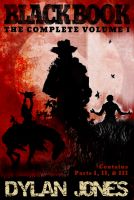
Black Book, Volume 1, by Dylan Jones

Black Book Volume 1Black Book, Volume 1, has the first three episodes of the genre-bending Black Book series.  It’s a story that mixes Western, science fiction, and fantasy into a quest that spans centuries.

In Part 1: The Devil’s Blood, we find Sheriff Jack trying to keep the peace in a small, American West town during the 1860s.  But Jack is no ordinary Sheriff.  He has almost supernatural skills that help him survive a bloody encounter with bandits that shoot up his town and kill many of its citizens.  He’s quick on the draw, knows how to use his fists…and can time-travel out of town when a powerful adversary leaves him no choice but to retreat.

In Part 2: Out of Time, we meet Benjamin Freeman, President of the United States in the year 2308.  Ben has directed his time-travel corps to locate Jack, an old military comrade who has gone missing in the distant past.  When Ben personally oversees the operation, he walks into a trap orchestrated by a deadly faction that also wants to find Jack for its own ruthless purposes.

In Part 3: The Wall, Jack arrives in 1862 California.  He meets up with a six-year-old boy and his guardian, a mysterious old man who has met Jack before, though Jack has no recollection.  The old man guides Jack to a hidden object that Jack knows will change his life and the course of humanity.

First the good:

Jones’ scenes in the Wild West were so awesome that I thought I was reading a Zane Grey novel.  In Part 1, I could taste the dust on my lips and smell the body odor of the gamblers in the saloon.  The Western dialogue was spot-on and I could feel the bullets zip past my ear during the gunfights.

Sheriff Jack is an interesting character because he understands the stakes of his mission, yet cannot help himself when he goes out of his way to protect the innocent, even if it threatens the success of his mission.

Most of Volume 1 was about Jack, but Ben Freeman, who appears in Part 2, proved to be an interesting character as well.  Through him, we get a glimpse of the 24th century and how time travel becomes a truly devastating weapon.  Volume 1 only hints at Ben’s military background and his relationship with Jack, so there is still plenty of ground to cover there in future volumes.

And in the Black Book world, lets just say time travel is not for those who fear pain or swimming.

Now for the warning:

I went into Black Book, Volume 1, thinking I'd get three episodes of good serial fiction.  What I got instead were three chapters of a great novel.

Let me explain.

A single episode of serial fiction should be like an hour-long episode of a TV drama -- the characters encounter a situation that they take action to resolve within that one hour.  While there may be an over-arching storyline that ties the episodes together, each one should have a clear beginning, middle, and end.

For me, the three episodes of Black Book, Volume 1, did not have that clear beginning, middle, and end.  They had scenes that felt like set-up for a coming situation...but that situation never materialized, which made the scenes feel pointless within that episode.

But Volume 1's three episodes were what I'd expect from the opening chapters of an exciting sci-fi novel with an intriguing mystery.  Those "pointless" scenes would work well in a complete novel that is a single story with a clear beginning, middle, and end.

The Black Book series promises to be a wonderfully engaging story that I look forward to reading and buying.  I highly recommend it for the storytelling, world building, and quality of writing.

I’m just going to wait for the omnibus version so I can read it all at once.

Black Book, Volume 1, is available on Amazon.


Monday, November 30, 2015

Tethered Worlds: Blue Star Setting by Gregory Faccone

book cover for Tethered Worlds: Blue Star SettingJordahk Wilkrest no longer has the luxury of believing he isn't special. His family line can work mystic technology, something fewer and fewer can do. Not only that, but his grandfather was a user of tremendous ability called a “Sojourner.” Jordahk has used mystic himself to get out of jams, something happening all too frequently of late. But he's still fearful of the dangerous technology, and for good reason.
Then, without warning, Jordahk's grandfather shows up again. The trail of their previous adventure is being followed. Their old friend and the mysterious girl under his care are in the cross-hairs of the power-hungry Archivers. But two men and a crazy robot aren't exactly a crack rescue force. And as the clues come together, they realize a much greater threat is gathering. One that calls for a legendary ship and the power of a Sojourner.

Too bad the ship's buried behind enemy lines in a system oppressed for two centuries. Can Jordahk revive the spirits of those subjugated in a war lost generations before? And what of the girl who's increasingly showing near-impossible abilities? Somehow Jordahk has to lead her, get the ship, and warn the free worlds of impending doom. For who's more vulnerable than those who wrongly believe their armor is impenetrable?


This is very much a middle book in a trilogy or a series. That's not a slight, just a fact. While there are enough references to the first book Tethered Worlds: Unwelcome Star, it's obvious to the reader that there's another story out there (definitely worth reading, I must say). And the way this book ends, although the events in this book come to their own conclusion, the overall story arc has (at least) another book in it.

I didn't feel as overwhelmed by this book as I did the first. I'll chalk it up to being somewhat familiar with the characters from the first book—Jordahk and his family being the easiest to recognize. I had a better understanding of the pantheon of villains in this one too. Faccone does a better job of differentiating them. And they didn't all wear black hats. One was definitely gray, probably brought about by the events that transpired in Unwelcome Star. Some of the minor characters from the first book are gone, replaced by new ones. Faccone did a good job of fleshing them out.

Blue Star Setting clocks in at a whopping 548 pages, even longer than the first book. The length of the novel gave Faccone the space he needed to render those minor characters, but he's still providing us with scenes that go on for far too long. "Brevity" is not in this author's toolbox. I think he could've gotten away with a 15% shorter book by trimming or cutting action scenes.

There are also scenes in both books that don't factor into the main story at all. They seem to be included only because they take place in parallel to the events on the main stage. I'd be inclined to suggest cutting them, but it turns out that Faccone does this to set the stage for events that will happen much later down the road. For instance, one of the new characters is Khai. She was in stasis during Unwelcome Star, so I didn't get why Faccone bothered to include the events pertaining to her rescue. Turns out, she emerges in this book and plays a major role in how this story plays out. Another example is Rewe, a villain. I didn't really gather his purpose in the first book, but in this book, Faccone offers two key scenes showing the development of his character into a major antagonist for a future book. Faccone is definitely a man with a plan.

As I mentioned in my review for the first book, this is a meticulously detailed universe. Faccone's world-building is top notch. The setting is rich in history with amazing technology that lives up to its "mystic" moniker. And I get the sense that he has even more in store in the next book(s) in this series.

Ignore my curmudgeon talk. While I bemoan its length, particularly the battle scenes, the pacing of the story doesn't drag. Faccone certainly gives the reader her money's worth. Blue Star Setting is a welcome addition to Faccone's Tethered Worlds series. It's more big and bold space opera with a hero you can root for as he grows to fill some very big, yet well worn, shoes. Highly recommended for space opera fans.

For more information on Blue Star Setting and other books in the Tethered Worlds universe, please visit the author's website.

Thursday, January 30, 2014

The Best of 2013

Each year, the reviewers here at the New Podler Review of Books pick the book (or books) which we feel are the very best independently published (or small press) works. The only other requirement we have is that it was reviewed here on the blog.

Here are the winners for 2013:

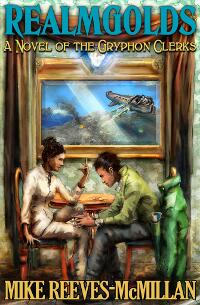
The Bookworm: I'm going to go with Realmgolds by Mike Reeves McMillian. It's everything that a reader could want in a steampunk novel. It combines politics, innovation, social unrest and the fight for basic freedoms in a compelling story. And the books in the series are even better.
Realmgolds
Black Book Rob: Black Book: Volume 1 by Dylan Jones, is my pick for the best of 2013. It had a cool blending of genres (Western, sci-fi, and fantasy) that you don't often see in traditionally published books. However, be aware that it's a serial novel made up of three "episodes." You'll need to buy future volumes to learn the characters' ultimate fates.

A Calculated Life - Original CoverDED: It should come as no surprise that my selection for the best book of 2013 is Anne Charnock's A Calculated Life. It is an excellent character study of a young augmented woman named Jayna who works for a global trends analytical firm. Her journey of self-discovery is what makes this story. Charnock deftly bonds the reader to Jayna by granting us unfettered access to her mind, thus making us her mute confidant.

Since my review, the novel was picked up by 47 North, Amazon Publishing's speculative fiction division, and nominated for the 2013 Philip K. Dick Award.

We reviewed 24 stories last year and rejected over 170. Considering that we were closed for seven months, that's still a fair amount of submissions.

Wednesday, June 23, 2010

Fashion Police By: Sibel Hodge

Review For the New Podler Review of Books by S.B. Jung

The Fashion PoliceHodge created a lovely chick-lit/thriller storyline that reminds me of Charlaine Harris’ Lily Bard mysteries that I love to eat up. The main character, Amber Fox, is a jilted ex-cop out for revenge against her incompetent superior officer, Janice Skipper, whose goal in life is to look beautiful, destroy others more competent that herself, and snag Amber’s Latin Lover for herself. Her dismissal from the Hertfordshire police force forces her to work for her ex-fiance in order to make ends meet. The storyline follows the disappearance of a famous fashion designer and his latest collection. The story has a lot of promise, and some simple clean-up would help the story flow better and reach a more diverse audience. The characters are mostly fun and the story is a nice read. The love triangle Amber Fox finds herself in is a nice touch of humanity and vulnerability, though her indecision gets to be much after awhile. We don’t want a heroine with a penchant for whining, do we?

Issues: First, the book takes place in England, so some of the slang and references are lost on a Yankee like myself. I understood references such as “flat” (apartment) and “boot” (trunk of the car), but others lost on me. If the book had been meant as a regional book, it wouldn’t make a difference, but since this review site caters to an American audience, better care needs to be given in order to market to an international audience.

As for the storyline, it was polished enough but for a few problems. First, Amber is forced to field too many assignments at once. All of them tie together to the overall picture, but time needs to be taken so the reader can absorb what’s happening and digest. Also, the part where Amber has a dream sequence and magically finds a program the Hacker can use for facial recognition is just too convenient. More development is needed her to make this wholly believable.

Also, the author seemed a little too stereotypical in her portrayal of one particular character which almost had me stop reading. Her decision to make “the Hacker” a black male would have been normal, but she decides to have him be a Haitian versed in Voodoo (voudon or Vodun are more proper), dress in over-sized hip-hop clothing, and eat only natural foods. Hodge points out his eccentricities over and over again, saying things like, “He had to be the least techy-looking guy I’d ever seen: black, over six and half feet tall with two plaits sticking out the top of his head, a hoodie three sizes too big, jeans that were so baggy they defied the laws of gravity, and a goatee beard. He looked more like a gangster rapper than a computer expert” (Hodge 2). It is this stereotyping of minorities that can be insulting and offensive to both the targeted race as well as those who do not tolerate discrimination of any sort. Stereotyping like this alienates more sensitive readers. She could have treated this in a much better manner than this and other references to the Hacker as Snoop Dogg. This is a personal opinion of mine, for the record, and some may not see into it as much as I do, so if you read it please bear that in mind.

This book is available from Amazon.

S.B. Jung has been an English Teacher since 2002. She has been writing plays, poems, and novels since 1997; Lines of Neutrality is her first published work. You can find the book at Amazon or other online retailers.

Friday, March 20, 2009

The Faber Book of Utopias

The Faber Book of Utopias
Edited by John Carey
528 pages
Faber and Faber (1999)

Anthologies are a wonderful way of exploring a genre or theme; not as a substitute for wide reading but as pointers to make your reading more rewarding. I’ve discovered some of my favourite books and authors through anthologies such as The Art of the Story edited by Daniel Halpern, and Alberto Manguel's Black Water: The Book of Fantastic Literature, which is a wonderful collection of fantastic/speculative tales.

Given a fair number of this site's readers declare an interest in post-apocalypse and alternate history titles, I suspect they might also be interested in an anthology such as this. The Faber Book of Utopias edited by John Carey is a fascinating survey of writing dealing with one of the most recurrent concerns in speculative literature and philosophy.

As Carey explains in his introduction, utopia actually means nowhere or no-place. It has often been taken to mean good place, through confusion of its first syllable with the Greek eu as in euphemism or eulogy. As a result of this mix-up, another word dystopia has been invented, to mean bad place. But, strictly speaking, imaginary good places and imaginary bad places are all utopias, or nowheres. Both are represented in this book and Carey uses the word dystopia for the bad places simply because it now has currency.

Not every imaginary nowhere counts as a utopia, however. To qualify as a utopia, an imaginary place must be an expression of desire. To count as a dystopia, it must be an expression of fear. This book, then, is a collection of humanity’s desires and fears over several millennia. The instant we recognise that everything inside our heads, and much outside, consists of human constructs that can be changed, we want to change them. This belief in the perfectibility of human life and society encourages many noble and selfless schemes but it's also inspired a trail of folly, tyranny and attempts at social control. They tend to centre around genetic engineering, education, crime and punishment, the prevention of ageing and the avoidance of death (or painless ways of inducing it).

Carey’s scope is vast, in terms of both period and genre. The first extract, “Holy Snakes”, comes from an Egyptian manuscript written 2000 years before the birth of Christ. The last comes from Lee M. Silver’s 1998 book Remaking Eden and concerns the fate of humankind in a post-cloning America of the year 2350. In between there are fiction and non-fiction selections from Plato, Tacitus, Francis Bacon, Jonathan Swift, Milton, Hobbes, Voltaire, Samuel Johnson, the Marquis de Sade, Robert Owen, Karl Marx, Oscar Wilde, William Morris, H. G. Wells, W. B. Yeats, D. H. Lawrence, George Orwell, Aldous Huxley, Italo Calvino, Julian Barnes and many more. As other reviewers have noted, while many of the selections are predictable, some are surprising: Carey has defined utopian writing widely enough to include an extract from Hitler's Mein Kampf and Abraham Lincoln's “Gettysburg Address” as examples. (Sidenote: Did you know there is actually a photograph of Lincoln delivering that speech?)

Each has a brief introduction which provides enough context for you to appreciate an unfamiliar piece without ruining it for you (a lesson the editors of many anthologies should learn, including the aforementioned Manguel). Carey’s impressions are sometimes radical: on Plato’s Republic he argues that, however benevolent its goals, the imagined world is maintained by a mixture of force and lies and depends on squashing the aspirations of ordinary people. This points to a theme that emerges consistently here. Utopias obviously offer warnings, promises and social critiques by encouraging us to compare imagined realms with our own. But the meaning we make of the comparison will differ depending on the nature of where, and when, we live. In the mid-twentieth century, Karl Popper criticized Plato’s Republic because he saw in such a seemingly benign utopian model the beginning of, and justification for, totalitarian states. The force of a utopia seems to rely on how readily it thrusts us into a re-evaluation of our own world and its current trends. This can change over time.

Overall this is a vast and rewarding work that should appeal to anyone interested in the idea of utopia/dystopia. Ultimately, utopias seem to be attempts to address the insoluble problems of human life, but utopians tend to falsify these problems by regarding them as simple. They build their utopias on universal human longings. But what they build usually carries within it its own potential for crushing or limiting human life. As this anthology shows, how that particular contradiction plays out can be endlessly fascinating.

Tuesday, July 12, 2016

Union of Souls by Scott Rhine

Book cover for Union of SoulsReuben Black Ram has been a hacker for Special Forces, a DJ for pirate radio, and a real pirate who hotwires spaceships. The richest Goat in the galaxy, he is being asked to give up everything to save a race of alien mimics and his Human girlfriend. To accomplish this, he must cross Union space to reach the Convocation of Souls. The space battles, spies, and dangerously experimental tech don’t bother him as much as what MI-23 expects of him—to grow up and become a world leader. Reuben still has a few tricks up his bulletproof sleeves, including a psi talent that up until now has only made him an object of ridicule.

Before I get into the review, I'd like to comment on the cover. Each of the books in this series has been told from the POV of a different character. In the first two books, that character was human and featured on the cover. Not this one. The main character is a "goat"—humans have applied Terran animal nicknames to many of the alien races they've encountered—but we don't get to see him on this cover. I was disappointed by that decision. And the spaceships on the cover don't look like the one the heroes fly around in. It's just a generic sci-fi cover. Don't get me wrong; it's a competent cover. I was just hoping that the main-character-on-the-cover trend was going to continue.

I've enjoyed watching Reuben evolve over the three books in the series. In Void Contract, he meant well, but was a screw-up. Max saw potential in him, especially considering his lineage, and made him his pupil. By the time we're knee deep in Supergiant, Reuben has matured into a responsible member of the crew, though one that wears his heart on his sleeve.

Early on in this book, Reuben is forced to come to terms with the events that came at the end of Supergiant. While he's still young and emotionally malleable enough to adapt and prepare for his destiny, Reuben faces many challenges along the way. There are many temptations, and he knows he has to resist them, well, most of them anyway. He longs for what he's lost and on come the temptations of sex and booze. He feels a burning need to right the wrongs that were inflicted upon his people by Phibs and Bankers and on comes the temptation to misuse the power of government to exact revenge. Rhine deftly steers Reuben through these challenges in believable ways.

Whereas Void Contract was primarily about the assembling the cast of characters, the series' plot lines were introduced, though Rhine barely scratched the surface. Supergiant went into detail about those plot lines and their implications. The stakes were raised, and the urgency of our heroes' mission was understood. Those plot lines are (mostly) resolved in Union of Souls, and it is Reuben who is the key to accomplishing this. So it totally makes sense for Union of Souls to be told from his perspective. Unlike Supergiant, which was told from Roz's perspective and where many action scenes took place "off camera", Reuben is in the thick of it. The reader doesn't miss out on anything.

Rhine's writing continues to be efficient. There are no wandering tangents or paragraphs of purple prose. Dialogue, internal and external, serves to advance the story or provide insight into the characters. The same goes for the action scenes.

The manuscript has been meticulously edited and is of professional quality.

Union of Souls is the best book in what has already been a great series. Reuben is an immensely likeable character due to his relatability. He has flaws like everyone else, but is thrust into a situation of great political power with debauchery and corruption tempting him all the time. Rhine does an excellent job resolving the plot lines he introduced in the first book. Switching the narrative character POV with each book has been a smart move as it enables the reader to be in on events as they unfold. It will be interesting to see who narrates the story in the next book in the series, Glory Point.

For more information, please visit the author's website.

UPDATE 7/27/16: The author informs me that he and his cover illustrator tried to come up with a proper sketch for Reuben, but they were unable to make one that did him justice. The cover is actually a scene from the huge convocation at Giragog that takes place at the climax of the story.

Tuesday, January 24, 2012

The Best of 2011

Like last year, each reviewer here at the New Podler Review of Books picks the book (or books) which he/she feels are the very best independently published (or small press) work. Before, when it was just Podler, it was very easy to come up with one book to receive the Independent Novel Award. One reader, one judge. Getting four people with very different tastes, not to mention genre interests, to agree on one book out of thirty-three as being the very best would be impossible. Flaming Dove

First up is S.B. Jung.

"My pick for 2011 is Flaming Dove by Daniel Arenson. This book is a great read that I highly recommend to anyone who loves a different kind of fantasy fiction."

Libby Cone had two picks.
Being Light "I nominate Helen Smith's Being Light—a tale well-told, with interesting characters of real depth—and Gunshot Stigmata by Scott C. Rogers. It takes a great deal of talent to employ a highly unreliable narrator, explore his delusions, and keep the narrative from flying apart altogether. A very sensitive treatment of the world of a very damaged soul." Gunshot Stigmata

Rob Steiner picked Oathbreaker Book 1: The Knight's Tale by Colin McComb.

"Vivid language, unique characters, and a compelling story combined to put it far above the other books I reviewed last year. It's the first of a planned series, so I hope to read more of McComb's work in 2012."


Mirror ShardsFor me, the 2011 winner, hands down, was Mirror Shards. This anthology, about the impact of augmented reality upon society, featured a diverse array of authors. Indie author, Thomas Carpenter, assembled the stories from both traditionally published and indie writers and published it under his Black Moon Books imprint. The end result was a highly entertaining and thought provoking read.


We reviewed 33 books last year. Over 150 submissions were rejected due to various reasons. Time is a big factor. We rejected some well-written stories because we didn't have the time to stick with a book that didn't grab us right away. When we were open to submissions, we received 20-30 submissions each month. It's just too much for us to handle. We need more reviewers to handle the flood. Until then, we'll finish up the remaining submissions from 2011 before we open the submissions window for a new batch.

Thanks for reading!

Sunday, April 8, 2007

Rebirth by Scott McKenzie (B+)

book cover for RebirthA high-octane action piece featuring secret societies, Vampires, and Tom Ryder, detective, who gets caught in the timeless struggle. Fast action and fast writing make it tough to put down.

Printed: 240 pages, 6" x 9", perfect binding, black and white interior ink
Copyright: © 2007 Scott McKenzie Standard Copyright License
Language: English
Country: United Kingdom (Great Britain)
Available online at: Lulu

First impression: I like the cover. This is important because it makes me want to look inside. What do I like about the cover? It's simple, black, the red letters of the title arouse my curiosity — Rebirth of what?

The book begins with a strong prologue that is action-packed and well written. It is well executed and poses a question—who or what escaped from the lab? I found myself hooked by the first two sentences, then by the prologue itself, which is a good indication of what follows. I would like a bit more detail as to what the lab is about. For example, is this person who escapes infected with something? That would add a nice bit that would increase the suspense. Still, the opening impresses me.

In chapter 6 we meet the protagonist, Detective Tom Ryder. Like all cops, he has a bad marriage and a boss that he doesn't quite get along with. True to form of their relationship, his boss assigns Tom the Mantek case. As a result, he comes into contact with Jane Simpson, the WHO operative introduced in chapter 5. The relationship between the two starts off somewhat cold and professional. I would like to see, personally, a bit more here. Of course, Rebirth is an action-oriented novel, but, still, I think that the very first meeting between Tom and Jane should create a spark of some kind. Of course, the chapter in which we meet Jane would stand some improvement as far as developing who Jane is. Still, the opening chapters are pretty good.

Another thing that is effective in this book is the brevity of the chapters. This is a good habit in thrillers and action novels where you want to make your story points clearly and not engage in too much fluff.

The author stumbles a bit in the distinction between the antagonists. The questions that poses itself after chapter 12 is—does the assassin who kidnapped Doctor Owens work for the Brotherhood? Clarity is the beginning of true suspense, and it would be intensified in this book had this been more clear. The action and the writing, however, are good enough to compensate for the glitch.

Friday, February 6, 2015

Interview with M. Terry Green

M. Terry GreenToday, we have the pleasure of interviewing M. Terry Green, the author of the Olivia Lawson Techno-Shaman series. As has been posted here previously, Green has been working on a new series entitled, The Chronicles of White World. With her permission, we revealed the cover for the first book, Iced, and an excerpt from the first chapter. Now, she's here to talk to us about the book.

New Podler: Thanks for being here with us today, Terry!

Terry Green: It’s a real pleasure, and thanks for having me!

NP: The cover for Iced is striking. As we're in the midst of a New England winter, the cover isn't helping me forget how cold it is outside.

TG: As we’re in the umpteenth year of drought here in LA, having only just ended 375 straight days when the high temperatures didn’t drop below 60°F, the cover for Iced is a fond, fervent wish for me.

NP: The cover for Iced was created by RPG and book illustrator, Tom Edwards. Most of his work has been very dark, not necessarily in tone, but in color. Did that play a role in your artist selection?

TG: You know, I don’t really see them as dark at all. Then again, my favorite color is black, both in color and tone.

NP: So what drew you in?

TG: Tom makes a world. Each and every piece of artwork I’ve seen of his seems to create some other place entirely. As surely as novels have backstory and world building, I think artwork has it too. I’m immediately transported by his work and always find myself curious to know more.

NP: As we read in your "cover story" guest post, designing book covers is hard work. By my count you went through four cover design styles over the course of the Techno-Shaman series. How has that experience shaped your approach for this series?

TG: I just try to get out the way! I know I’m not up to the task myself, though budget drove me to try my hand in the beginning. For this series, I wanted to put my best foot forward right from the get go. I gave the barest sketch of the environment, the heroine, and the story to Tom. At times, he even had to ask for more information. I’ve found when chatting with readers or seeing their reviews, that my experience of the story can be very different from theirs. I think that’s true of the audiobooks, and I also think that’s true of the covers. A big part of the fun for me is finding someone with amazing talent who then just does what they’re already doing. The end product may not sound or look anything like what was in my head, but I think that’s awesome! There’s also a degree of trust when you place your work in the hands of another creative. For me that goes back to finding the right person in the first place.

Iced by M. Terry GreenNP: What can you tell us about the world where Iced takes place? Besides the fact that it's very cold!

TG: Iced is set on a far future earth. Though it’s fiction, I’ve based it on theories about our planet’s real past during eras that have been called “snowball earth” or “slushball earth.” It’s harsh. Luckily, my heroine is up to the task of surviving. :) Hey, maybe that’ll make for some prequels—all those weaklings who didn’t make it. Or not.

NP: Are there any cultural or political remnants of today still around? Or have the glaciers ground up everything from our world?

TG: It’s definitely a world with remnants of our own. But like other dystopian works, what remains is fractured. In that far future, only the most robust elements survive and frequently they’re cruel: autocratic rule, slavery, and some nasty creatures. On the other side, I’ve also elevated the roles of scientists as preservers of knowledge, people taking an active interest in the preservation and betterment of the human race.

NP: How do people survive? There's nothing to eat around here once the ground freezes. Is it like Minnesota where everyone is ice fishing?

TG: I like to think of it as ice fishing on a big scale. The only viable places for human habitation are places of warmth, near volcanos and fumaroles. Some sea life has survived, but it’s a matter of knowing where to drill. As I built the world, I did quite a bit of research into the latest discoveries that scientists are making in the Arctic, particularly when it comes to what types of life survive under the ice. It’s not easy to survive on White World, but it’s doable.

NP: In the excerpt, it appears that everyone gets around via iceboat—in essence, trimarans equipped with skate blades. While it's a mode of transportation that's been around for centuries, it's seldom used. And forget about seeing it in fiction. Have you done it yourself?

TG: I haven’t but I’d adore it! For the book, I watched videos and looked at sites that talked about how to make your own ice yacht. I’ve looked into land sailing on the ancient, dry lake beds near Las Vegas. That’s most definitely something I intend to try. Thanks for the reminder!

NP: Thirteen is an odd choice for the name of a protagonist. Is there anything you can share with us about her, without revealing any spoilers that is.

TG: Unlike the winning and compassionate protagonist of my previous series, Thirteen’s life has been brutal. As an escaped slave, she may know how to survive, but she has a lot to learn about being human. ‘Thirteen’ is only the name that she goes by because she doesn’t know her real name. But it’s something she’d dearly like to find out.

NP: One final question: What's up with all of your protagonists having white hair?

TG: I’m trending that way myself. They say write what you know. My next series will take place in an albino geriatric ward. That’ll take some research for a change.

NP: That's going to do it for me. If anyone in the audience has any questions for Terry, please post them in the comments.

Thanks again for joining us today, Terry. This was fun and illuminating. =)


TG: This was totally fun! I don’t think I’ve ever smiled at my laptop so much. And thanks for skipping the pirate talk.

NP: Iced is available now for pre-order and is scheduled to go live on February 10th.

Wednesday, April 13, 2011

March 2011 Smashwords Conveyor Belt


I picked out these pieces in the first week of March and only now am able to review them, not only due to being involved in a move but also due to the sweetness of some of the candies coming down the belt. I think the caliber of Smashwords submissions is improving.

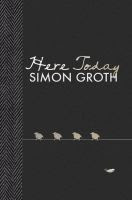
Here TodayHere Today by Simon Groth is a novel about a woman doing a short-term gig as an occupational therapist in a palliative ward. It takes place in Australia. The protagonist, Astrid, is bunking with a friend, Leith, who herself has become paralyzed from the waist down, and who deals with it by dressing and behaving like Lindsay Lohan. Astrid has self-esteem issues, but does some good work with the mostly elderly clientele, and with a famous writer who has suddenly become locked in by a stroke. The theme of the book is communication; sometimes this is expressed with slightly heavy-handed metaphors, as when Astrid bites her tongue seriously enough to require medical attention, but overall the interplay between her, her patients, and her friend is handled very well. The narrative explores the lies we tell to ourselves and to others, and the struggle to communicate truthfully that some never win. It was an enjoyable book overall.
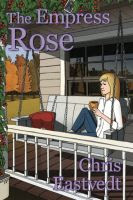
The Empress RoseThe Empress Rose by Chris Eastvedt held my attention for many pages, until the constant info-dump of material about the superiority of hydroponic farming wore me down. At my new digs, a front and back yard with scruffy grass are challenging me to revitalize them organically, but I doubt you want to hear much about the three-bin method of composting or the pros and cons of corn gluten meal. But Rose doesn't stop. At a farmers' market, after she has explained to other farmers in excruciating detail how her methods are superior, she starts all over again preaching to a restaurateur. I have been accused of doing the same thing over topics I am passionate about; I have learned that it is a quick way to bore people conversationally, and it sure is a good way to bore the reader if one is not careful.
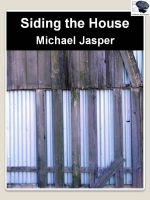
Siding The HouseSiding the House by Michael Jasper is a short vignette about a poor African-American family living down South who try to preserve a little joie de vivre in the face of threatening monotony and casual racism. The story is narrated by turns by Kanita, the little daughter, all brightness and speed; her depressed mother; her toothless grandmother, who tries to keep up morale by constantly making candy (an imaginative example of self-defeating behavior); and Bobby Ray, the developmentally delayed brother. Their house is being covered with siding by two young white men who seem to illustrate the downside of attempts at upward mobility in a racist system. Kanita disowns the siding, calling it “ugly,” and manages to hold onto her self-esteem. Beautifully written.
Tim the Tale Teller by Timothy Conerson: "By 2010 President Obama was constantly looking for terrorist in every corner of the globe. While cities and towns in the United States crumbled, Chinese computer programmers began to create a virus that paralyzed the weapon systems in the U.S. All combat took place hand to hand, gun to gun. The people of the United States were not particularly patriotic during that time so it was easy for the Chinese military to occupy the U.S."

This is from “The Peoples [sic] Republic,” the first of several short stories. I think he means “terrorists.” This would have worked so much better if set in the distant future, with names changed (and text edited; there are many typos and grammatical errors). The year 2010 has come and gone, and I see no dearth of people who consider themselves patriotic, from the Tea Partiers to the strikers in Wisconsin. The author really liked his own book; he gave it five stars on Amazon.

Chewing on Pen Caps by Cloud Buchholz. I think this is. A type of experimental fiction. Because when the narrative is. In the POV of. Or about the protagonist. Lemon Anderson. The structure reverts. To sentence fragments. But it's difficult to read. And no substitute for character development. Which may happen eventually. But not soon enough for me.


If you find explicit sexual content unpleasant, read no further.

This is Butte. You Have Ten Minutes by Craig Lancaster This Is Butte. You Have Ten Minutes and Gunshot Stigmata by Scott C. Rogers, if I had them in paperback, would probably smell of stale cigarette smoke and dried beer, with covers splotched with dried secretions whose origin I might not want to know. The Lancaster book looks at the trajectories of the lives of several people in Montana, down on their luck, and in one case, in prison. There is a lot of riding of Greyhound buses, furtive and fast screwing in a bus station restroom, and the exchange of a blow job for a lift with a trucker. The prose is intense but smooth, like good black coffee. The characters are honed by experience, mostly bad. Any residual loyalty or vulnerability is tested or betrayed. The whole narrative is bathed in yellowish sodium streetlight.

Gunshot StigmataRogers' book is different, in that its unreliable narrator is usually stoned and always insane. A damaged product of the foster care system, he plays guitar until his incapacity to bear life leads him to shoot himself in the hand, hence the title. He does try to find love; an uninhibited male view of sex runs rampant here and is refreshing. Rogers writes about sex and the ever-present undertone of aggression, like Charles Bukowski on steroids: “The mole that hid just on the inside of her right thigh. Whenever I ate her out I always kissed it goodbye afterwards, pulling up with a chin wet like a lion fresh from a kill.” The novella is in many short, disjointed chapters that jump around like the disordered thoughts of a severely shattered soul. Very well done.

Friday, November 14, 2014

The Northern Star: Civil War by Mike Gullickson

Reviewed by The Bookworm's Fancy.

The Northern Star: Civil WarMike Gullickson’s The Northern Star: Civil War picks up with a bang eleven years after the events of The Northern Star: The Beginning. The tentative cooperation between the world government and MindCorp (the company that owns the technology that makes civilization possible in a world drained of oil) has slowly begun to fray. Like its predecessor, Civil War is full of complex characters with interconnecting motives. It is very hard to separate the bulk of the characters into good/bad or black/white. Instead they all (except for Evan Lindo) exist in a state of varying shades of gray. This, in of itself, makes for a compelling read. But I’m getting ahead of myself.

Let me start with the easy stuff. All too often, we hear horror stories of indie books with bad editing and horrible covers. Not only are Gullickson’s covers amazing, but the editing is spot on. No odd formatting or glaring grammatical errors to break the reader’s immersion in the story.

I referred to Gullickson’s The Northern Star: The Beginning as an “old school, science-fiction romp”. The Northern Star: Civil War is this and so much more. It is more than just men in mechs destroying each other. It is more than amazing technological advances. Gullickson manages to make it all accessible to the average reader without overloading the senses. The technology is intricate and complicated but explained to the reader with a simple ease that just flows.

All the characters that survived through the first book are back to continue their journey in this book. Most interesting, though, is the inclusion of John Raimey’s now twenty-year-old daughter, Vanessa. Just a child in the first book, she has blossomed into a confident, intelligent young woman working with the bionics. While Gullickson’s story sets her up as the lynchpin to the ultimate evil scheme, the character of Vanessa becomes the emotional center of the story. Her relationships with Evan Lindo, Mike Glass, and John Raimey drive the story just as much as the constant struggle for power between MindCorp and the government.

Following the trend of the second installment in a trilogy being darker, Civil War is to The Beginning as the Empire Strikes Back is to A New Hope. It is decidedly darker, dirtier, and grittier. You find yourself rooting for the heroes and rallying with them only to have the rug pulled out from beneath you when they fail. The final scenes evoked the same emotional distress and despair as when Han Solo gets frozen in carbonite. The ending compels you to read the last book in the series because it just can’t end like this. The good guys have to win. Or do they?

The Bookworm gives The Northern Star: Civil War 4.5 stars for delicious darkness. For more information, please visit the author's website.

Sunday, June 27, 2021

Liberated by Steve Anderson

book cover for LiberatedIn the early days of post-war Germany, Captain Harry Kaspar has been assigned by the US military government to oversee recovery efforts in the town of Heimgau. Unfortunately, the post is already occupied by Major Membre. It seems that the office that assigned Membre supersedes the one that picked Kaspar, and obviously the major outranks the captain.

Kaspar and Membre butt heads from the start. Besides smarting from missing out on the position that Kaspar feels should've been his—he trained for it after all—Membre comes across as a self-serving opportunist, more interested in personal gain than helping this Bavarian town start over. Kaspar heads off in a huff to survey the town when he discovers three German men lying in the road, evidentially tortured and murdered. He now has a mystery to solve.

With the aid of Katarina, a former German actress, Kaspar navigates black markets, systemic corruption, the aftermath of the Holocaust, and a disgruntled conquered populace in an effort to solve the murders and right some wrongs, all while trying to avoid getting killed.

Anderson's story was born out of research he did in Munich to get his master's in history. Besides touching on prejudice towards German-Americans stateside, the book calls attention to Allied looting in post-war Europe. While it might be dismissed as stealing from Nazis, it should be noted that the Nazis stole it from innocents. Be sure to check out the afterword to get an idea as to the extent of the theft.

While the story was intriguing and rooting for Harry was easy, Liberated didn't resonate with me quite as much as the previous work—The Losing Role, a story about Harry's brother Max who fought for the Germans—did. I feel that certain characters weren't as developed as I think they could've been. Still, I liked it and plan on reading the next book in the series.

3.5 stars

Liberated was published by Skyhorse/Yucca Publishing.
Just to be clear. This book was not submitted to us. I went out and bought it on my own.

\_/
DED

Friday, December 6, 2013

Collegium Sorcerorum: Thaddeus of Beewicke by Louis Sauvain

It is a summer of the Dark Ages when an old vagabond appears in Beewicke offering the parents of the boy, Thaddeus, the promise of a fine education and a trade for their son. Gold exchanges hands and the stranger and the boy go off in the old man's cart, pulled by the sentient mule, Asullus.

On the journey, he is joined by two others recruited by their new Master—Anders of Brightfield Manor, a scholar, and Rolland of Fountaindale, a street thief. The three boys are unaware they are all the ultimate descendants of this very same Sorcerer.

Silvestrus begins the instruction of his charges by stating that the use of Sorcery is governed by Belief. If one has the inborn talent and the strength of Belief, one’s desires can take form—assuming any size, any shape and for any purpose. But he also warns them that each use of Sorcery shortens a Sorcerer’s life span by an unknowable quantity. The old man pronounces one last requirement—before he or she can command the use of Sorcery, a youth must first be intimate with a beloved.

Their quest for the College is perilous and on the way they are beset by beasts, brigands, a Demon, a black-haired Courtesan, the King of the Moths, tree fiends, ghost legions and Greensward Aelvae as they seek to achieve their final goal—the ancient and revered Collegium Sorcerorum.


Much in the same vein as The Hobbit, Collegium Sorcerorum: Thaddeus of Beewicke is a travelogue.  Louis Sauvain has built a spectacularly detailed world (with maps and illustrations to boot) and he doesn't skip a chance to celebrate it.  He treats the reader to a dark age filled with fairy, demons, and all sorts of magical creations.

Thaddeus finds himself overwhelmed by this world as he has been swept away from Beewicke in order to be trained as a sorcerer by Silvestrus.  He acts very much like what you'd expect from a typical teenager for the most part.  Even though Thaddeus is the main character, Rolland (another apprentice) often steals the show (literally).  He is a great character, almost reminiscent of a young Locke Lamora.

I found myself enjoying the author's use of the Latin language.  So often in fantasy, we are subjected to made-up magical/fantasy languages that really are just bastardized versions of Latin (I'm looking at you, J.K. Rowling!).  Sauvain uses the Latin languages for all things he deems important.  It was a nice little tidbit to have added to the book.

One of my main sticking points was Asullus, the talking mule.  Sauvain gave him a backwoods type dialect that he transcribes onto the page.  While this is nice for flavor every now and again, there are long passages where Asullus just talks and talks and talks and I found myself skipping them only to come back and have to re-read them because Sauvain uses him as an info dump to fill the reader in on the story.

Here's an example of his speeches:

"Hmm.  Well, I see ye'll no' be lettin' me go till I spills it, will ye? All right, but donno' be tellin' the old man where ye heard this. This is just 'tween ye, me, an' the feed bag, aye?..."

This particular speech goes on for twenty or so lines. Asullus isn't the only one who is wordy.  So many times, the characters (especially Silvestrus) repeated the same things in short order.

Another issue that I had was the large cast of characters.  In my opinion, Sauvain wasted too much time on temporary characters who show up for just a couple of paragraphs or a chapter and don't really add anything of value to the story.

The idea that sorcery is connected with sex is an intriguing concept but one that feels out of place in a book that has very much a young adult genre feel to it. Though the actually sex takes place "off camera", so to speak, I feel it is often rushed and handled poorly.

For example, Thaddeus's first sexual encounter happens at the behest of some fairies who "thank" him for saving their queen by getting him drunk and the screen fades to black, but he is too embarrassed to talk about it later with Asullus.

For all its flaws, it was still an interesting read.

Collegium Sorcerorum: Thaddeus of Beewicke is available from Amazon.

For more reviews from the Bookworm, stop by the Bookworm's Fancy!

Friday, May 16, 2014

Magic’s Heart by Thomas Oliver

If you write about a quest to deliver a magical object to a far-flung destination and thereby save the world from evil, you had better be up to the challenge, for your brave travelers unwittingly toil in the shadows of Frodo and Sam. Thomas Oliver makes a credible foray into this formidable subgenre with Magic’s Heart. This novel’s would-be heroes are a close-knit family whose members each possess a distinct magical talent. Seventeen-year-old Aliya has an affinity for bodies of water and the creatures that inhabit them. Her twin brother Crick has highly developed outdoor skills honed through years of exploring. Their brother Yori, 11, has the most advanced abilities of anyone in the family – he can detect magic and read the thoughts and feelings of others. The remaining family members, including parents Orlando and Siu and grandmother Abetta, each have their own magical specialties.

Yet they live in a region in which magic has come to be suspect. The Darkness is gathering strength, and the leaders in the nearby city of Immelus rely on military might to protect the people of the region. Url, an elderly friend of the family who has dedicated his life to studying the origin of magic, believes that the only way to combat the Darkness is to find the Heart of Magic. After an arduous search of a subterranean cave, Url and the family members find the Heart, which turns out to be a gemstone approximately five feet in diameter. The group formulates a plan to deliver it to a legendary stronghold of magic, the city of Iala. There it would be incorporated into a magical torch on the Tower of Elliad. This torch, in theory, would be a weapon sufficient to defeat the Darkness. As Url explains,

“When the Heart brought Magic into our world, it also, unintentionally I believe – brought something else. Something far worse.  A darkness from beyond our world and our understanding, attracted through the stars to the Magic of the Heart like a terrible moth to the light of a distant flame… it brought the horror around which the Black Wind exists. The true Darkness itself; ever hidden, ever unknown, ever terrible… Sometime after the first Magic was found, the first breaths of the Wind appeared. They started small and isolated, hovering around the borders of our world like wolves around a flock, picking off the weak and unwary. But over the years these breaths grew and came together in one vast storm, engulfing horizons and destroying towns and cities and their peoples within as quick as sound. And all the time it looked inwards, in towards the light. In towards the Heart, seeking it, craving it… The Heart is the key – the only key, beneath us this whole time – to ending the Black Wind! It is the one and only thing which can bring to us the peace our world has lived without for so long! The Heart is our freedom!”

But the group must brave hundreds of miles of wilderness, the Black Wind, and an assortment of other threats to reach their destination. They are joined on their quest by Tarryn, a young guardsman from Immelus, and Aulan, a mysterious, otherworldly outcast.

A quest can be a tedious thing, fraught with empty miles, bad weather, hunger, exhaustion, and often a growing tendency among the travelers (and sometimes the readers) to ask, “Are we there yet?” Magic’s Heart tames the inherent tedium of a long journey by revealing a fully realized world with its own geography, politics, and bestiary. The travelers encounter friends and foes along the way. They enter and quickly retreat from the dead city of Irraigon, devasted by the Black Wind years ago. They sojourn for a time in the Undervalleys, where an entire society dwells underground to avoid the perils of the encroaching Darkness. They meet up with waterfaeries, scarravers (ants the size of wolves, with deadly pincers), and stalkers, which are alchemically altered humans whose wailing paralyzes its hearers with terror.

Throughout their journey, the group struggles to understand the Heart’s capabilities and the role of magic in their world. Magic is not without its pitfalls. A recurring theme is corruption resulting from the lure of magic’s power. Tarryn describes to the others how the leaders of Immelus hoard information about magic: “Any knowledge that’s ever been passed down to the main of the City and the rest of the Heartlands has been sieved and corrupted a hundred times over by the Council… Anything which may benefit them in some way, either then or sometime in the future, they hold back for themselves. There’s so many centuries of history and secrets hidden within the City, they’ve probably forgotten half of it themselves…”

This novel is intended to be the first in a series called The Núminway Chronicles. There is much to admire in this ambitious opening installment. The author has clearly lived and breathed the world he describes for a very long time, imagining it down to the smallest detail. There are grand concepts and epic struggles, and it’s apparent that much more remains to be revealed about this world in the coming volumes.

The execution, however, is not flawless. Parts of the novel dragged. The chapters describing the search for and retrieval of the Heart of Magic from the cavern are a prime example of this. Another quibble I have is with the character of Yori. He is characterized as possessing the greatest magical talent of anyone in the family, yet he spends significant stretches of time withdrawn and afraid, brooding silently on the growing danger instead of making himself useful. To put it bluntly, I found him annoying. Finally, some of the prose was a bit challenging because of word choice, punctuation, and sentence construction. I think a good editor could make a profound difference.

When the travelers finally reach Iala, the novel really takes off. These final chapters are the strongest in the book. They introduce the most memorable secondary characters, culminate in a satisfyingly cataclysmic conclusion, and effectively set the stage for the sequel.

For more information on Magic's Heart, visit the author's website.

Monday, October 26, 2015

Book Excerpt: Shattered by M. Terry Green

Book cover for ShatteredLast Monday, we revealed the cover for Shattered, the third book in the Chronicles of White World series from M. Terry Green. This week, Green has granted us permission to reveal a sample of the story. Enjoy!

Shattered by M. Terry Green

“What's wrong with your father?” Thirteen asked.

As usual, Miyu stood tucked against her side. Although the eight-year-old was small, there was barely room at the bow for one person. She wore a parka, three layers of thermals, and goggles to stay warm, but still preferred the wind to the comfort of the cockpit. Turning the opening of her hood to face aft, she looked at her father.

As he had since they’d taken the slaver sloop, Cord piloted the ship. Thirteen hadn’t questioned it. Her eyesight was needed forward. Though the trimaran was iceworthy, it had no sounding buoy. Without the sound and flag warning system, any vasses that lay ahead would have to be sighted. While Thirteen waited for Miyu’s answer, she continued to scan. Although the freezing air was crisp and clear, visibility was limited. This close to the volcano, the fractured plateau allowed views of several clicks, not hundreds. Cord steered the sloop around jagged, tilted, and towering blocks of ice. Even the surface they sailed on was veined with cracks. Like most ships on the Pacifica Sheet, the trimaran’s heavy steel blades were made for speed, not the sharp inclines and drops of a direct course.

Although slavers, not Skulls, would be their worry now, Thirteen scanned for them out of habit. Her eyes lingered on the volcano.

“I think Papa is mad,” Miyu said.

Thirteen frowned and considered Miyu’s face. Where Cord's was long and angular, hers was heart-shaped and full, chin and nose small beneath her big dark eyes. But with the amber lenses hiding them, it was hard to read her.

“Why would he be mad?”

Miyu’s only answer was a little grimace and a shrug.

Thirteen returned her gaze to the ice, but her thoughts stayed with Cord. This was quiet even for him. The closer they got to Helado, the more he stopped talking. But why mad?

The lopsided slopes of the volcano were so close that Thirteen had to look up. If Cord could add another few knots, even with the tight steering, they might make port this evening. But without asking, Thirteen knew he wouldn’t try. He was far too cautious.

Through the two light layers of thermals over her chest, she touched her sister’s silver pendant. Tomorrow would be the day—tomorrow morning by the look of it. Thirteen couldn’t help but smile. Sierra was in Helado.

Where in the city, Cord seemed to know, though he had yet to say. But even if he’d named a certain district, a street, or even a location, none of it would have meant much. All Thirteen knew of Helado was slave processing and the coliseum. Once upon a time, they had been her whole world.

As the volcano loomed, the mounting dread of it did too. Though time in the hold of a slaver ship had been daunting, the volcano was where the true nightmare had begun: her separation from Sierra, branding, and sale. It was different now, but she would have to be on guard. It was swarming with sailors. She would have to wear a cap and goggles at all times, and never look anyone in the eye.

But at the same time, the weight of years was about to lift. She would rescue her sister, take her from the life of slavery Thirteen had escaped long ago. How many volcanoes, miles, and slavers had come between them, she couldn’t remember. But it was all ending here, where it had begun.

The scar between her shoulder blades tightened, but she shook it off. She tilted her head left and cracked her neck, then right.

The mainsail and headsail alternately billowed and flapped as Cord maneuvered the sloop. They zigged and zagged between frosty, sculpted columns, precariously perched boulders, and aqua-tinged pyramids. But at times they sailed due east. In the late afternoon, the trimaran threw its long silhouette out in front, the mast’s thin shadow pointing like a needle. The blotchy sails had held up. Their mottled, ghost shades undulated over the fractured ice. They just needed to last another day.

“Half a day,” Thirteen muttered.

“What?” Miyu asked.

Thirteen smiled down at her upturned face. “Nothing.”

Miyu’s faint eyebrows gathered together for an instant, but only for an instant. Her ready smile spread—until she shivered.

“You’d be warmer in the cockpit,” Thirteen said, her white hair buffeted by the gale that drove them. She knew better than to suggest Miyu go below. Neither of them wanted to be there.

In response, Miyu hugged her around the middle. No longer caught off guard, Thirteen smiled and patted her back the way she’d seen Cord do. She glanced at him, manning the helm.

Back at the Skull depot, he’d been right to pick this ship. Though the sloop hadn’t been able to fly, it’d been sturdy. With any luck it would blend into slaver traffic as they neared the volcano. It had all worked out. Thirteen scowled as she returned to scanning.

What did he have to be mad about?

• • • • •

Cord judged the sky’s dimming light. There was another hour of sailing at most. Off the bow, a few points north of east, the damned volcano soared. It dominated the landscape, demanding to be looked at. The jagged spires of its wrecked rim jutted skyward, a mix of jet-black basalt and gleaming ice. Though he couldn’t see it, the city of Helado waited on its irregular and sheltered slope. They had yet to sight it and also yet to be detected. He could still turn around, veer off north or south, away from what waited there.

Thirteen took that moment to glance back at him. He went stock-still. But it wasn’t her silvery irises or their reflection of the setting sun that gave him pause. It was her smile. As Miyu hugged her and Thirteen turned away, Cord went cold inside, with a chill that bordered on numb.

Again he glared at the volcano. He had to do this—and not just for her.

Though it was the last place in all of White World he’d wanted to see again, it would have to be. He owed Thirteen his daughter’s life. This was his end of the bargain, and it was time that it was delivered. It was almost past time. Only by the slimmest of margins had they escaped the slaver fleets. Though Cord couldn’t deny Thirteen’s knack for survival, someone would inevitably catch up. He glanced aft.

Though the enormous vasse and devastated plateau lay far behind, a pursuer might yet appear. While Thirteen looked ahead, Cord couldn’t stop glancing behind. He had to assume the slavers had survived.

Another hour of sailing wouldn’t amount to much distance, but he would take every advantage he could. Thirteen’s luck wouldn’t hold forever. His had already come to an end.

©2015 M. Terry Green

To learn more, visit Terry's website.

Sunday, July 4, 2021

Lost Kin by Steve Anderson

Book cover for Lost KinAfter the events in Liberated Harry Kaspar has been relocated to Munich. As he enters the final weeks of service as an administrator for the military government, his life is good. He resides in a nice house with cushy amenities, has a former WAC girlfriend, and the locals appreciate his efforts to restore some semblance of pre-war normalcy. And then a cop shows up on his doorstep one night informing him that there's been an incident and his brother may be involved. Having not seen nor heard from his brother for several years, Harry's interest is piqued, though for a German-American, he knows this could be a scam, or worse. What follows is an investigation into a murder, black market sales of the spoils of war, and old scores that demand to be settled in blood.

There are elements of noir in this story. Harry's girlfriend has a bit of femme fatale to her which both excites and worries him. Meetings with informants take place in dark alleys and secluded rooms, forcing Harry to always be alert for the double cross. The atmosphere of downtrodden Munich is leaden with cold autumnal rain and early snow. And the American military government is seen through a lens of world weary cynicism.
She knew so many majors, colonels, and generals, all rearguard types who'd never seen combat but rode desks like gladiator chariots except their shields were their puffed-up chests done up with medals of every color, the swords their sharp tongues and stern memos, the feints and thrust their back-room whispers and leaks applied with extreme prejudice. Opponents cowered, colleagues awed, and mistresses swooned.
As with Liberated, Anderson has done the research. The deal that FDR and Churchhill made with Stalin in Yalta would soon turn out to be a Faustian bargain. I don't want to spoil it, but Anderson explores an aspect of that here as a way for the two brothers' paths to cross again.

Lost Kin is a strong addition to the Kaspar Brothers series. The noir elements spice up the intriguing plot, and Anderson's characters are well-developed. I got caught up in their predicament as Anderson entwined their fates with historical events. I'd recommend the series as a whole for WW2 historical fiction fans looking for something different from that time period.

4 stars.

Lost Kin was published by Skyhorse/Yucca Publishing.
Just to be clear. This book was not submitted to us. I went out and bought it on my own.

\_/
DED

Sunday, April 26, 2009

Winter Games

Winter Games
John Lacombe
336 pages
AuthorHouse (2008)

When bookish, twentysomething Tim Sutton goes to collect his kid brother, Eric, from the airport one cold New Hampshire evening, things don't go quite as planned. Three FBI agents are there to meet Eric, too. Within minutes, two are dead – throats slashed – and Eric has vanished into the snow. Three years later, Tim receives a coded message at the small-town comic book store he runs: a North Korean propaganda comic cleverly amended to include instructions on how Eric can be found. With the assistance of a disgraced former agent from the FBI's Financial Crimes Department, a millionaire Chicago drug lord, and a gifted female super-soldier-turned-rogue, Tim sets out to find his brother…

Many self-published thrillers fail because they're boring. The author has a topic they find interesting, or a great premise, but no idea how to turn that into a novel. Winter Games is certainly not one of those books. Clearly informed by the rhythms of Hollywood and high-concept episodic television such as "Prison Break" and "24", John Lacombe's novel grabs you from the outset. It was page 91 before I looked up.

The scenario is outrageous, but that's just what the genre demands. Suspension of disbelief is required – and rewarded. It's an opportunity for readers to project themselves into an imaginary world, and this is one of hi-tech espionage, global drug networks, black ops, comic books, and ninja-like operatives who pick fights with grizzly bears for kicks. It has the kind of fun, page-turning intensity you need in this genre. Lacombe has clearly read plenty of these kind of novels and he knows how they work. It's all action and anticipation – begin in medea res, reveal just enough for the reader to understand what's going on, but hold back enough that they want to keep reading. As James Cameron once said of writing movies: "Every scene should answer a question, and raise a new one you want answered, too..." On that score, Lacombe really delivers.

The writing style is clear and efficient, but Lacombe also understands the music of language. He knows how the rhythm of it can propel you across the page. Exposition is kept to a minimum. Where it is eventually required, it's mostly delivered through dialogue and in scenes that also advance the action, so Lacombe has clearly thought about how to deploy it. Some of these scenes are long and the exposition a little too wordy, but they often segue into action-packed flashbacks which "show" more than they "tell", which is satisfying. It's mercifully free of the awkward phrasing and endless typos that plague so many self-published novels. My virtual editor's pencil was hovering, but was rarely put to use. There's the odd overuse of adjectives, but on the whole this is the clean, workmanlike language you expect in an action-thriller and it really is a pleasure to read.

I was pleased, too, to discover there's quite a bit going on here thematically. Without wanting to spoil the story, it involves the global drug trade, super-soldier training programs, the ethics of US and North Korean government agencies, and one very smart American kid. At one point that kid, Eric Sutton, utters, "Screw freedom. I have power." At different times, this may well have been the battle cry of both the US and North Korea. While the novel never aims to be an incisive political analysis of the two nations, it does draw some comparisons between their global ambitions, motives and methods. There's also a really nice subtext about people being unable to overcome the life for which they were either born or made. I think a little more could have been made of Eric's character and family background, in this regard. His achievements are quite incredible, but I had an easier time buying those achievements than his rather cold motives. I wanted more. It would've made the novel a richer experience. But you can't judge a novel against an objective it didn't set out to achieve, and Lacombe has mostly exceeded the ones he obviously lined up here.

There are a few aspects that might benefit from a professional edit. First, two characters are named "Jeff" and they share many scenes together, so it's not always clear which one is speaking. This is compounded by an odd formatting error: where a character's speech runs over more than one paragraph, the closing quotation marks should be left off the end of all but the final paragraph. Here, the quotation marks are closed at the end of every paragraph of speech, so it often seems as if a second character has started speaking when it's actually a continuation of the first. This can be confusing. Secondly, things occasionally get a bit muddy in terms of structure. There are multiple flashbacks, and two scenes from the past are virtually identical though they happened three years apart. It's possible to get a little confused and this slows the pace. Finally, I mentioned earlier that suspension of disbelief is required. But sometimes things go too far. The ease and accuracy with which characters infer major parts of the backstory – inferences which are vitally necessary for the action to continue – is sometimes implausible.

In the final analysis, though, these aren't serious problems. Overall, this is a slick and solid action-thriller from an emerging writer of considerable strength. It shows a confident grasp of storytelling technique, genre requirements (including the tickler for a sequel!) and superb imagination. It's polished and professional work, and I imagine it was only knocked back by mainstream publishers because the thriller is such an incredibly competitive field.

Oh well, their loss is our gain. Winter Games is a mighty fine read. And John Lacombe is a talent to watch.

Note: This has been a free review. Due to a change in site policy requiring self-published authors to pay for reviews from now on, this is the last one I'll be contributing to The New Podler Review of Books.

This policy change was cancelled by Podler before it ever happened. The only "price" that we ask authors to "pay" is that they send us a copy of the book they wish to be reviewed. - The Podler Staff